An exclusive feature by The Worlds Times
At a time when business leaders are confronting unprecedented uncertainty, volatile markets, technological disruption, and rapidly shifting geopolitical realities, new approaches to leadership are becoming essential. Traditional management models are increasingly being tested by a world shaped by complexity and constant change. Against this backdrop, researcher and business strategist Aldin Celovic has introduced a fresh perspective on adaptive leadership and decision making.
Drawing from his latest manuscript, Fixing Uncertain, Strategic Failure, or Collapse During Unexpected Crises via Leadership Cycle, Celovic explores how contemporary leaders can navigate instability through reflection, analysis, and strategic intervention. Originally developed as an academic work within the field of international business and macroeconomic forecasting under JEL code F47, the manuscript moves beyond conventional management theory to address one of the most pressing questions of modern leadership: how can executives and decision makers lead effectively when certainty no longer exists?
As a Senior Researcher and Specialist within the Horizon Europe worldwide consortium, Celovic has spent years studying international finance, business development, sustainability, and executive leadership. His latest work combines academic research with practical insights for leaders operating in what experts describe as a VUCA environment defined by volatility, uncertainty, complexity, and ambiguity.
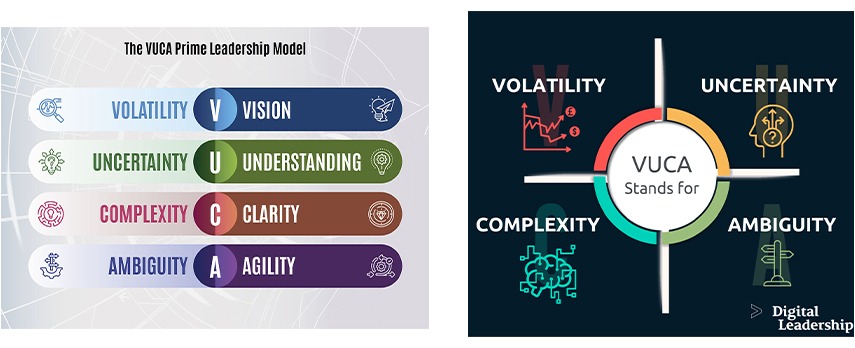
Digital leadership VUCA World Disruptive Leadership Institute
Understanding Leadership Beyond Crisis Management
According to Celovic, uncertainty is no longer an occasional challenge for organizations. It has become a permanent feature of global business. Financial instability, geopolitical tensions, technological transformation, artificial intelligence, and changing labor dynamics have created an environment in which leaders must constantly adapt.
His manuscript argues that many existing leadership frameworks struggle to respond effectively to contemporary disruptions. While transformational, transactional, democratic, and charismatic leadership styles each offer value, they often prove insufficient when organizations face prolonged uncertainty and unexpected crises.
Instead, Celovic introduces a cyclical framework centered on three interconnected stages: analysis, intervention, and what he calls the balcony perspective.
The concept is deceptively simple. Leaders begin by carefully analyzing the environment around them, identifying risks, opportunities, and structural weaknesses. They then intervene strategically, implementing actions and testing solutions. Finally, they step back to the balcony, observing broader patterns and reassessing outcomes before beginning the cycle again.
For Celovic, leadership is not a linear process with fixed answers. It is a continuous practice of observation, adaptation, and learning.
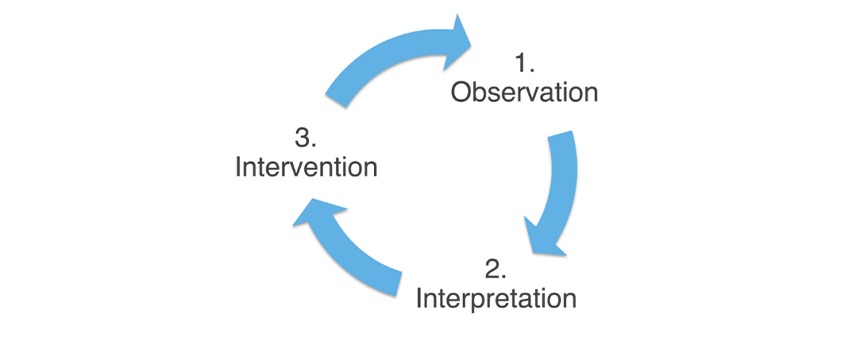
Iterative decision-making as a practice of adaptive leadership
The Balcony Perspective and the Future of Leadership
One of the manuscript’s most distinctive ideas is the emphasis on “the balcony,” a concept inspired by adaptive leadership theories developed by leading scholars. Rather than remaining immersed in daily operational pressures, leaders must periodically step away from immediate challenges to observe systems from a higher vantage point.
From the balcony, executives can identify recurring patterns, understand organizational dynamics, recognize hidden obstacles, and distinguish between technical problems and adaptive challenges.
Celovic argues that many strategic failures occur not because organizations lack resources or expertise, but because leaders become trapped within operational routines and lose sight of the broader picture.
This perspective has particular relevance in today’s business climate, where artificial intelligence, digital transformation, cybersecurity concerns, and global market fluctuations are reshaping industries at an unprecedented pace.
Additional insights into adaptive leadership and innovation can be found through the official publications of the Harvard Business Review and research from Warwick Business School.
Leadership in the Age of Volatility
The manuscript highlights a growing disconnect between traditional leadership education and the realities faced by modern executives. According to Celovic, organizations increasingly demand leaders capable of navigating uncertainty while maintaining strategic clarity.
He identifies several emerging leadership qualities that will define the next generation of executives:
Transparent communication that builds trust even when complete information is unavailable.
Adaptive thinking that embraces experimentation and continuous learning.
Emotional resilience that enables leaders to remain calm under pressure.
Vision driven decision making grounded in long term purpose rather than short term reactions.
Empowerment of teams through collaboration and distributed responsibility.
These principles reflect broader changes occurring across international business and financial markets. As industries evolve, leadership itself must evolve alongside them.
Celovic also suggests that entirely new categories of leadership may emerge in the coming years, including disruptive leadership and DBA leadership as distinct disciplines capable of addressing the demands of the modern economy.
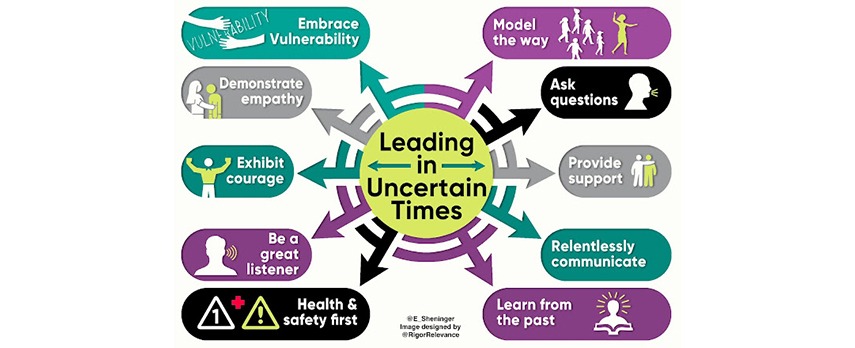
A Principal’s Reflections: Leading in Uncertain Times
From Academic Research to Practical Application
Although the manuscript originated within an academic framework, its implications extend far beyond universities and research institutions. It offers practical guidance for executives, entrepreneurs, policymakers, and doctoral professionals seeking to build resilience in unpredictable environments.
Celovic emphasizes that leadership development is a long term process requiring continuous reflection, disciplined research, and intellectual curiosity. Success, he argues, depends less on immediate outcomes and more on the ability to repeatedly analyze, adapt, and improve.
His work also reinforces the importance of original research and evidence based decision making in executive leadership. In a world increasingly shaped by rapid technological progress and information overload, thoughtful analysis remains one of the most valuable strategic assets.
Readers interested in Celovic’s previous work and broader perspective on innovation and regional transformation can explore his earlier feature in The Worlds Times at The Worlds Times Interviews.
Conclusion
As businesses around the world continue to navigate uncertainty, Aldin Celovic’s leadership framework offers a compelling argument for a more reflective and adaptive approach to management. By combining rigorous analysis with strategic intervention and long term perspective, his Leadership Cycle model provides a roadmap for executives seeking clarity in increasingly complex environments.
At its core, the manuscript challenges leaders to move beyond traditional assumptions and embrace a new philosophy of leadership shaped by resilience, creativity, and continuous learning.
In an age defined by disruption, the ability to step onto the balcony and see the bigger picture may ultimately become one of the most valuable leadership skills of all.
Connect with Aldin:
https://www.linkedin.com/in/aldincelovic/
Also Read:-
Anthony Joseph Abou Jaoude on Dubai Real Estate Success
Dr. Hui Tian: Bridging Silicon, Biology & AI in Healthcare
Laurent Serafini: Redefining Global Business Intelligence