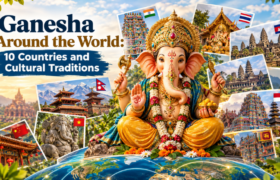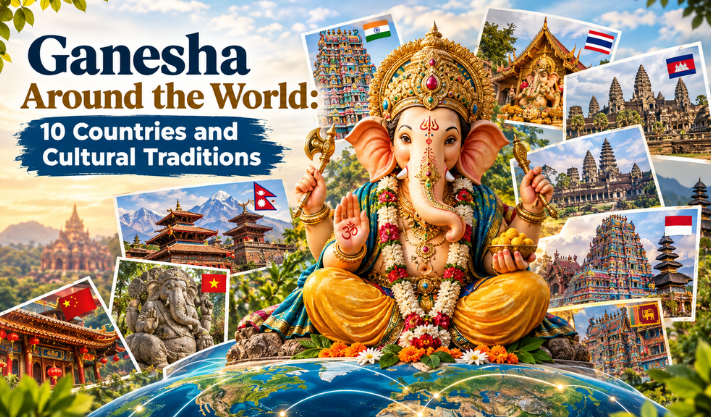
Lord Ganesha is one of the most prominent deities in Hinduism, recognised by his elephant head, human body, and association with knowledge, new beginnings, prosperity, and the removal of obstacles. Although Ganesha originates in the religious traditions of India, his image and worship have spread across South Asia and Southeast Asia, where different communities have developed distinctive names, artistic styles, and religious practices.
From India and Nepal to Thailand, Japan, Cambodia, Myanmar, Indonesia, Sri Lanka, Malaysia, and Vietnam, Ganesha appears in temples, sculptures, shrines, and cultural traditions. His role can range from that of a principal Hindu deity to a figure incorporated into Buddhist traditions and regional artistic practices.
Here is a look at Ganesha around the world and the different cultural traditions associated with him in 10 Asian countries.
1. India — Ganesha
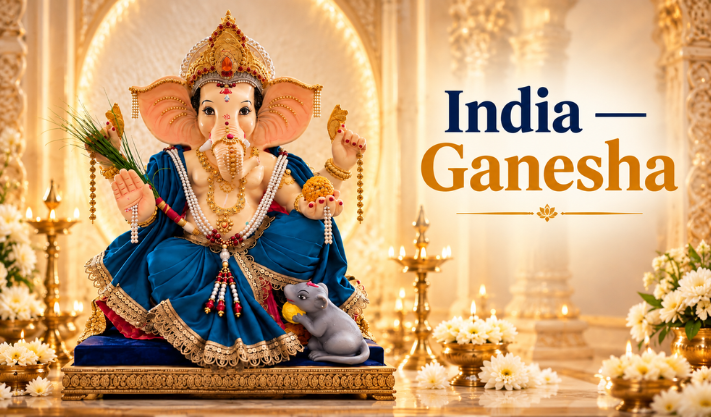
India is the traditional homeland of Ganesha worship. Known by names such as Ganesha, Ganapati, and Vinayaka, he is widely associated with knowledge, learning, prosperity, good fortune, new beginnings, and the removal of obstacles.
Ganesha is especially prominent during Ganesh Chaturthi, when devotees install images of the deity, perform prayers, participate in cultural celebrations, and, in many places, take part in public processions.
His distinctive iconography commonly includes an elephant head, large ears, a prominent belly, multiple arms, and a mouse as his vehicle.
Ganesha is worshipped in homes, temples, educational institutions, and workplaces, making him an important part of both religious and cultural life in India.
2. Thailand — Phra Phikanet
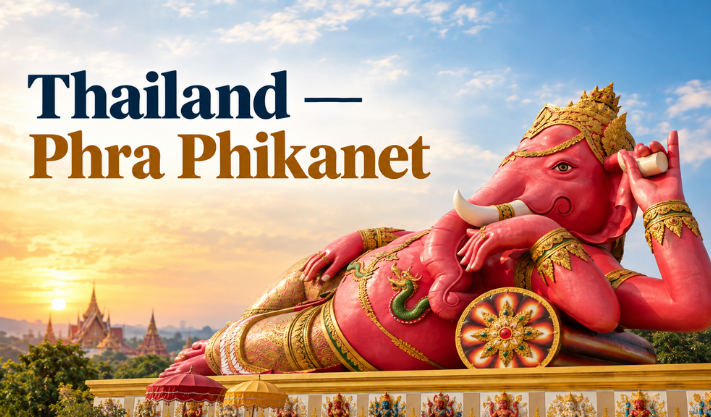
In Thailand, Ganesha is widely known as Phra Phikanet or Phra Phikanesuan. His worship has developed within a cultural environment influenced by both Hindu and Buddhist traditions.
Ganesha is associated in Thailand with success, prosperity, creativity, knowledge, and overcoming difficulties. His likeness can be found at shrines and sacred places, including locations associated with the arts and creative professions.
The Thai form of Ganesha demonstrates how a deity can retain familiar religious symbolism while acquiring additional meanings within a local cultural context.
3. Indonesia — Balinese Ganesha
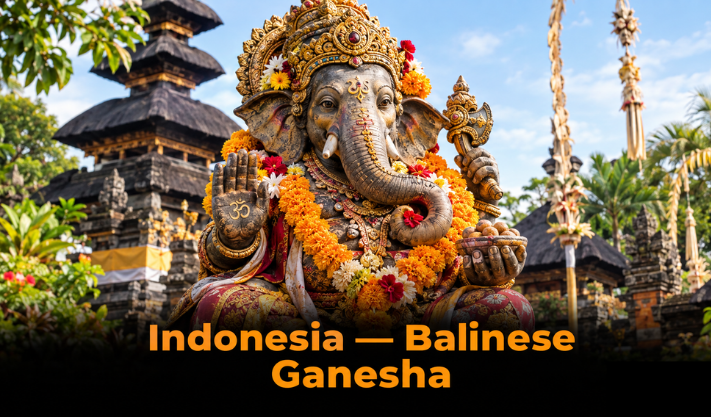
Indonesia has a long history of Hindu-Buddhist cultural influence, particularly on the island of Bali. In Balinese Hindu religious art, Ganesha is an important figure and can be seen in temples, sculptures, and sacred spaces.
Historical sites such as Goa Gajah contain Ganesha imagery alongside elements associated with Hindu and Buddhist traditions. These sites demonstrate the long history of religious and artistic exchange in the Indonesian archipelago.
Ganesha remains a recognisable religious icon in Bali, where his representations reflect distinctive Balinese artistic traditions and are associated with protection, wisdom, and spiritual practice.
4. Japan — Kangiten
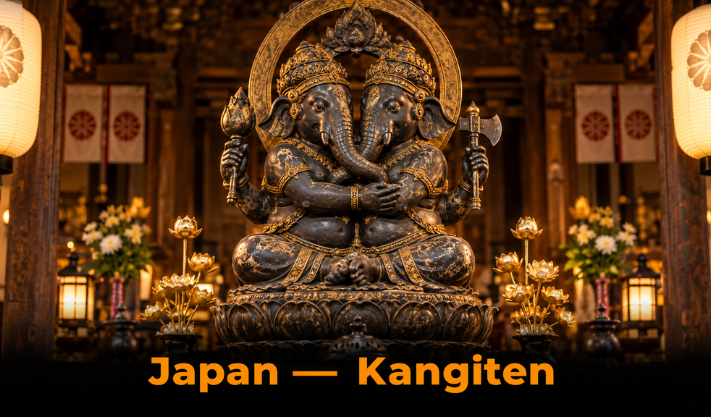
Ganesha also appears in Japan through Buddhist traditions, where he is known as Kangiten. Japanese representations can differ considerably from the familiar Hindu depictions found in India.
Kangiten is particularly associated with esoteric Buddhist traditions. Rather than simply reproducing the Indian form of Ganesha, Japanese Buddhist art and religious practice adapted the deity within a different theological and cultural context.
Japan therefore provides an important example of how the image and traditions associated with Ganesha travelled beyond Hindu communities and became part of the wider religious history of Asia.
5. Cambodia — Khmer Ganesha
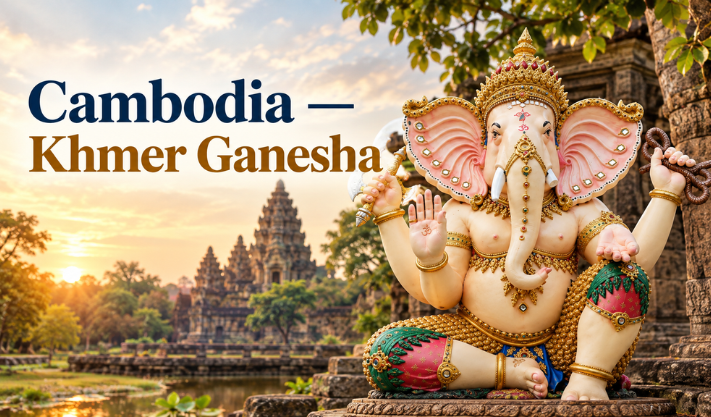
Cambodia contains some of the earliest surviving representations of Ganesha in Southeast Asian art. Khmer artists depicted Ganesha in stone sculptures and temple art, giving the deity distinctive regional characteristics.
Historical Khmer sculptures of Ganesha display variations in body proportions, ornaments, poses, and artistic details when compared with many Indian representations.
These sculptures demonstrate how Hindu religious imagery became closely connected with the artistic heritage of the Khmer world. Today, they are also important for understanding Cambodia’s ancient religious, artistic, and cultural history.
6. Sri Lanka — Pillaiyar
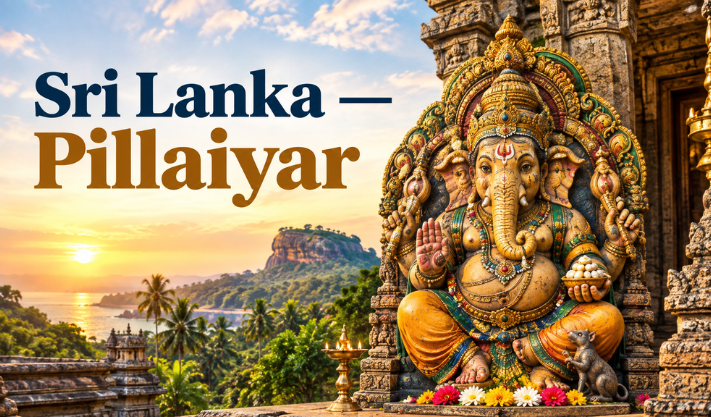
Among Tamil Hindus in Sri Lanka, Ganesha is popularly known as Pillaiyar. Temples and shrines dedicated to Pillaiyar can be found in areas with Hindu communities, reflecting the deity’s longstanding place in Sri Lankan Tamil religious life.
Ganesha’s traditional role as the remover of obstacles is particularly relevant to devotional practices. Devotees may pray to Pillaiyar before beginning important work or seek blessings for family and personal matters.
The name Pillaiyar also reflects the strong Tamil cultural connection to Ganesha worship.
7. Myanmar — Maha Peinne
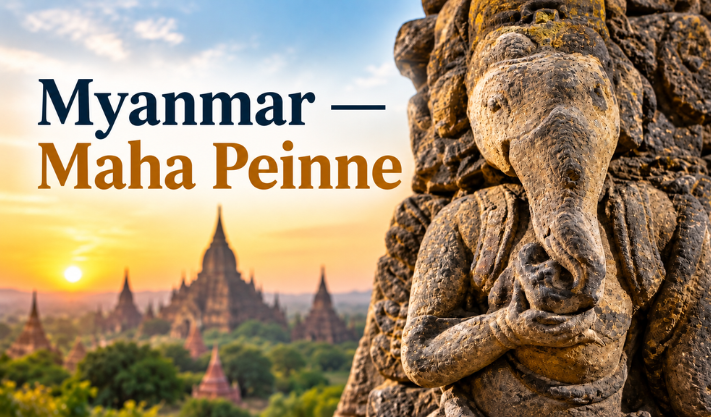
In Myanmar, Ganesha is known as Maha Peinne, along with related forms of the name. His presence reflects centuries of interaction between Indian religious traditions and Myanmar’s Buddhist cultural environment.
Maha Peinne is traditionally associated with an elephant-headed form identified with Ganesha. His image forms part of Myanmar’s broader religious and cultural heritage.
The Myanmar tradition is notable because aspects of Ganesha’s identity and stories became incorporated into local religious and cultural traditions rather than simply reproducing Indian practices unchanged.
8. Malaysia — Vinayagar and Pillaiyar
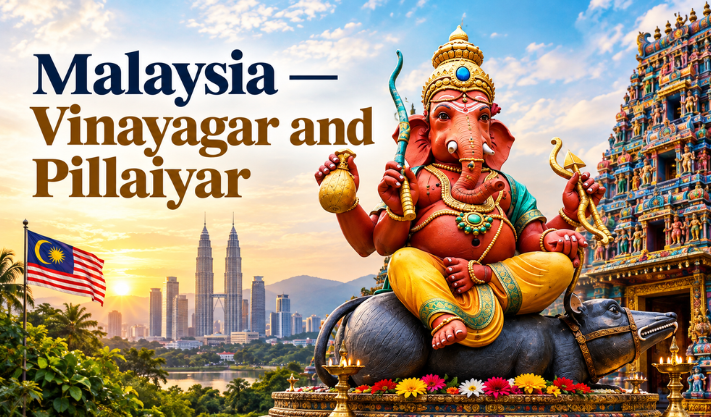
Ganesha is also worshipped by Hindus in Malaysia, particularly within communities with cultural and historical connections to South India and Tamil Nadu. He is commonly known as Vinayagar or Pillaiyar.
Malaysia has numerous Hindu temples dedicated to different deities, including Ganesha. He is commonly associated with blessings, wisdom, prosperity, and the removal of obstacles.
The presence of Ganesha in Malaysia reflects both the wider history of Hindu traditions in Southeast Asia and the history of Indian communities in the country.
9. Vietnam — Ganesha and Champa Heritage
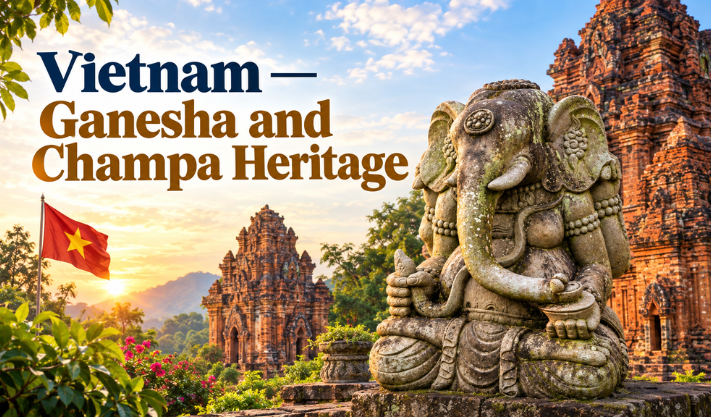
Ganesha also appears in the historical art of Vietnam, particularly in connection with the Champa civilisation, which was influenced by Hinduism and Buddhism.
Hindu deities were incorporated into Champa temple sculpture, and Ganesha became part of this wider artistic tradition. Historical representations show how religious ideas travelling across South and Southeast Asia were expressed through local artistic styles.
Today, these sculptures form an important part of Vietnam’s archaeological and multicultural heritage.
10. Nepal — Hindu and Buddhist Ganesha Traditions
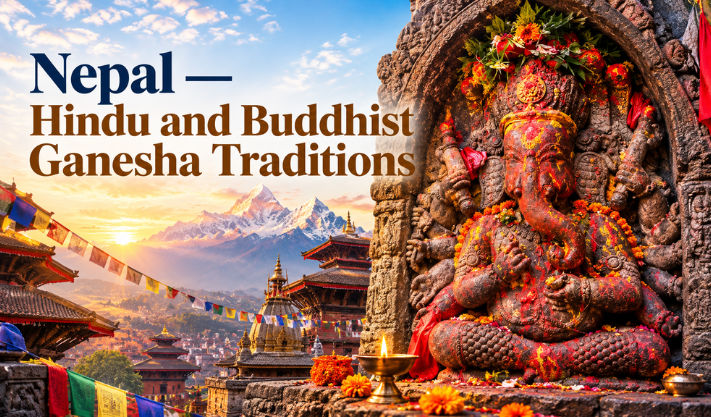
Nepal provides another important example of Ganesha’s connections with both Hinduism and Buddhism. Ganesha is worshipped by Hindu and Buddhist communities, particularly in the Kathmandu Valley.
Ganesha shrines and statues can be found throughout Nepal, with the deity often associated with protection, prosperity, good fortune, and the removal of obstacles.
Nepalese Ganesha sculptures are also known for their distinctive craftsmanship, with dynamic forms and artistic details that can differ from representations found in other parts of Asia.
Ganesha Around the World: One Deity, Many Cultural Forms
The story of Ganesha around the world is not simply about the spread of a religious icon. It also illustrates how religious traditions can change and develop as they move across cultures.
Ganesha remains one of the principal Hindu deities in India and is associated with new beginnings, wisdom, prosperity, and the removal of obstacles. In Thailand, he is known as Phra Phikanet and is associated with success and the arts. In Myanmar, he appears as Maha Peinne within local religious traditions.
His image and associated traditions also became connected with Buddhist religious contexts in Nepal and Japan, while Cambodia, Vietnam, and Indonesia preserve important historical examples through sculpture, temples, and archaeological sites.
These traditions should not be treated as identical. Each country has its own history, religious communities, artistic traditions, and interpretations of Ganesha.
Ganesha’s Different Names Around the World
One of the most interesting aspects of Ganesha’s cultural journey is the variety of names associated with him in different regions.
-
India: Ganesha, Ganapati, Vinayaka
-
Thailand: Phra Phikanet, Phra Phikanesuan
-
Japan: Kangiten
-
Sri Lanka: Pillaiyar
-
Myanmar: Maha Peinne
-
Malaysia: Vinayagar, Pillaiyar
These names reflect the different languages, religious traditions, and cultural contexts through which Ganesha has been represented.
Why Is Ganesha Worshipped in Different Countries?
Ganesha’s traditions have travelled beyond India through historical religious exchange, migration, trade, cultural interaction, and the spread of Hindu and Buddhist traditions across Asia.
As Ganesha entered different cultural environments, communities adapted his imagery, names, stories, and religious significance to their own traditions. This is why representations of Ganesha can look and function differently from one country to another while still retaining recognisable elements of the deity’s identity.
Conclusion
The presence of Ganesha in 10 countries across Asia reveals the diversity of religious art, cultural exchange, and shared heritage across the region.
From Ganesha in India and Pillaiyar in Sri Lanka and Malaysia to Phra Phikanet in Thailand, Maha Peinne in Myanmar, and Kangiten in Japan, different names and artistic forms tell a broader story of how religious traditions travel and evolve.
Ganesha is therefore not represented in just one way. His image has been carried into different languages, artistic traditions, religious systems, and cultural histories, making Ganesha around the world a fascinating subject for understanding Asia’s shared yet diverse heritage.
Also Read:-
Palmer Luckey: Oculus Founder, Anduril Entrepreneur
What Is the Gold Rate in the United States?
Joe Lonsdale: Palantir Co-Founder, Investor and Entrepreneur