Introduction: Why Watch Women Entrepreneurs in 2027?
Women entrepreneurs are playing an ever more crucial role in influencing the global economy. Women founders are creating businesses that meet evolving customer needs and tap into new opportunities, from technology companies generating new software and expanding financial services to revolutionising beauty, healthcare and online shopping.
Watch out for successful women entrepreneurs in 2027, not only for their business success but for their capacity to bring fresh ideas, build influential brands, generate jobs and solve real-world problems. Their experiences are testimony to the strength of industry knowledge, customer insight, financial discipline and long-term planning to build a thriving business in competitive marketplaces.
Women-led entrepreneurship is particularly well exemplified in India. Business executives like Falguni Nayar, Kiran Mazumdar-Shaw, Radha Vembu and Upasana Taku have played a key role in building industries from digital commerce and biotech to software and fintech.
This article profiles 15 women entrepreneurs, both established and rising, who will be worth following in 2027 based on their businesses, leadership and industries. The selections cover a variety of industries and markets and are an editorial watchlist, not a definitive rating of wealth or a promise of future success.
Top 15 Most Successful Women Entrepreneurs to Watch in 2027
Falguni Nayar – Founder, Nykaa
Why You Should Watch Falguni Nayar in 2027
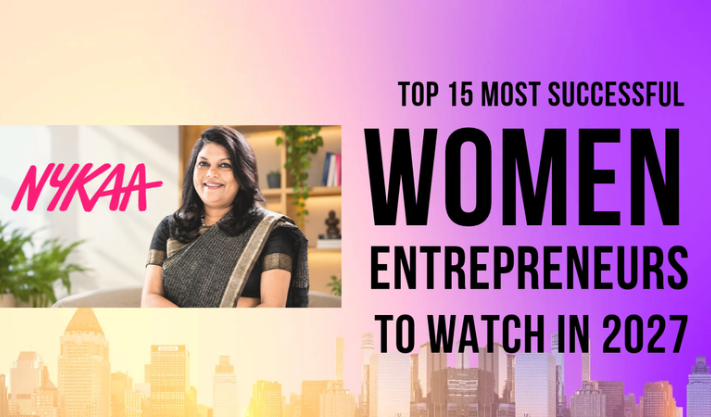
Falguni Nayar is one of India’s most well-known women entrepreneurs and the founder of Nykaa, a cosmetics and lifestyle retail firm. She founded Nykaa in 2012 after a career in investment banking, developing a dedicated online marketplace for beauty items.
Her story is a case study in how an entrepreneur can find a market that isn’t being served well and establish a brand based on trust, product selection and customer experience. Nykaa’s mix of digital retail and physical stores also highlights the importance of linking online discovery with offline purchases.
Nayar is one to watch in 2027 as beauty consumers look for new products, tailored advice and easier purchasing experiences. Her entrepreneurial approach offers a valuable lesson: a keen understanding of customers can uncover opportunities in a crowded sector.
Kiran Mazumdar-Shaw – Founder of Biocon
What Makes Kiran Mazumdar-Shaw a Successful Entrepreneur?
Kiran Mazumdar-Shaw started Biocon in 1978, and the company was among the early businesses to enter India’s biotechnology sector. Founded as a small industrial enzyme company, it has evolved into a substantial biopharmaceutical corporation with a global presence.
Her entrepreneurial career emphasises the need for scientific expertise, perseverance and continued investment in research. The biotechnology sector is challenging, as developing medications involves specialised expertise, regulatory compliance and extensive testing.
Mazumdar-Shaw’s corporate legacy remains important in 2027 as healthcare businesses continue to work on affordable medications, biosimilars and new treatments. Her career is an example of how entrepreneurs may create enduring enterprises by solving significant problems instead of chasing trends.
Radha Vembu – Zoho Corporation
Why Entrepreneurs Should Look Up to Radha Vembu
Radha Vembu is associated with Zoho Corporation, a software company that builds business applications and productivity tools. She is an important figure in India’s enterprise IT ecosystem, where software firms help companies run their operations, communicate, manage customer relationships and handle finances.
In the software sector, organisations that build meaningful products, maintain customer trust and improve their technology over time can establish lasting businesses. Companies offering practical alternatives to complicated or expensive tools can attract both small businesses and large organisations.
As digital transformation continues in 2027, Vembu’s work with Zoho makes her a business leader worth following. Her entrepreneurial story demonstrates the importance of creating usable technologies and developing products that address recurring business problems.
Jayshree V. Ullal – CEO of Arista Networks
What Can Entrepreneurs Learn from Jayshree Ullal?
Jayshree Ullal leads Arista Networks, a technology business that focuses on networking solutions for large data centres and enterprise environments. Her career is an example of how technical knowledge and business leadership can be combined to achieve a strong position in a specialised market.
With the increased use of cloud computing, artificial intelligence and data-intensive applications, the need for reliable networking infrastructure continues to grow. These technologies depend on networks that can transmit large amounts of information quickly, reliably and securely.
As digital services expand and demand for computing infrastructure and data-centre interconnection increases, Ullal is worth watching in 2027. Her career demonstrates why extensive business knowledge, strategic execution and the ability to lead technical teams are critical in technology entrepreneurship.
Neha Narkhede – Technology Entrepreneur
Why Is Neha Narkhede Important in the Technology Sector?
Neha Narkhede is a well-known name in data infrastructure and enterprise software. She is a co-founder of Confluent, a technology company built around tools that help businesses process and manage real-time data streams.
Today’s businesses rely on up-to-date information. Financial transactions, online purchases, digital communication and connected devices produce data that organisations may need to analyse as events happen. Real-time data technologies help companies respond faster and make better decisions.
As organisations continue to deploy artificial intelligence and data-driven technologies, Narkhede will remain an important entrepreneur to watch in 2027. Her career illustrates an essential lesson for software founders: solving a difficult technological problem can create significant value when that problem affects a broad range of industries.
Falguni Peacock – Fashion and Events Entrepreneur
Why You Should Follow Falguni Peacock
Falguni Peacock is known for entrepreneurship in fashion and events. Her professional profile highlights another side of building a business, where creativity, brand recognition, client relationships and premium experiences are crucial.
Fashion and event businesses need more than an attractive product or service. Entrepreneurs must understand their audiences, maintain quality, build networks and adapt to changing expectations. A recognised brand can help a business stand out in a crowded marketplace.
Peacock’s field is worth watching in 2027 as customers continue to demand exceptional experiences and tailored services. Her presence also demonstrates that entrepreneurship is not limited to software, finance or large manufacturing enterprises. When commercial strategy supports artistic vision, creative industries can offer important opportunities.
Vineeta Singh – Co-Founder and CEO of SUGAR Cosmetics
Why You Should Watch Vineeta Singh in 2027
Vineeta Singh is the CEO and co-founder of SUGAR Cosmetics, a cosmetics business that has established its identity around makeup products for Indian consumers. The company operates in a competitive market where consumer preferences, digital marketing, distribution and product innovation influence purchasing decisions.
A major lesson from Singh’s journey is the importance of understanding a specific consumer segment. Brands that pay attention to local preferences, product performance and accessibility can build a distinctive identity rather than simply replicating existing competitors.
By 2027, beauty entrepreneurs will need to respond to changing consumer expectations, growing online competition and demand for authentic brand communication. Singh is worth monitoring for her experience in developing a consumer-facing brand in a business where customer loyalty must continually be earned.
Upasana Taku – Co-Founder of MobiKwik
What Impact Has Upasana Taku Had on Fintech?
Upasana Taku is a co-founder of MobiKwik, a fintech company involved in digital payments and financial services in India. Her entrepreneurial journey is connected to the wider expansion of cashless transactions and technology-enabled financial access.
Digital financial products can make everyday transactions more convenient, but building a successful fintech company involves more than creating an easy-to-use application. Security, regulatory compliance, reliable technology and customer confidence are equally important.
As businesses and individuals continue to embrace digital financial tools, Taku is one to watch in 2027. Her career offers a lesson for entrepreneurs entering regulated industries: innovation must be supported by operational stability and a clear understanding of the responsibilities involved in managing financial services.
Ruchi Kalra – Co-Founder of OfBusiness
Why Is Ruchi Kalra Important for Business Entrepreneurs?
Ruchi Kalra is the co-founder of OfBusiness, which offers technology-enabled business financing and procurement solutions to organisations. Her approach addresses a significant challenge for many companies: sourcing the resources, financing and operational support needed to scale.
For small and medium-sized businesses, managing working capital, acquiring raw materials and navigating complicated supply chains can be challenging. Companies that help solve these problems can support economic activity beyond the consumer sector.
Kalra’s entrepreneurial experience emphasises the importance of identifying structural gaps in business processes. In 2027, technology-driven procurement and business financing will be important areas to watch as organisations seek more efficient ways to control expenses and grow their operations.
Neha Bansal – Co-Founder of Lenskart
What Can We Learn from Neha Bansal’s Business Journey?
Neha Bansal is a co-founder of Lenskart, a company combining online and physical retail with vision-related products and services. The organisation operates in a market where affordability, product variety, convenience and customer service influence purchasing decisions.
Eyewear is a good example of how entrepreneurs can modernise an established sector. Digital product discovery, organised retail and technology-enabled customer experiences can help consumers explore accessible options.
It will be interesting to follow Bansal in 2027 as retail businesses continue to connect online platforms with physical shopping experiences. Her entrepreneurial story demonstrates that creating something entirely new is not the only way to make a difference. Businesses can also create value by making existing products easier to access and purchase.
Ghazal Alagh – Co-Founder of Mamaearth
Why Should Entrepreneurs Watch Ghazal Alagh?
Mamaearth is a consumer brand in the personal care, skincare and cosmetics segment, co-founded by Ghazal Alagh. The company expanded its market presence through e-commerce, consumer branding and a variety of products designed for everyday needs.
In the consumer business environment, purchasing decisions are influenced by product quality, price, customer reviews, brand credibility and convenience. Entrepreneurs must also address growing expectations around ingredient transparency, product safety and responsible marketing.
Alagh’s entrepreneurial career offers lessons in brand building and consumer behaviour. In 2027, she remains relevant to discussions about direct-to-consumer companies, digital marketing and the challenges of maintaining consumer trust as a brand expands into new categories.
Swati Bhargava – Co-Founder of CashKaro
How Is Swati Bhargava Transforming E-Commerce?
Swati Bhargava is the co-founder of CashKaro, a cashback and rewards platform that allows users to access deals when shopping through participating retailers. Her business operates at the intersection of digital commerce, customer acquisition and online purchasing behaviour.
Consumers increasingly compare prices, look for deals and consider the value of their purchases. Cashback and rewards platforms respond to these habits by connecting shoppers with retailers through incentives and online referrals.
In 2027, Bhargava is a name to watch as digital commerce continues to create opportunities for businesses that improve the shopping experience. Her entrepreneurial approach illustrates how a company can build a business around a simple consumer need: helping people make more informed purchasing decisions while giving merchants another way to attract customers.
Ameera Shah – CEO of Metropolis Healthcare
Why Does Ameera Shah Matter as a Healthcare Entrepreneur?
Ameera Shah is associated with Metropolis Healthcare, a diagnostic services provider offering laboratory tests and other healthcare services. Her business journey highlights the importance of coordinated diagnostic services in supporting doctors and patients.
Healthcare entrepreneurship requires close attention to quality, operational consistency, technology and patient confidence. Diagnostic companies must deliver reliable results while managing laboratory infrastructure, professional expertise and service availability.
Shah is worth watching in 2027 as healthcare systems place greater emphasis on preventive care, early detection and convenient diagnostic procedures. Her leadership illustrates how business development and healthcare delivery can work together to address important community needs.
Pallavi Mohadikar – Co-Founder of Palmonas
Why Is Pallavi Mohadikar an Entrepreneur to Look Up To?
Pallavi Mohadikar is the co-founder of Palmonas, a brand in the demi-fine jewellery sector. The company has adopted an omnichannel strategy, combining online shopping with physical stores to meet customers where they prefer to shop.
Jewellery brands must balance design, product quality, pricing, presentation and consumer confidence. Building a scalable business also requires effective inventory management, supplier partnerships, marketing and consistent service across sales channels.
Mohadikar attracted attention in 2026 when Palmonas was recognised in the Woman Ahead category of the Economic Times Startup Awards. Her journey makes her relevant to follow in 2027 as Indian consumer brands explore new product categories and expand their retail presence.
Pallavi Shrivastava – Co-Founder of Progcap
Why Watch Pallavi Shrivastava in 2027?
Pallavi Shrivastava is the co-founder of Progcap, a financial technology company that develops financing solutions for businesses, particularly those operating in supply chains and underserved enterprise segments.
Access to credit can determine whether smaller firms can purchase inventory, pay suppliers and manage their daily operations. Technology-enabled financial services can help improve access, although responsible lending, risk management and sustainable repayment models remain essential.
Shrivastava’s work is relevant to the development of inclusive finance and business infrastructure. In 2027, she is worth following as companies explore better ways to support small enterprises and improve the movement of capital through supply chains. Her entrepreneurial career demonstrates that meaningful innovation can involve strengthening the structures that allow other businesses to succeed.
What Business Trends Will Shape Women’s Entrepreneurship in 2027?
Which Industries Offer the Biggest Opportunities for Women Entrepreneurs?
Technology, healthcare, finance and consumer brands offer promising opportunities for women entrepreneurs in 2027. The strongest opportunities will depend on customer demand, access to capital, competition and the ability to deliver useful products or services.
Artificial intelligence can help businesses automate routine tasks, analyse information and improve customer service.
Financial technology can address challenges involving digital payments, business financing and financial management for individuals and enterprises.
Healthcare offers opportunities in diagnostic services, digital health solutions and healthcare technology that can improve access and efficiency.
Beauty and personal care brands can expand by understanding customer preferences and supplying reliable products.
E-commerce businesses can explore specialised online stores, customer loyalty programmes and omnichannel shopping experiences.
Sustainable businesses can develop products and services that reduce waste or improve resource efficiency, potentially attracting customers seeking more responsible choices.
These industries do not guarantee success. Entrepreneurs must evaluate demand, analyse operating expenses and develop a business strategy that can remain sustainable as the company grows.
Frequently Asked Questions About Women Entrepreneurs to Watch in 2027
Who Are the Most Successful Women Entrepreneurs to Watch in 2027?
Women entrepreneurs worth following in 2027 include Falguni Nayar of Nykaa, Kiran Mazumdar-Shaw of Biocon, Radha Vembu of Zoho, Jayshree Ullal of Arista Networks, Neha Narkhede of Confluent and Upasana Taku of MobiKwik. Other notable names include Vineeta Singh, Ruchi Kalra, Ghazal Alagh and Pallavi Shrivastava.
These entrepreneurs represent different industries, business models and stages of business development. Their inclusion reflects their company experience and industry relevance rather than a prediction that each will achieve a specific result in 2027.
Why Is Women’s Entrepreneurship Important for Economic Growth?
Women’s entrepreneurship contributes to economic progress by creating jobs, developing new products, increasing competition and meeting customer needs. Women-led firms can also bring a wider range of experiences and perspectives to business decisions.
When women have better access to funding, mentorship, professional networks and markets, they can develop businesses that serve communities and strengthen local economies.
How Can Women Become Successful Entrepreneurs in 2027?
Women who want to start a business in 2027 should begin by identifying a problem that customers are willing to pay to solve. They can then research competitors, test their ideas with potential customers, estimate launch costs and develop a viable business plan.
Building financial expertise, understanding digital marketing, networking with experienced founders and gathering customer feedback can support better decision-making. Entrepreneurs should focus on developing sustainable businesses rather than measuring success exclusively through rapid expansion or public recognition.
What Challenges Do Women Entrepreneurs Commonly Face?
Women entrepreneurs may face challenges related to access to funding, limited professional networks, unequal expectations and competing responsibilities. These challenges vary by industry, region, business stage and individual circumstances.
Practical approaches include maintaining accurate financial records, building relationships with mentors and investors, joining industry networks and demonstrating customer demand through measurable results.
Are Women Entrepreneurs Only Successful in Technology and Startups?
No. Women entrepreneurs build successful businesses in healthcare, manufacturing, education, retail, agriculture, professional services, fashion, hospitality and many other industries.
The entrepreneurs highlighted in this article demonstrate that entrepreneurship can involve developing advanced technology, improving healthcare services, modernising traditional retail or creating better financial solutions. The right opportunity depends on the entrepreneur’s expertise, available resources and market needs.
What Should Investors Look for in Women-Led Businesses?
Investors should evaluate women-led businesses using the same commercial criteria applied to other companies. Important factors include customer demand, revenue quality, profit margins, market size, competitive advantages, leadership capability and financial management.
An entrepreneur’s gender alone does not determine business performance. Strong investment decisions depend on evidence, realistic projections and a clear understanding of potential risks.
Conclusion: The Future of Women’s Entrepreneurship in 2027
The most successful women entrepreneurs to watch in 2027 represent a diverse range of industries, business models and leadership approaches. From Falguni Nayar’s consumer retail business and Kiran Mazumdar-Shaw’s biotechnology legacy to Jayshree Ullal’s technology leadership and Pallavi Shrivastava’s work in business financing, their journeys highlight the many ways entrepreneurs can create value.
Also Read:-
Key Challenges Entrepreneurs Will Face in 2027
Explore the best startup ideas and business trends for 2026.
Lohran Queiroz: Football to Latin American Tech Leadership