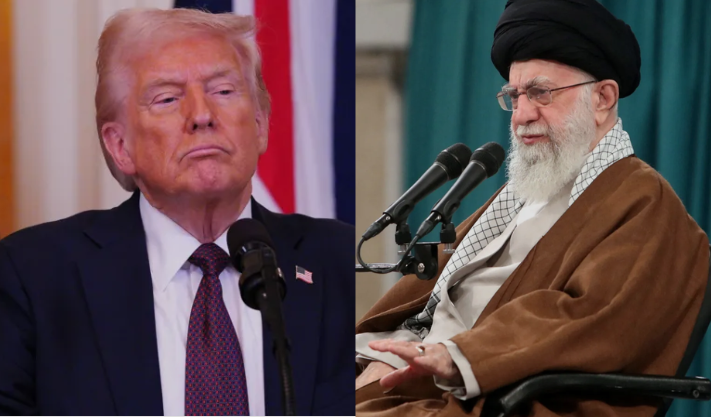
US President Donald Trump has announced a two-week pause in planned military strikes against Iran. He said this decision is linked to Iran’s willingness to reopen the Strait of Hormuz and take part in talks.
This pause in fighting between the US and Iran has created a small chance for diplomacy. However, there are no clear signs yet that the conflict is fully over.
The decision came after strong statements earlier in the day from Trump, where he warned of severe action against Iran. Later, mediators stepped in at the last moment to reduce tensions. Trump said the US had already achieved its military goals and suggested that both sides were close to reaching a bigger agreement.
Iran has also shown some willingness to cooperate, but only under certain conditions.
Its leaders have agreed to a temporary ceasefire and proposed a wider plan to end the conflict. However, they made it clear that they will only stop military actions if attacks against Iran also stop.
At the same time, the situation on the ground is still tense. Missile activity in the Gulf region and ongoing Israeli operations show that the conflict is not fully under control.
1. A temporary ceasefire
The ceasefire announced by the US is only for two weeks. It is meant to be a pause, not a full solution.
Trump called it a “double-sided ceasefire,” meaning both sides are expected to hold back. But officials from both countries have said that the agreement is conditional and can be reversed at any time.
Iran’s Supreme National Security Council also said clearly that this does not mean the war has ended. It described the ceasefire as a temporary step to allow talks to happen.
Iran warned that its forces are still ready. If there is any mistake or attack from the other side, it will respond strongly.
2. The Strait of Hormuz is very important
One of the main demands from the US is the reopening of the Strait of Hormuz.
This waterway is extremely important because about 20% of the world’s oil passes through it.
Trump has said that it must be reopened fully, safely, and immediately for the pause in strikes to continue.
Iran has agreed in principle but added conditions. It said that ships can pass safely only if there is coordination with its military and certain technical issues are managed.
Since the conflict began, Iran has used this route as a key bargaining tool.
3. Iran says ceasefire depends on fairness
Iran has not agreed to stop fighting completely.
Foreign Minister Abbas Araghchi said that Iran will stop its defensive actions only if attacks against it stop first.
This shows the deep lack of trust between the two sides. Even a small violation could break the agreement.
It is also unclear what Iran considers “defensive operations,” which leaves room for confusion and possible conflict.
4. Talks may happen in Islamabad
During this two-week pause, the US and Iran are expected to hold talks in Islamabad.
Trump said this decision came after discussions with Shehbaz Sharif and Asim Munir, who asked him to delay military action.
Iran has confirmed it will take part in these talks. This shows that both sides are at least open to diplomacy after weeks of rising tensions.
5. Iran’s 10-point peace plan
Iran has proposed a detailed 10-point plan to end the conflict.
This plan is broader than just a ceasefire. It aims for a complete and lasting peace.
Some key points include:
- A permanent stop to fighting in regions like Iran, Iraq, Lebanon, and Yemen
- Reopening of the Strait of Hormuz
- Removal of US sanctions
- Release of frozen Iranian funds
- Financial support for rebuilding damaged areas
Iran also said it is willing to commit to not developing nuclear weapons, presenting this plan as a full solution to the conflict.
6. Confusion over nuclear programme
There is a problem with Iran’s proposal that could affect negotiations.
Different versions of the plan have different wording. The Farsi version mentions “acceptance of enrichment” in Iran’s nuclear programme, but this phrase is missing in the English version.
This difference is important because nuclear activity is a key issue in the conflict.
Trump has said that stopping Iran’s nuclear programme completely is a major goal. He had earlier rejected Iran’s proposal, calling it unreliable.
This difference in wording may show that both sides still disagree on this sensitive issue.
7. Ongoing tensions in the region
Even with the ceasefire announcement, tensions remain high.
Missile activity has been reported in the Gulf region. At the same time, Israeli military operations are continuing.
This shows that the situation is still unstable and could change quickly.
8. Trust between both sides is low
The past few weeks have increased mistrust between the US and Iran.
Both sides are cautious and unsure about each other’s intentions. This makes the ceasefire fragile.
Any misunderstanding or small incident could lead to renewed fighting.
9. Major issues are still unresolved
The ceasefire does not solve the main problems behind the conflict.
Key issues include:
- Iran’s nuclear programme
- Its influence in the Middle East
- Long-standing political tensions with the US
These problems will need serious and long-term discussions to resolve.
10. The next two weeks are critical
The coming two weeks will be very important.
If talks go well, this pause could lead to a longer and more stable agreement.
But if negotiations fail or violence continues, the ceasefire could collapse quickly.
The bottom line
The US-Iran ceasefire is an important step to reduce tensions, but it is not the end of the war.
There are many conditions attached to the agreement. Military activity has not fully stopped, and major disagreements remain.
The situation is still uncertain and could change at any time.
The upcoming talks will decide whether this pause becomes a lasting peace—or just a short break in an ongoing conflict.
Also Read:-
Scaling a Service Business: 7 Lessons on People
What It Takes to Scale a Business and Earn Customer Trust
Why Smart Founders Build Before Scaling