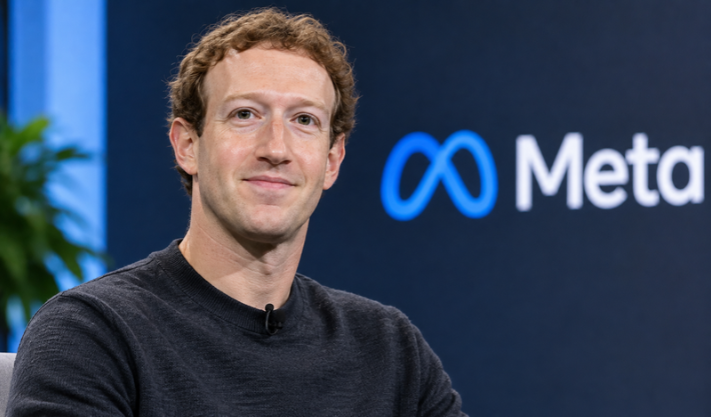
Introduction: Who Is Mark Zuckerberg?
Mark Zuckerberg is an American technology entrepreneur, computer programmer, and business leader best known as the co-founder, chairman, and chief executive officer of Meta Platforms. He is widely recognized for building Facebook into one of the world’s most influential social media platforms and transforming it into a broader technology company focused on artificial intelligence, virtual reality, augmented reality, and digital communication.
His entrepreneurial journey began during his time at Harvard University, where he developed the original version of Facebook in 2004. What started as a social networking platform for college students eventually became a global digital ecosystem connecting billions of people through Facebook, Instagram, WhatsApp, and Messenger.
Zuckerberg’s career represents a significant chapter in the development of modern technology. His decisions have influenced how people communicate, how businesses reach customers, how creators build audiences, and how information travels across the internet.
However, his leadership has also attracted criticism and public scrutiny, particularly regarding user privacy, content moderation, competition, and the influence of social media on society.
Today, Zuckerberg continues to lead Meta through a period of technological transformation, with artificial intelligence and immersive computing playing increasingly important roles in the company’s long-term strategy.
This article explores Mark Zuckerberg’s early life, education, entrepreneurial beginnings, business achievements, leadership philosophy, technological vision, challenges, and lasting influence on the global technology industry.
Early Life and Education: How Did Mark Zuckerberg Begin His Journey?
Where and When Was Mark Zuckerberg Born?
Mark Elliot Zuckerberg was born on May 14, 1984, in White Plains, New York, United States. He grew up in Dobbs Ferry, a community in Westchester County, in a family that encouraged education, curiosity, and intellectual development.
His father, Edward Zuckerberg, worked as a dentist, while his mother, Karen Zuckerberg, worked as a psychiatrist. Mark grew up alongside his three sisters, Randi, Donna, and Arielle.
Technology became an important part of his childhood. Unlike many children who developed an interest in computers through games, Zuckerberg showed an early curiosity about programming and software development.
When Did Mark Zuckerberg Start Learning Programming?
Zuckerberg began learning computer programming during his childhood. His father introduced him to Atari BASIC programming, helping him understand how computers could be used to solve problems and perform different tasks.
During his teenage years, he created a communication program called ZuckNet for his father’s dental practice. The software allowed computers in different rooms to communicate with one another.
He also developed Synapse Media Player, a music recommendation program that analyzed listening preferences and suggested songs based on user behavior.
The project attracted attention from technology companies, including Microsoft and AOL. However, Zuckerberg decided to continue his education rather than immediately pursue opportunities in the corporate technology industry.
These early experiences helped him develop programming skills, analytical thinking, and an understanding of how software could improve everyday communication.
What Did Mark Zuckerberg Study at Harvard University?
In 2002, Zuckerberg enrolled at Harvard University, where he studied computer science and psychology.
Harvard provided an environment where he could combine his technical interests with an understanding of human behavior. This combination later became important in designing social networking products.
While studying at Harvard, he worked on several experimental software projects. Some attracted attention because they demonstrated how quickly digital tools could influence student behavior and online interactions.
One of these projects eventually led to the creation of Facebook.
The Founding of Facebook: How Did Mark Zuckerberg Build a Global Social Network?
When Was Facebook Founded?
Facebook was launched on February 4, 2004, while Zuckerberg was a sophomore at Harvard University.
Initially called TheFacebook, the platform was designed as an online directory that allowed Harvard students to create profiles, connect with classmates, and learn more about people within their university community.
The concept was relatively straightforward: provide students with a digital space where they could identify one another and build social connections.
However, the platform quickly attracted attention beyond its original audience.
How Did Facebook Expand Beyond Harvard?
After its initial success, Facebook expanded to additional universities across the United States.
The growing student community helped the platform develop through word-of-mouth recommendations. Students invited friends, shared profiles, and encouraged others to join.
As demand increased, Facebook expanded beyond university networks.
In 2006, the platform opened registration to people with eligible email addresses, allowing a much broader audience to participate.
This decision significantly changed Facebook’s growth potential.
Instead of remaining a university networking website, Facebook became a social media platform for people from different backgrounds, countries, and age groups.
Why Was Facebook Different From Other Social Networking Websites?
Facebook introduced a combination of features that made online networking more accessible and interactive.
Its early advantages included:
- Personal profiles that represented individual identities.
- Friend connections that created digital social networks.
- News Feed updates that displayed relevant activity.
- Photo sharing and comments.
- Groups and community discussions.
- Messaging and event-related features.
The platform gradually evolved into an important part of everyday digital communication.
Its success also demonstrated how social networks could become valuable business platforms by connecting users, advertisers, developers, and organizations.
From Facebook to Meta: Why Did Mark Zuckerberg Change the Company’s Name?
When Did Facebook Become Meta Platforms?
In October 2021, Facebook announced that its parent company would be renamed Meta Platforms.
The change reflected Zuckerberg’s broader vision for the future of digital communication and computing.
Facebook had already expanded beyond its original social networking product. Its business included Instagram, WhatsApp, Messenger, virtual reality hardware, and other technology initiatives.
The new corporate identity was intended to represent a company developing a wider range of digital experiences.
Meta’s mission focuses on building the future of human connection and the technology that makes it possible.
What Does Meta Platforms Do?
Meta Platforms operates a collection of digital communication, social networking, and technology products.
Its major products include:
Facebook: A social networking platform for sharing updates, connecting with communities, discovering content, and supporting business activities.
Instagram: A visual social media platform focused on photos, videos, Stories, Reels, messaging, and creator communities.
WhatsApp: A messaging service used for personal communication, business conversations, voice calls, and international connectivity.
Messenger: A messaging platform that supports private conversations, group communication, and voice and video calls.
Threads: A social networking platform designed around text-based updates, public conversations, and creator engagement.
Meta AI: An artificial intelligence assistant designed to help users find information, generate content, and complete everyday tasks.
Meta Quest: A virtual reality product ecosystem that supports immersive gaming, entertainment, fitness, and social experiences.
Together, these products allow Meta to participate in several important areas of the digital economy.
Mark Zuckerberg’s Leadership at Meta Platforms
What Is Mark Zuckerberg’s Role at Meta?
Mark Zuckerberg serves as Meta’s founder, chairman, and chief executive officer.
His responsibilities include setting the company’s overall direction, determining product priorities, guiding major technology investments, and overseeing its long-term business strategy.
As CEO, he plays a central role in deciding how Meta develops its platforms and responds to changes in the technology industry.
His leadership approach is closely connected to product development, engineering, experimentation, and long-term innovation.
What Makes Mark Zuckerberg’s Leadership Style Different?
Zuckerberg is known for maintaining a strong focus on product development and technological innovation.
Rather than concentrating exclusively on short-term financial performance, he has frequently supported investments in technologies that may take years to become commercially successful.
His leadership philosophy emphasizes several important areas:
Long-term thinking: Investing in products and technologies that could become important in the future.
Engineering-driven decisions: Using technical research, experimentation, and product development to solve complex problems.
Continuous improvement: Updating products based on user behavior, feedback, and changing market conditions.
Organizational adaptation: Restructuring teams and priorities when new technologies create different business opportunities.
Global connectivity: Developing services that help people communicate across geographical and cultural boundaries.
This approach has helped Meta remain influential in the technology industry, although some strategic decisions have generated significant debate.
How Does Zuckerberg Influence Meta’s Business Strategy?
Zuckerberg has considerable influence over Meta’s product roadmap and investment priorities.
The company operates in an environment where artificial intelligence, advertising technology, digital content, messaging, and immersive computing are increasingly interconnected.
His strategy involves strengthening existing platforms while developing new technologies that could shape future digital experiences.
For example, artificial intelligence can improve content recommendations, advertising performance, automated customer interactions, and creative tools.
At the same time, investments in smart glasses and virtual reality reflect the company’s interest in developing new ways for people to interact with technology.
Mark Zuckerberg and Artificial Intelligence: What Is Meta’s AI Vision?
Why Is Artificial Intelligence Important to Mark Zuckerberg?
Artificial intelligence has become one of the most important priorities in Zuckerberg’s technology strategy.
He views AI as a technology capable of changing how people communicate, work, learn, create, and interact with digital services.
Meta uses artificial intelligence throughout its existing platforms.
For example, AI systems help recommend content, personalize user experiences, identify potentially harmful material, and improve advertising performance.
The company is also developing generative AI products that allow users to interact with intelligent assistants and create digital content.
What Is Meta AI?
Meta AI is the company’s artificial intelligence assistant.
It is designed to answer questions, provide information, assist with creative tasks, and help users interact with technology through conversational experiences.
Meta has integrated AI capabilities into several of its products and has also developed standalone AI experiences.
Its Llama family of AI models supports research, development, and applications across the broader AI ecosystem.
The company’s AI strategy also includes developing advanced models and infrastructure to support increasingly capable systems.
What Is Mark Zuckerberg’s Vision of Personal Superintelligence?
Zuckerberg has discussed the idea of personal superintelligence as a future direction for artificial intelligence.
The concept involves creating highly capable AI systems that can assist individuals with their personal and professional goals.
Rather than limiting AI to answering simple questions, the broader vision involves intelligent systems that understand user needs, support complex tasks, and provide personalized assistance.
Potential applications include:
- Personalized education and learning.
- Business productivity and automation.
- Creative content development.
- Personal research and information discovery.
- Communication and translation.
- Everyday decision-making support.
However, achieving superintelligence remains an uncertain scientific and technological challenge. It is a long-term ambition rather than an established capability.
The Metaverse: What Is Mark Zuckerberg Trying to Build?
What Is the Metaverse?
The metaverse refers to a collection of interconnected digital environments where people can interact through virtual representations, immersive experiences, and digital technologies.
These environments can support entertainment, communication, education, professional collaboration, and virtual activities.
Zuckerberg believes immersive computing could become an important part of the next generation of digital interaction.
Instead of communicating only through traditional computer and smartphone screens, people may eventually interact through virtual and augmented reality environments.
Why Did Zuckerberg Invest in Virtual Reality?
Meta’s investment in virtual reality reflects its belief that future computing experiences may become more immersive.
The acquisition of Oculus VR in 2014 represented an important step in this strategy.
Oculus later became part of Meta’s broader Reality Labs business, which develops virtual reality hardware, augmented reality technologies, and related software.
The Meta Quest product family allows users to access immersive entertainment, gaming, fitness, and social experiences.
However, widespread adoption of virtual reality continues to face challenges, including hardware costs, comfort, accessibility, and the availability of compelling applications.
Is the Metaverse Still Part of Meta’s Future Strategy?
Yes. The metaverse remains part of Meta’s long-term technology vision, although the company’s immediate investment priorities also include artificial intelligence and wearable devices.
Meta is exploring how virtual reality, augmented reality, AI, and smart glasses can work together.
The company’s goal is to create new ways for people to interact with digital information without depending entirely on conventional screens.
Its Reality Labs division supports these developments through hardware, software, and research initiatives.
Mark Zuckerberg’s Business Achievements and Global Influence
What Are Mark Zuckerberg’s Biggest Business Achievements?
Zuckerberg’s achievements extend beyond creating Facebook. He has built and managed a technology company with a portfolio of products used across different parts of everyday life.
Some of his most important achievements include:
Building Facebook into a global platform: He transformed a university networking website into one of the world’s most recognized social media platforms.
Expanding Meta’s digital ecosystem: The company brought together major platforms, including Instagram, WhatsApp, and Messenger, under a broader corporate structure.
Developing mobile-first social experiences: Meta’s products helped popularize mobile photo sharing, short-form video, social messaging, and digital communities.
Expanding into artificial intelligence: The company has made substantial investments in AI models, computing infrastructure, and intelligent assistants.
Advancing virtual and augmented reality: Through Reality Labs, Meta continues to develop immersive technology and wearable computing devices.
Supporting the creator economy: Facebook and Instagram have provided creators, influencers, and businesses with tools to develop audiences and monetize digital content.
These achievements demonstrate Zuckerberg’s ability to identify technological opportunities and turn them into large-scale commercial products.
How Has Mark Zuckerberg Changed the Global Business Environment?
Zuckerberg has influenced the way businesses approach marketing, communication, and customer relationships.
Before social media became widespread, companies depended heavily on traditional advertising, television, newspapers, and direct marketing.
Facebook and Instagram introduced new ways for businesses to reach audiences through targeted advertising, organic content, creator partnerships, and online communities.
Today, companies of different sizes can use Meta’s platforms to:
- Promote products and services internationally.
- Build relationships with customers.
- Generate business inquiries and sales leads.
- Share educational and promotional content.
- Develop recognizable brand identities.
- Communicate directly with their audiences.
This transformation has created opportunities for startups, small businesses, entrepreneurs, and established organizations.
It has also changed the competitive landscape of digital advertising.
Mark Zuckerberg’s Wealth and Business Success
How Did Mark Zuckerberg Become a Billionaire?
Mark Zuckerberg became a billionaire primarily through his ownership of Meta Platforms.
When Facebook experienced rapid growth, its commercial value increased significantly. The company’s expansion into advertising, mobile applications, and international markets helped establish it as a major technology business.
Facebook’s initial public offering in 2012 marked another important milestone in its financial development.
As the company’s valuation increased, Zuckerberg’s ownership stake became one of the most valuable assets associated with his personal wealth.
His financial position is closely connected to Meta’s stock performance, business results, and long-term growth prospects.
What Is Mark Zuckerberg’s Main Source of Income?
The primary source of Zuckerberg’s wealth is his ownership of Meta shares.
Unlike traditional business executives who may depend primarily on annual salaries and bonuses, much of his financial value comes from his equity in the company.
Meta generates most of its revenue through advertising across its family of applications.
Advertisers pay to reach audiences through platforms such as Facebook and Instagram, using targeting and measurement tools supported by the company’s technology.
Meta’s business model has helped it generate substantial revenue while allowing users to access many of its services without paying subscription fees.
Mark Zuckerberg’s Personal Life and Philanthropy
Who Is Mark Zuckerberg’s Wife?
Mark Zuckerberg is married to Priscilla Chan.
The couple met while studying at Harvard University and married in 2012.
Chan is a pediatrician and philanthropist who has been involved in several initiatives focused on education, healthcare, and scientific research.
They have three daughters and generally maintain a relatively private family life despite their public profiles.
What Is the Chan Zuckerberg Initiative?
The Chan Zuckerberg Initiative (CZI) is a philanthropic organization established by Zuckerberg and his wife in 2015.
Its work focuses on using technology, research, and collaboration to address important global challenges.
The initiative supports several areas, including:
Scientific research: Supporting researchers and technological developments that could improve human health.
Education: Expanding access to educational opportunities and personalized learning.
Human potential: Supporting projects that help individuals and communities improve their opportunities.
Community development: Working with organizations that address social and economic challenges.
The initiative reflects Zuckerberg and Chan’s interest in applying technology and financial resources to long-term social issues.
Why Is Philanthropy Important to Zuckerberg’s Legacy?
Philanthropy represents another dimension of Zuckerberg’s influence beyond the technology industry.
His charitable activities reflect a belief that innovation can contribute to solving complex problems.
By supporting scientific research, education, and community initiatives, he has helped direct attention and resources toward areas that may benefit from technological progress.
However, the long-term effectiveness of large philanthropic initiatives depends on measurable outcomes, accountability, and the ability to create sustainable improvements.
Challenges and Controversies in Mark Zuckerberg’s Career
What Challenges Has Mark Zuckerberg Faced as Meta CEO?
Despite Meta’s commercial success, Zuckerberg has faced significant challenges throughout his leadership career.
Managing a global social media company involves complex responsibilities related to technology, public communication, regulation, and user protection.
Some of the most important challenges include:
User privacy: Meta has faced criticism and regulatory scrutiny over how personal information is collected, processed, and used.
Content moderation: Managing harmful content, misinformation, harassment, and inappropriate material across global platforms remains difficult.
Competition: Meta competes with major technology companies for users, advertisers, creators, and AI talent.
Government regulation: The company operates under different privacy, competition, advertising, and digital safety regulations across international markets.
Artificial intelligence risks: Developing advanced AI systems creates questions about safety, transparency, reliability, and responsible deployment.
These challenges demonstrate that operating a large technology platform involves responsibilities beyond product innovation and financial performance.
Why Has Facebook Faced Privacy Concerns?
Privacy has been one of the most significant issues associated with Facebook and Meta.
The company’s business model relies heavily on advertising, which involves processing information to help advertisers reach relevant audiences.
Over the years, questions have been raised about data collection, third-party access, transparency, and the protection of personal information.
One widely discussed example was the Cambridge Analytica controversy, which brought international attention to Facebook’s data practices.
The controversy increased public awareness of digital privacy and encouraged broader discussions about how technology companies should manage personal information.
It also contributed to greater regulatory attention and pressure for stronger data protection standards.
How Has Zuckerberg Responded to Criticism?
Zuckerberg and Meta have responded to criticism through public statements, policy changes, technology investments, and modifications to platform controls.
The company has introduced additional privacy settings, content moderation systems, safety measures, and tools designed to provide users with greater control over their experiences.
Nevertheless, the effectiveness of these measures continues to be debated by regulators, researchers, policymakers, and users.
For Zuckerberg, balancing technological innovation with public trust remains an important leadership responsibility.
Mark Zuckerberg’s Future Vision for Technology
What Is Mark Zuckerberg’s Vision for the Future of Social Media?
Zuckerberg’s vision extends beyond traditional social networking.
He believes digital platforms will increasingly combine social interaction, artificial intelligence, video, messaging, and immersive technology.
Social media is already evolving from a system primarily based on friends and followers into an environment where recommendation algorithms help users discover content from creators, communities, and businesses.
Artificial intelligence is expected to play an increasingly important role in this transformation.
Future social platforms may provide more personalized experiences, advanced creative tools, intelligent recommendations, and new communication methods.
How Will AI Change Meta’s Future?
Artificial intelligence is expected to influence nearly every major area of Meta’s operations.
Its potential applications include:
- More relevant content recommendations.
- Improved advertising targeting and performance.
- AI-powered customer service.
- Automated creative and editing tools.
- Personalized digital assistants.
- Advanced language translation.
- More natural interactions with wearable devices.
Meta is also investing in the infrastructure needed to develop and operate increasingly advanced AI systems.
The company’s strategy includes AI research, computing capacity, data centers, and the development of its own models.
These investments could influence the company’s competitive position in the global technology industry.
What Role Will Smart Glasses Play in Zuckerberg’s Technology Strategy?
Smart glasses are an important part of Meta’s efforts to develop wearable computing.
Unlike traditional virtual reality headsets, smart glasses can be designed for everyday activities.
They can combine cameras, audio, voice interactions, and artificial intelligence in a familiar wearable form.
Meta’s Ray-Ban Meta glasses demonstrate how AI assistants can be integrated into consumer devices.
Potential applications include hands-free communication, photography, information discovery, and assistance with everyday tasks.
In the longer term, augmented reality could allow users to interact with digital information through their field of vision.
This approach represents another possible stage in the evolution of personal computing.
What Are the Biggest Opportunities and Risks for Meta?
Meta has several opportunities as technology continues to evolve.
Artificial intelligence could improve existing products and create new revenue opportunities. Wearable devices could establish new consumer technology categories. Messaging platforms could support more business communication and digital transactions.
However, these opportunities also involve risks.
High infrastructure costs, strong competition, regulatory pressure, privacy expectations, and uncertain consumer demand could affect the company’s future performance.
The ability to balance investment, innovation, profitability, and responsible technology development will be important to Meta’s long-term success.
Leadership Lessons From Mark Zuckerberg’s Entrepreneurial Journey
What Can Entrepreneurs Learn From Mark Zuckerberg?
Zuckerberg’s journey offers several lessons for entrepreneurs, startup founders, and business professionals.
Start by solving a real problem.
Facebook addressed a straightforward need: helping people connect and learn more about one another. Successful businesses often begin with a clear understanding of customer needs.
Think beyond the initial idea.
Facebook began as a university networking platform, but its growth came from expanding the original concept into a global service.
Learn continuously.
Zuckerberg’s background in programming and technology demonstrates the importance of continuously developing new skills.
Invest in innovation.
Businesses that adapt to technological changes may be better positioned to compete in evolving markets.
Build strong teams.
Large-scale products require collaboration among engineers, designers, marketers, researchers, and business professionals.
Accept that leadership involves criticism.
Building a major company brings public attention and difficult decisions. Effective leadership requires evaluating criticism and responding responsibly.
Why Is Mark Zuckerberg Considered an Influential Technology Entrepreneur?
Zuckerberg is considered influential because his work has affected several major areas of modern life.
He helped popularize social networking on a global scale, influenced digital advertising, supported the growth of creator-driven businesses, and directed significant investment toward artificial intelligence and immersive computing.
His career also demonstrates how technology entrepreneurs can influence consumer behavior, communication patterns, business models, and public discussions about digital responsibility.
His influence is not limited to Meta’s financial performance. It also comes from the broader changes his products and decisions have introduced into society.
Frequently Asked Questions About Mark Zuckerberg
Who Is Mark Zuckerberg?
Mark Zuckerberg is an American entrepreneur, programmer, and business executive. He co-founded Facebook in 2004 and currently serves as the founder, chairman, and CEO of Meta Platforms.
What Is Mark Zuckerberg Famous For?
He is famous for creating Facebook, developing one of the world’s largest social media businesses, and leading Meta’s expansion into artificial intelligence, virtual reality, and wearable technology.
How Old Is Mark Zuckerberg?
Mark Zuckerberg was born on May 14, 1984. He is 42 years old as of November 2026.
Where Is Mark Zuckerberg From?
He was born in White Plains, New York, United States, and grew up in Dobbs Ferry, New York.
Did Mark Zuckerberg Graduate From Harvard?
No. Zuckerberg attended Harvard University, where he studied computer science and psychology, but left before completing his degree to focus on developing Facebook.
When Did Mark Zuckerberg Create Facebook?
Facebook was launched on February 4, 2004, initially for students at Harvard University.
Who Founded Facebook With Mark Zuckerberg?
Facebook was founded by Mark Zuckerberg alongside Dustin Moskovitz, Chris Hughes, and Eduardo Saverin.
What Is Mark Zuckerberg’s Position at Meta?
He is the founder, chairman, and chief executive officer of Meta Platforms. He oversees the company’s overall direction and product strategy.
Why Did Facebook Change Its Name to Meta?
Facebook changed its parent company’s name to Meta Platforms in October 2021 to reflect its broader focus on social technology, virtual reality, augmented reality, and the metaverse.
What Companies and Platforms Does Meta Own?
Meta’s major platforms and products include Facebook, Instagram, WhatsApp, Messenger, Threads, Meta AI, and Meta Quest.
Is Mark Zuckerberg Involved in Artificial Intelligence?
Yes. Zuckerberg leads Meta’s strategic efforts in artificial intelligence, including AI research, large language models, generative AI products, and advanced computing infrastructure.
What Is Mark Zuckerberg’s Net Worth?
Zuckerberg’s net worth fluctuates with the market value of his Meta shares and other investments. He is consistently ranked among the world’s wealthiest individuals, although his exact net worth changes over time.
Is Mark Zuckerberg Married?
Yes. He married Priscilla Chan in 2012. They have three daughters.
What Is Mark Zuckerberg’s Philanthropic Organization?
He and his wife established the Chan Zuckerberg Initiative in 2015 to support scientific research, education, and other social initiatives.
What Is Mark Zuckerberg’s Biggest Business Achievement?
One of his most significant achievements is transforming Facebook from a university networking website into a global social media platform and building Meta into a major technology company.
What Is Mark Zuckerberg’s Future Goal?
His broader vision includes advancing artificial intelligence, developing personal AI assistants, improving digital communication, and building immersive computing experiences through virtual reality, augmented reality, and wearable devices.
Conclusion: Mark Zuckerberg’s Lasting Impact on the Technology Industry
Mark Zuckerberg’s journey from a young programmer at Harvard University to the founder and CEO of Meta Platforms represents one of the most influential entrepreneurial stories of the modern technology era.
His creation of Facebook changed how people communicate, share information, and build relationships online. Through the expansion of Meta, he helped establish a technology ecosystem that connects individuals, businesses, creators, and communities across international markets.
However, his career is not defined by business growth alone. His leadership has also been associated with important discussions about privacy, digital responsibility, artificial intelligence, competition, and the influence of technology on society.
As Meta continues to invest in AI, wearable devices, virtual reality, and next-generation computing, Zuckerberg’s leadership will remain closely connected to the company’s ability to adapt to technological change.
Also Read:-
Andy Jassy: Amazon CEO, Career, Leadership and Vision
Sundar Pichai: The Leader Shaping Google’s AI Future
Satya Nadella: The Visionary Leader Behind Microsoft