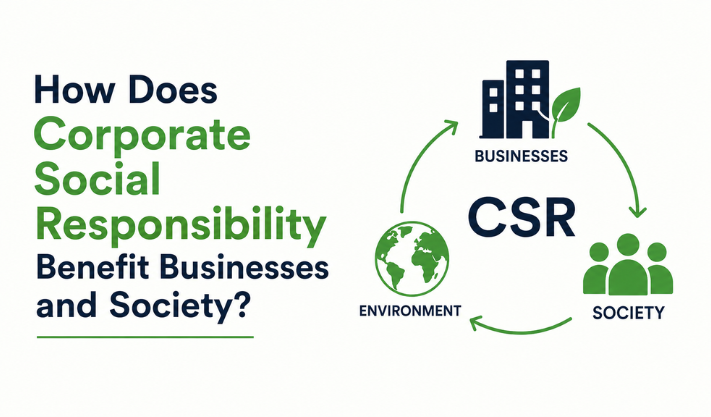
Corporate Social Responsibility (CSR) has become an essential part of modern business strategy. Today, companies are expected not only to generate profits but also to contribute positively to society, protect the environment, and operate ethically.
If you are searching for how corporate social responsibility benefits businesses and society, this FAQ guide explains CSR meaning, importance, advantages, examples, challenges, and how it creates value for companies, employees, customers, and communities.
What Is Corporate Social Responsibility (CSR)?
Corporate Social Responsibility (CSR) refers to the way businesses take responsibility for their impact on society and the environment.
A socially responsible company considers how its decisions affect:
- Employees
- Customers
- Communities
- The environment
- Stakeholders
CSR is not limited to making profits. It includes ethical business practices, sustainability initiatives, community involvement, and responsible decision-making.
Common CSR activities include:
- Reducing carbon emissions
- Supporting charitable causes
- Improving workplace conditions
- Promoting diversity and inclusion
- Using sustainable resources
- Investing in community development
Why Is Corporate Social Responsibility Important?
CSR is important because businesses influence the world around them. Companies use resources, employ people, create products, and interact with communities.
A strong CSR strategy helps businesses achieve financial success while creating positive social and environmental impact.
Today’s customers and employees prefer companies that:
- Act ethically
- Protect the environment
- Support social causes
- Treat employees fairly
CSR helps businesses build stronger relationships with the people who trust and support them.
How Does CSR Benefit Businesses?
Corporate Social Responsibility provides several advantages for businesses. It helps companies improve their reputation, increase customer loyalty, attract employees, reduce risks, and achieve long-term growth.
The major business benefits of CSR include:
Can CSR Improve Brand Reputation?
Yes, CSR can significantly improve a company’s reputation.
Businesses that support social and environmental causes often create a positive public image. Companies that demonstrate responsibility and transparency are more likely to earn customer trust.
A strong reputation can lead to:
- Increased customer loyalty
- Positive media coverage
- Higher brand awareness
- Better stakeholder relationships
In competitive markets, responsible businesses often gain a stronger position.
How Does CSR Increase Customer Loyalty?
Customers today care about more than just product price and quality. Many consumers prefer brands that match their personal values.
CSR initiatives can increase customer loyalty by showing commitment to:
- Environmental protection
- Social equality
- Community development
- Ethical manufacturing
When customers connect with a company’s values, they are more likely to continue supporting that brand.
Can CSR Help Companies Attract and Retain Employees?
Yes, CSR plays an important role in employee attraction and retention.
Many employees want to work with organizations that create a positive impact.
Companies with strong CSR programs often experience:
- Higher employee satisfaction
- Greater motivation
- Strong workplace culture
- Better employee retention
Employees often feel more engaged when they know their work contributes to meaningful goals.
How Does CSR Improve Employee Engagement?
CSR increases employee engagement by giving workers opportunities to participate in meaningful activities.
Examples include:
- Volunteer programs
- Community projects
- Sustainability campaigns
- Charity initiatives
Employees involved in positive change often develop a stronger connection with their organization.
How Can CSR Help Businesses Save Money?
CSR is not only about spending money. Many responsible business practices can reduce costs and improve efficiency.
Examples include:
- Energy-saving systems
- Waste reduction programs
- Sustainable supply chains
- Efficient resource management
Environmental responsibility can lower operating costs while protecting natural resources.
Can CSR Improve Business Performance?
Yes, CSR can support long-term business success.
Responsible companies often benefit from:
- Stronger customer relationships
- Improved employee performance
- Reduced business risks
- Increased innovation
- New market opportunities
CSR helps businesses focus on sustainable growth instead of only short-term profits.
How Does CSR Benefit Society?
Corporate Social Responsibility creates benefits beyond the company.
CSR supports society through:
- Community development
- Environmental protection
- Job creation
- Ethical business practices
- Social improvement
Businesses have the resources and influence to support important social goals.
How Does CSR Help Communities?
Many companies create CSR programs to support local communities.
Examples of community-focused CSR activities include:
- Education programs
- Healthcare support
- Donations
- Skill development
- Local infrastructure projects
These initiatives improve quality of life and create new opportunities.
How Does CSR Protect the Environment?
Environmental responsibility is one of the most common areas of CSR.
Businesses can reduce their environmental impact by:
- Using renewable energy
- Reducing waste
- Recycling materials
- Conserving water
- Lowering emissions
- Developing sustainable products
Environmental CSR helps protect the planet for future generations.
What Are Examples of Corporate Social Responsibility?
CSR examples depend on the industry and business goals.
Environmental CSR Examples
- Pollution reduction
- Eco-friendly packaging
- Climate action programs
- Sustainable production
Ethical CSR Examples
- Fair employee treatment
- Responsible sourcing
- Transparent business practices
Philanthropic CSR Examples
- Charity donations
- Community support
- Non-profit partnerships
Economic CSR Examples
- Creating jobs
- Supporting local businesses
- Investing in innovation
How Does CSR Build Customer Trust?
Trust is an important factor in business success.
Customers trust companies that:
- Communicate honestly
- Keep promises
- Act responsibly
- Address social concerns
CSR shows customers that a company understands its impact and takes responsibility.
Does CSR Help With Risk Management?
Yes, CSR can help businesses reduce risks.
Responsible companies often have better systems for managing:
- Environmental risks
- Social issues
- Workplace problems
- Reputation risks
CSR encourages companies to identify challenges early and create better solutions.
How Does CSR Support Sustainable Development?
CSR supports sustainable development by helping businesses meet present needs without harming future generations.
Companies support sustainability through:
- Sustainable manufacturing
- Ethical supply chains
- Environmental protection
- Social investment
CSR connects business growth with long-term global development.
What Are the Challenges of CSR?
Although CSR has many benefits, companies may face challenges such as:
- High initial investment costs
- Measuring social impact
- Maintaining transparency
- Avoiding false claims
- Balancing profit and responsibility
CSR programs must be genuine and supported by real actions.
What Is Greenwashing in CSR?
Greenwashing happens when companies claim to be environmentally responsible without making meaningful improvements.
Examples include:
- False sustainability claims
- Misleading environmental advertising
- Hiding negative environmental impacts
Authentic CSR requires transparency, measurable results, and real commitment.
How Can Companies Create an Effective CSR Strategy?
A successful CSR strategy includes:
- Identify important social and environmental issues.
- Set clear CSR goals.
- Involve employees and stakeholders.
- Measure results.
- Communicate progress honestly.
- Improve programs continuously.
CSR works best when it becomes part of the company’s overall business strategy.
FAQs
What is corporate social responsibility in simple words?
Corporate Social Responsibility means businesses take responsibility for their impact on people, communities, and the environment while operating ethically.
Why is CSR important for businesses?
CSR improves brand reputation, builds customer trust, attracts employees, reduces risks, and supports long-term business growth.
How does CSR help society?
CSR helps society through community development, environmental protection, ethical practices, and social improvement programs.
Can CSR increase profits?
Yes, CSR can improve profitability by increasing customer loyalty, employee performance, efficiency, and brand value.
What are the four types of CSR?
The four main types of CSR are environmental responsibility, ethical responsibility, philanthropic responsibility, and economic responsibility.
Is CSR only about donations?
No. CSR includes donations, but it also involves sustainable operations, ethical decisions, employee welfare, and environmental responsibility.
Final Thoughts
Corporate Social Responsibility benefits both businesses and society by creating a balance between economic growth and positive social impact.
Companies that follow CSR practices can build stronger brands, improve employee satisfaction, gain customer trust, and support healthier communities.
At the same time, society benefits from environmental protection, ethical business practices, and community development.
In today’s competitive world, CSR is no longer just an optional activity. It has become an important part of responsible, sustainable, and successful business growth.
Also Read:-
Bugatti Centodieci: Ultimate Guide to the Rare Hypercar
How to Choose the Perfect Lingerie for Your Body Type
Bugatti Chiron Profilée: The World’s Rarest Hypercar