In this in‑depth conversation, David T. Rosen, an entrepreneur, inventor, disruptor and author of six books including Own Your Happiness and Perspective Is Everything, shares the ideas that have driven him through a lifetime of invention, reinvention and economic disruption. From an early age he believed that everyone is born with a mission and realized that his own was to help people, particularly in money matters, so they could live with more dignity and choice.
His inventions form a single through‑line: turn customers into partners, crowds into capital and cooperation into a new kind of income.
From the WOW Card in 1985 to the WOW Mall in 1995, from 5 Star Exchange in 2001 to Cooperative Crowdfunding, Cooperative Universal Income and the CoopEcoSystem, Rosen’s story reads less like a series of isolated ventures and more like one long effort to build systems that make money fairer, more accessible and more cooperative for ordinary people.
The Interview
Early Entrepreneurship
The World Times: Your entrepreneurial journey began very early. How did those first experiences shape the way you think today?
David T. Rosen:“My journey started in Toronto when I was a child, first with a snow‑shoveling business and then with a paper route. Those experiences taught me that opportunity is rarely handed to you. Most often it is hidden inside ordinary problems, waiting for someone who is willing to solve them.
“What stayed with me was the realization that entrepreneurship is not a career category. It is a way of seeing. You learn to notice value gaps, unmet needs and systems that could work better. That mindset shaped everything I built afterward.”
Learning Through Failure and Reinvention
The World Times: Your story includes major breakthroughs and serious setbacks. What did adversity teach you?
David T. Rosen:“I have had more setbacks than most people know, and I do not hide that. I have lost businesses, endured health challenges and at points in life experienced homelessness. Those periods changed me because they stripped away illusion and forced me to understand what actually creates resilience.
“I learned that failure is not the opposite of success. It is often the tuition. If you study it honestly, it becomes design intelligence. That is why I kept building. Every collapse taught me how to make the next system stronger, fairer and more useful to ordinary people.”
The WOW Card: Loyalty as a Rail
The World Times: You say your first major disruption was the WOW Card. What made it important?
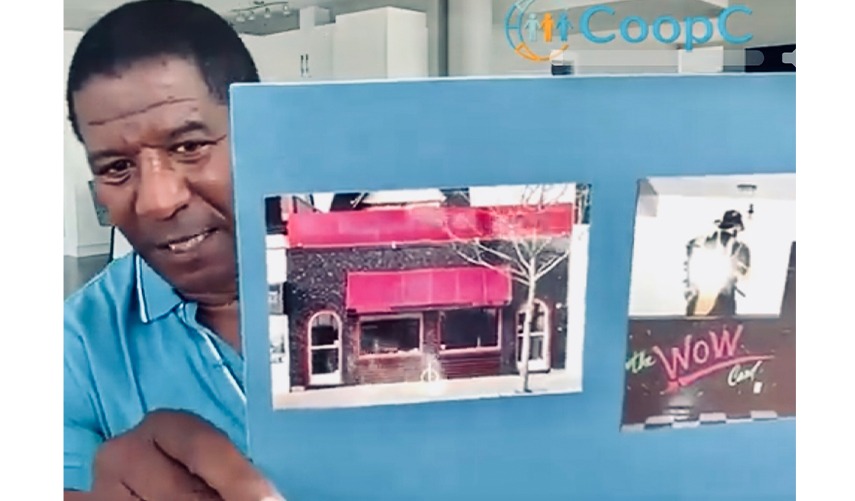
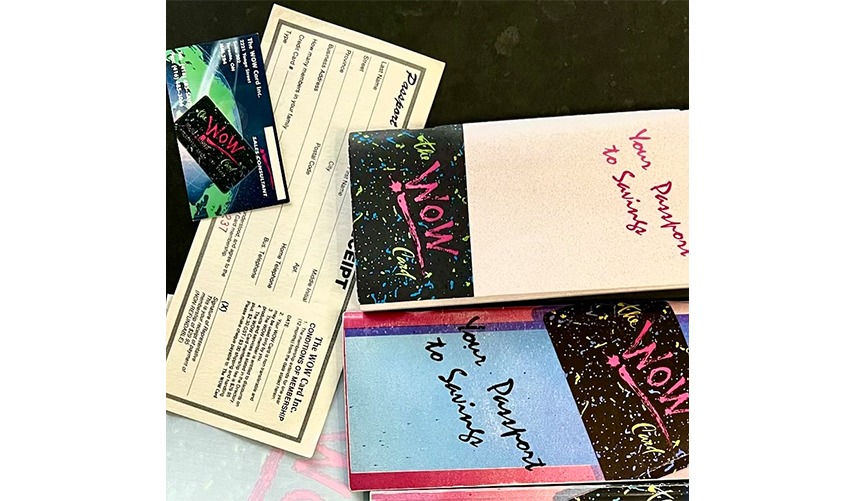
David T. Rosen:In 1985 I created the WOW Card, the world’s first multi‑use loyalty card. It was not just a discount card. It was a new retail rail. It rewarded repeat customer behaviour and used a magnetic strip to track shopping activity in a way that anticipated the data‑driven loyalty economy that later became standard.
“Today nearly every major retailer, bank, airline and digital platform uses some form of loyalty or rewards logic. Back then the idea was simple but disruptive: reward the customer immediately, learn from behaviour and turn repeat business into a measurable asset. That changed how merchants could think about relationships, not just transactions.”
The WOW Mall: Seeing the Internet as an Economy
The World Times: Then came the internet. What were you trying to build in the 1990s?
David T. Rosen:“In 1995 I built the WOW Mall, which was the world’s first Internet shopping mall. At the time most people still saw the internet as an information channel. I saw it as a commerce environment. I wanted to bring many retailers together into one shared online destination and show that the internet could become a place where people discovered, compared and bought products.
“That mattered because it helped point commerce toward where it eventually went. Today online marketplaces are normal. In the mid‑1990s that vision was early. The deeper lesson was that when a technology first appears most people use it to imitate the past. Real disruption happens when you design for what it can become.”
Inventing Crowdfunding
The World Times: You have been very clear that your 2001 system came before crowdfunding became a mainstream term. What exactly did you build?
David T. Rosen:“In March 2001 I launched 5 Star Exchange, a global online peer‑to‑peer money exchange system that was the first true online crowdfunding architecture. At the time I did not call it crowdfunding because that word had not yet entered the mainstream. I described it as a peer‑to‑peer money exchange. Structurally that is what it was: people using the internet to help fund one another directly.
“The system was built to be global, scalable and usable by everyday people, not only institutions or accredited investors. It grew rapidly, involved participants across many countries and showed that distributed online communities could move money at scale long before the term ‘crowdfunding’ was widely popularised. My view is straightforward: later platforms helped popularise the category, but the underlying architecture I created was already operational.”
Beyond One‑Time Campaigns: Cooperative Crowdfunding
The World Times: How did that invention evolve into Cooperative Crowdfunding?
David T. Rosen:“Traditional crowdfunding was an important step, but it usually remained campaign‑based. A person raised money for one project, one need, one launch and then the cycle ended. I wanted to solve the deeper issue of continuity. How do people not only raise capital once but participate in a system where support can circulate and become ongoing?
“That led to Cooperative Crowdfunding, which I formalised much later through CoopCrowd and related platforms. The purpose was to turn isolated fundraising into a cooperative framework where people are not just donors or backers. They can become participants in a larger income and opportunity system. That is very different from asking the crowd for a one‑time favour.”
Cooperative Universal Income (CUI)
The World Times: You now speak about Cooperative Universal Income, or CUI. What is it?
David T. Rosen:“Cooperative Universal Income is the next logical step in the same progression. If crowdfunding disrupted access to capital, CUI is meant to address access to recurring income. It is designed around the idea that people should be able to generate income cooperatively through structured relationships and participation, rather than relying only on jobs, gigs, government programmes or unstable business models.
“I do not position it as theory. I position it as architecture. Through the CoopEcoSystem and rails such as CoopIncome, Coop5050, CoopCrowd, CoopBe, CoopBusiness, CoopAI, My Green Room and Coop Digital Assets, the goal is to create pathways toward what I call POP Income, or Predictable Ongoing Passive Income. The objective is to help people build ongoing income in a lawful, cooperative, globally scalable way.”
The Cooperative Age
The World Times: You often use the phrase “The Cooperative Age.” What does that mean to you?
David T. Rosen:“The Cooperative Age describes a larger economic shift. For generations most systems were organised around gatekeepers. Capital was controlled by institutions. Opportunity was distributed unevenly. Income depended heavily on employment structures that are now under pressure from automation, centralisation and platform dependency.
“What is emerging instead is an era in which technology allows people to cooperate at scale. We already see versions of that in marketplaces, peer‑to‑peer systems, creator economies and community‑based funding. My work has been about giving that shift structure, so cooperation is not just a cultural idea but an economic engine.”

The Author Behind the Systems
The World Times: You are not only an inventor and economic systems architect, you have also written several books. How do your books connect to the work you are doing with cooperation and income?
David T. Rosen:“Writing has always been my way of slowing the movie down. I have built technical systems, but the real shift is psychological. That is why I have written six books, including Own Your Happiness and Perspective Is Everything. They are about the inner architecture that has to change if people are going to use new financial architecture well.
“In Own Your Happiness I focus on reclaiming peace, purpose and prosperity regardless of circumstances, because if someone is trapped in fear or scarcity thinking, even the best cooperative income system will feel out of reach. Perspective Is Everything continues that work by helping people change how they see themselves, money and possibility. When you combine a different way of seeing with a different way of earning, you get real, lasting transformation, not just another financial product.”
Historical Proof and Being Early
The World Times: You place major emphasis on documentation. Why is that so important?
David T. Rosen:“When something is genuinely early, history has a habit of crediting the people who came later and scaled it, not the person who built it first. That is why I am very deliberate about showing the record, not just telling the story.”
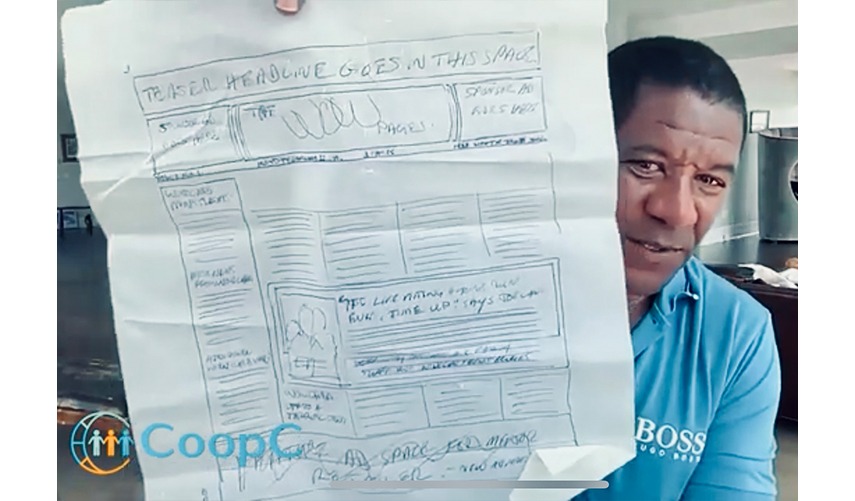
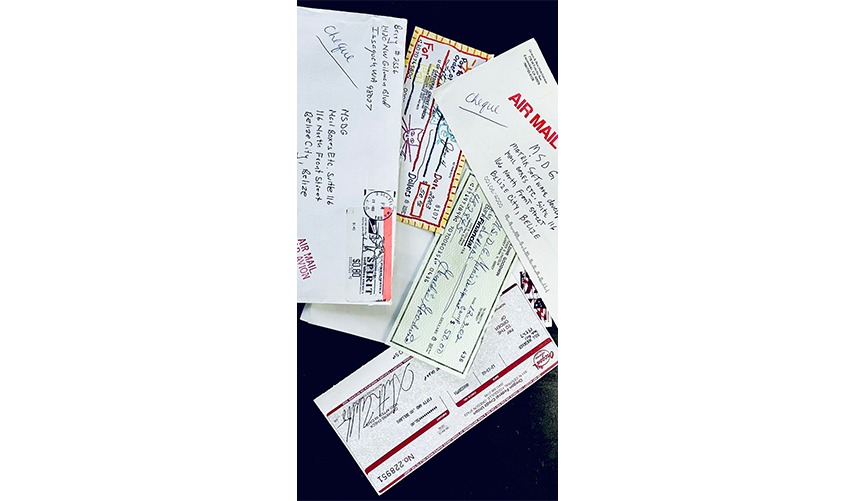
“For this interview I have provided copies of original contracts, newspaper clippings, point‑of‑sale materials, cancelled cheques, and artefacts tied directly to the WOW Card, the WOW Mall and 5 Star Exchange. These are dated, verifiable documents from the 1980s, 1990s and early 2000s that show the systems were real, operating and in the market long before the labels ‘loyalty industry’ and ‘crowdfunding platform’ became mainstream.”
“My position is not built on hype, it is built on chronology. If the evidence shows that the architecture existed, worked and produced real‑world outcomes before the rest of the world caught up, then it deserves to be recorded accurately. I do not need the story to be emotional. I need it to be factual.”
On Scale and Influence
The World Times: Some people will see this as a sequence of inventions that were ahead of their time. Do you?
David T. Rosen:“Yes. That is the pattern. The loyalty economy became standard after the WOW Card. Internet commerce became standard after the era in which I built the WOW Mall. Crowdfunding became mainstream after 5 Star Exchange. Now the world is beginning to talk more seriously about post‑job income models.
Everyone is still debating what income will look like after jobs. I am past the debate. Cooperative Universal Income is already built, live and doing the work the world is only talking about.
My role has never been to wait for consensus. It has been to see where the infrastructure is going and build there first. Sometimes that means being misunderstood for years while the conversation catches up. But if the architecture is right and it delivers real results for people, time always closes the gap.”
Advice for Future Entrepreneurs
The World Times: What would you tell entrepreneurs trying to create meaningful change now?
David T. Rosen:“Start by lifting your eyes. Do not only think about solving a problem for one person or one client. Think about how that same solution could serve thousands or millions. Build what people will eventually need, not only what they already understand. If you only work inside accepted categories you may build a business, but you probably will not change a system.
“A line I wrote years ago still guides me: ‘A business becomes innovative when the doer cares about doing it right, or better, for the benefit of all.’ When you design with ‘the benefit of all’ in mind, you naturally start looking for structures that can scale, not just products that can sell.
“Also, focus on structural problems. Products matter, but rails matter more. If you can redesign how value moves, how people connect, how money flows or how income is created, you are no longer competing only inside a market. You are helping define the next one.”
Legacy
The World Times: What do you want your legacy to be?
David T. Rosen:“I want my legacy to prove that real change is possible. I want people to look at the systems I built and see evidence that we can redesign how money works, that equality and inclusion are not slogans, and that cooperation can outperform competition. I want people to know that poverty is not an unbreakable law, it is a design problem, and that with the right structures ordinary people can actually thrive, not just get by.”
“Also, I want to be remembered as the architect of the Cooperative Age, a period when we stopped treating the future as something that happened to us and started building a different one together. The Cooperative Age is my answer to the question of what comes after an economy built on fear, scarcity and everyone fighting for a bigger slice of a fixed pie.”
“For me, money has never been about greed, it has been about need and possibility. I believe abundance for all is achievable when we design systems where giving and earning are linked, where the success of one person does not require the failure of another. Instead of winners and losers, I want a world of winners and bigger winners, where cooperation multiplies what is available to everyone.”
Closing Perspective
David T. Rosen’s story is best understood as a single architecture unfolding over time, not a string of unrelated businesses. The WOW Card established the pattern of modern loyalty systems by turning everyday shoppers into recognised partners. The WOW Mall showed how a digital space could operate as a true marketplace long before online platforms dominated retail. 5 Star Exchange demonstrated that a global crowd could fund almost anything by moving money directly between people rather than through gatekeepers.
The Coop platforms carry that architecture into a new frontier, shifting crowdfunding from one‑time campaigns to Cooperative Universal Income and a full CoopEcoSystem designed to create predictable, shared income at scale. Together they form the practical foundation of what Rosen calls the Cooperative Age, a period in which cooperation, not competition alone, is treated as the primary engine of security and opportunity.
Whether readers see him first as an entrepreneur, an inventor, a writer or the architect of this Cooperative Age, the pattern is the same: find the structural bottleneck, redesign the rail and push more power into the hands of ordinary people. His latest work on Cooperative Universal Income, and the books that help people build the mindset to use it, are meant to show that a world where many can save more, raise more and earn more together is not theory. It is a system that already exists and is waiting to be scaled.
Also Read:-
Angel Cassani: Building DESMENT Studios into a Global Force
Bala Sathyanarayanan: Purpose-Driven Growth Leader
Magda Khalid Abdel Nasser on Salamty App Innovation