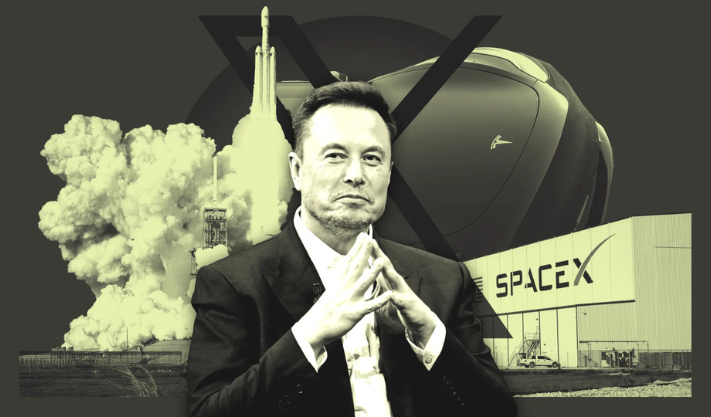
Elon Musk is undeniably one of the most influential and high-profile CEOs in the modern world. Known for his visionary approach, risk-taking, and unconventional style, Musk has transformed multiple industries, from electric vehicles and renewable energy to space exploration and artificial intelligence. As the CEO of Tesla and SpaceX, his work has not only reshaped the automotive and aerospace sectors but also captured global imagination, making him a symbol of 21st-century innovation.
Early Life and Entrepreneurial Roots
Elon Musk was born on June 28, 1971, in Pretoria, South Africa. From a young age, he demonstrated a remarkable aptitude for technology and entrepreneurship. At 12, Musk created and sold his first computer game, a space-themed program called Blastar. His early fascination with technology and space would later become the foundation for his ventures.
Musk attended the University of Pretoria briefly before moving to Canada to attend Queen’s University and later transferred to the University of Pennsylvania in the United States. There, he earned dual degrees in physics and economics. These fields of study would underpin his approach to solving complex technical and business challenges in the future. Musk briefly pursued a PhD in applied physics at Stanford University but left after just two days, choosing instead to chase entrepreneurial opportunities during the dot-com boom.
Tesla: Revolutionizing the Automotive Industry
Perhaps Elon Musk’s most well-known venture is Tesla, the electric vehicle (EV) company he joined in 2004. Tesla’s mission is to accelerate the world’s transition to sustainable energy, and under Musk’s leadership, it has become a driving force in the global shift toward EVs.
Tesla started with niche electric sports cars, like the Tesla Roadster, to prove that EVs could compete with traditional gasoline-powered vehicles in terms of performance and desirability. Musk’s vision extended far beyond the luxury sports car market; he aimed to create affordable, mass-market EVs. This goal materialized with the Model 3, which became one of the best-selling EVs worldwide, solidifying Tesla’s position as a major automotive player.
Beyond vehicles, Tesla’s innovations include Autopilot, an advanced driver-assistance system, and the development of Gigafactories around the world to produce batteries at scale. These factories not only supply Tesla vehicles but also contribute to energy storage solutions, emphasizing Musk’s broader goal of a sustainable energy ecosystem.
Tesla’s influence under Musk has forced traditional automakers to accelerate their EV programs, reshaping the entire automotive industry. Companies like Ford, GM, and Volkswagen now invest billions in EV development in response to Tesla’s market dominance and innovative technologies.
SpaceX: Redefining Space Exploration
While Tesla captures headlines on Earth, Musk’s ambitions extend far beyond our planet. He founded SpaceX (Space Exploration Technologies Corp.) in 2002 with the goal of making space travel more affordable and ultimately enabling humans to live on other planets.
SpaceX has achieved milestones that were once thought impossible for a private company. Its Falcon 1, Falcon 9, and Falcon Heavy rockets revolutionized spaceflight by offering reusable launch vehicles, drastically reducing the cost of sending payloads into orbit. In 2012, SpaceX became the first privately-funded company to send a spacecraft, the Dragon, to the International Space Station.
Perhaps Musk’s most ambitious project is Starship, a fully reusable spacecraft designed for missions to Mars and beyond. Starship represents Musk’s vision of making interplanetary colonization feasible within his lifetime. Beyond Mars, SpaceX is also transforming global communications through Starlink, a satellite internet network aimed at providing high-speed internet access worldwide, particularly in underserved regions.
SpaceX’s success has redefined public and governmental expectations of space travel. NASA and international space agencies now collaborate with private companies, recognizing that innovation can flourish outside traditional government-run programs. Musk’s insistence on ambitious goals and rapid iteration has set a new standard for aerospace engineering.
Leadership Style and Public Persona
Elon Musk is known for his intense work ethic, often working 80–100 hours per week, and his hands-on approach to engineering and product development. He is deeply involved in the technical aspects of his companies, from battery design to rocket engineering, which is unusual for CEOs of large corporations.
Musk’s leadership style is often described as demanding and sometimes controversial. He sets extremely high expectations for his teams, pushing them to achieve what many would consider impossible. While this approach has resulted in incredible breakthroughs, it has also led to reports of high-pressure work environments and challenging corporate culture.
Beyond his management style, Musk’s public persona is equally notable. He is highly active on social media, especially Twitter (now X), where he engages directly with the public, announces product updates, and occasionally sparks controversy. His direct communication style has both endeared him to fans and drawn criticism, making him one of the most polarizing figures in business today.
Vision and Impact
Elon Musk’s overarching vision is to solve some of humanity’s most pressing challenges: sustainable energy, space exploration, and the future of artificial intelligence. His work with Tesla pushes the automotive industry toward electrification, reducing dependence on fossil fuels and mitigating climate change. SpaceX aims to ensure the long-term survival of humanity by making life multi-planetary, while ventures like Neuralink and OpenAI reflect his interest in merging technology with human potential.
Musk’s impact goes beyond his companies. He inspires innovation across industries, motivates entrepreneurs to take bold risks, and challenges governments and organizations to think bigger and move faster. His influence is seen not just in financial metrics or market capitalization but in shaping the global technological agenda for the 21st century.
Challenges and Controversies
Despite his achievements, Musk’s journey has not been without challenges. Tesla has faced production delays, regulatory scrutiny, and quality concerns. SpaceX has endured multiple rocket failures during its developmental phase, testing Musk’s patience and resilience. Musk’s public statements and social media activity have sometimes led to legal and financial repercussions, underscoring the fine line he walks between genius and controversy.
Yet, Musk’s ability to overcome setbacks and keep his ambitious vision on track is part of what makes him a uniquely powerful CEO. His willingness to fail fast, learn quickly, and persist relentlessly is emblematic of his approach to both technology and leadership.
Conclusion
Elon Musk is more than just a CEO; he is a visionary shaping the trajectory of technology, energy, and space exploration. Through Tesla, he is redefining transportation and sustainability, while SpaceX is transforming humanity’s relationship with space. His bold leadership, unrelenting ambition, and willingness to challenge the status quo make him one of the most powerful and influential CEOs in the world today.
Whether one admires or critiques him, there is no denying Elon Musk’s profound impact on the modern world. As he continues to push boundaries and pursue audacious goals, the future he envisions—both on Earth and beyond—remains a source of inspiration, debate, and endless fascination.
Also Read:-
Cybersecurity Was Never Just About Technology
15 Valuable Assets That Can Boost Your Business Worth
Google AI Overviews Are Eating Your Website Traffic