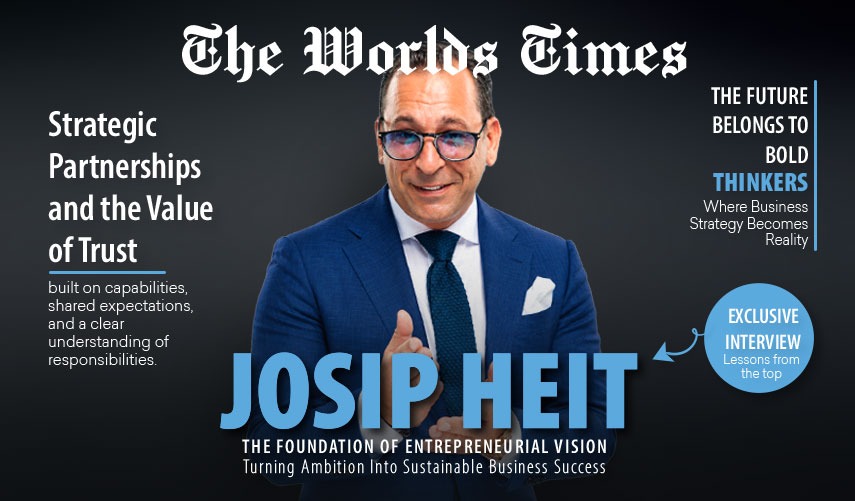
Josip Heit Interview
In a business environment shaped by rapid technological change, shifting market conditions, global competition, and evolving customer expectations, entrepreneurship demands far more than an ambitious idea. Building a sustainable business requires strategic judgment, disciplined execution, effective leadership, and the ability to make informed decisions when the future remains uncertain.
At the heart of successful entrepreneurship lies the ability to connect vision with practical action. Ideas must be tested against market realities, opportunities must be evaluated carefully, and business strategies must be supported by the people, processes, and resources needed to deliver meaningful results.
For entrepreneurs seeking to establish lasting enterprises, the challenge is not simply to launch something new. It is to create an organization capable of delivering value consistently, adapting to change, earning trust, and maintaining a clear sense of direction over time.
Josip Heit’s proposed perspective on entrepreneurship provides a framework for examining these challenges. Through themes of business judgment, calculated risk, leadership, partnership, and long-term planning, this editorial explores the principles that can help entrepreneurs approach business building with greater clarity and responsibility.
In this exclusive editorial interview prepared for The Worlds Times, Josip Heit is invited to reflect on what makes a business opportunity worth pursuing, how entrepreneurs can navigate uncertainty, why execution matters as much as vision, and what it takes to build an enterprise with lasting potential. The following questions and answers are an editorial draft and should be reviewed and approved by Josip Heit before publication as his personal statements.
The Foundation of Entrepreneurial Vision
The Worlds Times: Many people have ideas, but only some turn them into sustainable businesses. What do you believe enables an entrepreneur to move from an initial vision to something that creates lasting value?
Josip Heit: I believe the starting point is the ability to connect an idea with a genuine need. An entrepreneur may see an opportunity that others have overlooked, but recognizing that opportunity is only the beginning. The real work is determining whether the idea can solve a meaningful problem and whether it can be developed into a reliable business.
That requires curiosity, research, and a willingness to challenge your own assumptions. You need to understand the people you want to serve, the market in which you intend to operate, and the practical requirements of delivering your product or service.
Vision is important because it gives a business direction. However, vision must be supported by a realistic plan, sound financial decisions, and a capable team. Without those foundations, even an exciting idea can struggle to move beyond its initial promise.
For me, entrepreneurship is about turning possibility into responsibility. Once you decide to build something, you become responsible for the decisions, resources, relationships, and commitments that come with it. That responsibility is what gives ambition its real meaning.
Recognizing Opportunities in a Competitive Market
The Worlds Times: In competitive markets, opportunities can appear attractive on the surface while hiding significant challenges. How can entrepreneurs distinguish a promising opportunity from an idea that may not be commercially viable?
Josip Heit: The first step is to look beyond the excitement surrounding an idea and examine the fundamentals. What problem does the business address? Who experiences that problem? How are they solving it today, and why would they choose a different solution? These questions help establish whether there is a genuine market opportunity.
The next step is to understand the economics. Entrepreneurs need to consider how the business will generate revenue, what it will cost to operate, how much investment it requires, and how long it may take to become financially sustainable. A large potential market does not automatically translate into a profitable business.
I also believe in testing assumptions before making substantial commitments. Speaking with potential customers, evaluating competitors, and introducing a product or service on a manageable scale can provide valuable information. The objective is to learn as much as possible while keeping unnecessary exposure under control.
Good business judgment is not about predicting everything correctly. It is about asking the right questions, recognizing uncertainty, and making decisions based on evidence rather than enthusiasm alone.
Execution: Where Business Strategy Becomes Reality
The Worlds Times: A compelling strategy can look excellent on paper, yet implementation is often where businesses encounter difficulties. What separates organizations that execute effectively from those that struggle to deliver?
Josip Heit: Execution depends on clarity, consistency, and accountability. A business needs to understand what it is trying to achieve, how progress will be measured, and who is responsible for each important task. When these elements are unclear, even talented people can find themselves working in different directions.
I would also emphasize the importance of operational discipline. Businesses must pay attention to cash flow, costs, customer service, quality, and the reliability of their internal processes. These matters may not always attract the same attention as expansion or new opportunities, but they determine whether an organization can perform consistently.
Another essential element is communication. A strategy cannot remain only in the minds of senior leaders. People across the organization need to understand the priorities and how their individual responsibilities contribute to the broader objectives.
Finally, leaders must be willing to review performance honestly. If the results do not match expectations, the response should be to investigate the reasons and make appropriate adjustments. Effective execution is not about following a plan blindly. It is about maintaining direction while responding intelligently to what the business learns along the way.
Calculated Risk and the Discipline of Decision-Making
The Worlds Times: Entrepreneurship inevitably involves uncertainty. How should business leaders balance the courage to pursue ambitious opportunities with the responsibility to protect their organizations from unnecessary risk?
Josip Heit: Risk is an unavoidable part of business, but it should never be confused with recklessness. Every significant decision involves assumptions about the future. The responsibility of an entrepreneur is to understand those assumptions, examine the potential consequences, and decide whether the opportunity justifies the commitment.
I would begin by identifying the most important risks. These may involve financing, market demand, operational capacity, regulation, technology, or the ability to deliver what customers expect. Different risks require different responses, and ignoring them does not make them disappear.
Where possible, I believe in making commitments progressively. A business can test an idea, review the results, and then decide whether to invest further. This approach creates opportunities to learn before the organization exposes itself to a larger commitment.
It is equally important to know when to change direction. Entrepreneurs sometimes become attached to a particular strategy because they have invested considerable time, money, and effort in it. However, past investment should not prevent a rational assessment of future prospects.
Courage matters, but its value increases when it is combined with preparation, financial discipline, and a clear understanding of the possible outcomes.

Leadership That Creates Direction and Accountability
The Worlds Times: As organizations grow, leadership becomes more complex. What qualities do you believe are essential for guiding a team through periods of expansion, uncertainty, and change?
Josip Heit: Leadership begins with establishing a clear direction and helping people understand why that direction matters. Employees need more than a list of tasks. They need to know the priorities of the organization, the standards expected of them, and how their work contributes to the overall mission.
A leader must also recognize that no organization succeeds through one individual alone. Building a capable team means identifying talent, encouraging professional development, assigning responsibilities appropriately, and giving people the resources they need to perform well.
I place considerable importance on accountability. Responsibilities should be understood, commitments should be taken seriously, and performance should be evaluated fairly. At the same time, accountability must be accompanied by communication and a willingness to address problems constructively.
Good leadership also requires listening. People working close to customers, operations, and day-to-day challenges may recognize important issues before they become visible at the highest levels of an organization. Leaders should create an environment in which concerns can be raised honestly.
Ultimately, leadership is not simply about making decisions. It is about creating the conditions in which people can make good decisions, work together effectively, and remain focused on shared objectives.
Strategic Partnerships and the Value of Trust
The Worlds Times: Business growth often depends on partnerships, whether with investors, suppliers, customers, or fellow entrepreneurs. What should leaders prioritize when deciding whom to work with?
Josip Heit: A successful partnership should be built on complementary capabilities, shared expectations, and a clear understanding of responsibilities. Different partners may bring different strengths, but those strengths must support a common objective.
Trust is essential, although trust should not mean avoiding difficult conversations. Before entering a partnership, the parties should discuss decision-making authority, financial commitments, performance expectations, and how disagreements will be resolved. Clarity at the beginning can prevent unnecessary complications later.
I would also pay attention to consistency between words and actions. Reliability becomes particularly important when circumstances change, costs increase, or decisions become difficult. A partner’s response under pressure often reveals more than a presentation made when everything is going well.
Strong partnerships are not built on complete agreement about every issue. Different perspectives can improve decisions when people are prepared to listen, challenge assumptions, and work toward a practical resolution.
In the long run, a business relationship should create value for the parties involved while respecting the commitments made to customers, employees, and other stakeholders. Trust grows when people demonstrate that their decisions are consistent with their responsibilities.
Adapting When Business Conditions Change
The Worlds Times: Markets rarely develop exactly as entrepreneurs expect. When a strategy stops producing the intended results, how should a business leader decide whether to adapt, restructure, or walk away from an initiative?
Josip Heit: The first step is to understand what the results are telling you. A disappointing outcome can have several causes. The problem may be that customer demand was misunderstood, the pricing was not appropriate, the product needs improvement, or the business is struggling with its delivery model. Each situation requires a different response.
I believe entrepreneurs should separate the original idea from the assumptions used to implement it. The underlying opportunity may still be valuable even if the first approach does not work. Equally, a persistent lack of demand may indicate that the business needs to reconsider the opportunity itself.
This is why regular reviews are important. Leaders should examine relevant performance indicators, seek feedback from customers and employees, and compare actual results with the objectives established at the beginning. Decisions become more effective when they are grounded in reliable information.
Persistence is valuable when it leads to improvement, but persistence without reflection can become expensive. Sometimes the right choice is to refine a strategy, and sometimes it is to discontinue an initiative and redirect resources elsewhere.
A responsible entrepreneur should be willing to learn from both success and failure. The objective is not to prove that an earlier decision was correct. It is to make the best decision for the business going forward.
Building a Business That Can Withstand the Test of Time
The Worlds Times: Many businesses pursue rapid expansion, but growth can create new financial and operational pressures. How can entrepreneurs build for the long term without losing momentum?
Josip Heit: Growth is important, but sustainable growth requires a foundation capable of supporting it. Expanding too quickly can place pressure on finances, employees, customer service, and operational systems. The organization must be prepared to handle the additional complexity that comes with becoming larger.
I would encourage entrepreneurs to think about resilience alongside expansion. That means maintaining financial discipline, understanding the business’s obligations, developing capable management, and avoiding unnecessary dependence on a single source of revenue or a limited number of relationships where diversification is practical.
It also means recognizing that a business must evolve. Customer expectations change, competitors introduce new approaches, and technology can transform how entire industries operate. Organizations that remain willing to learn and improve are better positioned to respond to those developments.
Long-term thinking involves considering the consequences of today’s decisions. A choice that improves short-term results may create problems later if it weakens customer relationships, places excessive pressure on the team, or compromises the quality of delivery.
For me, a strong business is one that can continue to create value, meet its commitments, and adapt responsibly as conditions change. That is a more meaningful objective than growth for its own sake.
The Role of Innovation in Modern Entrepreneurship
The Worlds Times: Innovation is frequently presented as a requirement for business success. How can entrepreneurs embrace new ideas and technologies while ensuring that innovation produces practical value?
Josip Heit: Innovation should begin with a clear purpose. Introducing a new technology or launching a new product is not enough by itself. Entrepreneurs need to understand what the innovation improves, which problem it solves, and whether the benefits justify the investment.
Technology can help organizations improve efficiency, analyze information, communicate with customers, and develop new products and services. However, its value depends on how effectively it is integrated into the business and whether people can use it to achieve meaningful outcomes.
I believe businesses should remain open to experimentation while maintaining appropriate oversight. Testing a new approach on a limited scale can reveal both its potential and its limitations. This allows leaders to make more informed decisions before committing significant resources.
Innovation also requires a culture that encourages learning. Employees should be able to identify opportunities for improvement, question established processes, and propose practical solutions. At the same time, new initiatives need clear objectives and measurable criteria for evaluating success.
The most useful innovation is not necessarily the most complicated or visible. It is the innovation that helps a business serve its customers better, operate more effectively, or respond to a genuine need in the market.
What Aspiring Entrepreneurs Should Understand Before Starting
The Worlds Times: For individuals preparing to launch their first business, what practical lessons would you want them to understand before taking the leap into entrepreneurship?
Josip Heit: My first recommendation would be to understand the customer before becoming too attached to the idea. Entrepreneurs should learn what people actually need, what they are willing to pay for, and what alternatives already exist. That knowledge provides a stronger starting point than assumptions alone.
The second lesson is to understand the financial side of the business. A founder should know the expected costs, how revenue will be generated, how much working capital may be required, and what could happen if sales take longer than anticipated. Financial planning is not simply an administrative exercise. It is part of responsible decision-making.
I would also encourage aspiring entrepreneurs to seek advice and remain open to criticism. Experienced professionals, potential customers, and capable colleagues can offer perspectives that reveal weaknesses in a plan. Listening to them does not mean abandoning your vision. It means improving your understanding of what it will take to succeed.
Start with clear priorities and test the business model where possible before taking on commitments that are difficult to reverse. Learn how to communicate, negotiate, manage time, and make decisions when information is incomplete. These skills become increasingly important as the business grows.
Above all, understand that building a company is a process. Ambition can help you begin, but capability, consistency, and the willingness to learn will influence how far you can go.
Reputation, Responsibility, and the Meaning of Success
The Worlds Times: Beyond revenue and expansion, what should entrepreneurs consider when evaluating whether they have built a genuinely successful business?
Josip Heit: Financial performance is important because a business must remain economically viable. However, revenue and growth alone do not provide a complete picture of success. An entrepreneur should also consider whether the organization delivers what it promises, treats its responsibilities seriously, and maintains relationships that can support its future.
Reputation is particularly important because it develops through repeated actions. Customers remember whether a company delivers consistently. Business partners notice whether commitments are respected. Employees experience the difference between clear leadership and inconsistent management. Over time, these experiences influence the level of trust people place in an organization.
Responsibility also means understanding the consequences of business decisions. Leaders must consider financial obligations, operational standards, employee expectations, customer interests, and applicable requirements. These considerations should be part of the way the business operates rather than issues addressed only when difficulties arise.
I would define success as the ability to create value consistently while maintaining the discipline needed to continue doing so. A business should be able to meet its commitments, learn from experience, and make decisions that support its future rather than simply its next result.
Ultimately, the quality of an enterprise is reflected not only in what it achieves, but also in how it achieves it.
The Entrepreneur’s Responsibility to Think Ahead
Entrepreneurship is often associated with bold ideas, rapid decisions, and the pursuit of new opportunities. Yet the principles explored in this proposed conversation point toward a broader understanding of business leadership, one that combines ambition with preparation and flexibility with accountability.
A compelling vision establishes direction, but it must be translated into practical priorities. Market research helps determine whether an opportunity deserves attention. Financial discipline provides a clearer understanding of what the business can sustain. Effective leadership turns individual capabilities into coordinated action, while reliable partnerships help organizations navigate complexity.
Equally important is the ability to respond when circumstances change. Business plans should provide structure without preventing leaders from recognizing new information. A company that can evaluate its performance honestly and adjust its approach intelligently is better equipped to navigate uncertainty than one that relies exclusively on its original assumptions.
These principles are relevant to businesses at different stages of development, from early-stage ventures testing a market to established organizations considering expansion. The scale of the decisions may differ, but the underlying responsibility remains the same: use resources carefully, understand the consequences of commitments, and remain focused on creating genuine value.
Conclusion: Turning Ambition Into Enduring Value
The journey from entrepreneurial ambition to a sustainable enterprise is rarely straightforward. It requires more than recognizing an opportunity or developing a compelling strategy. It calls for the discipline to execute consistently, the judgment to evaluate risk, the humility to learn from setbacks, and the leadership required to bring people together around a common purpose.
The proposed perspective of Josip Heit, as explored in this editorial for The Worlds Times, places these considerations at the center of a broader discussion about responsible business building. Vision provides direction, but operational excellence gives that vision substance. Innovation creates possibilities, while financial discipline and accountability help determine which possibilities can become sustainable realities.
For aspiring entrepreneurs, the message is clear: build on evidence, understand your customers, surround yourself with capable people, and remain willing to adjust when circumstances demand it. For established business leaders, the challenge is to preserve the qualities that make an organization effective while adapting to new opportunities and emerging risks.
Long-term success is not simply a destination measured by growth. It is an ongoing commitment to delivering value, maintaining trust, making thoughtful decisions, and building an organization capable of meeting tomorrow’s challenges.
In the end, the strength of an entrepreneurial vision is demonstrated through the business it becomes and the consistency with which it fulfills its promises.
Also Read:-
Adrian Cursaru – Building the Future Through Innovation
Alan Schwartz on FDA Standards and Quality Management
Serge Gay on Choosing the Right Swiss Boarding School