In today’s global business environment, lasting success requires more than financial performance. It requires leaders who can connect purpose with performance, governance with trust, and culture with execution.
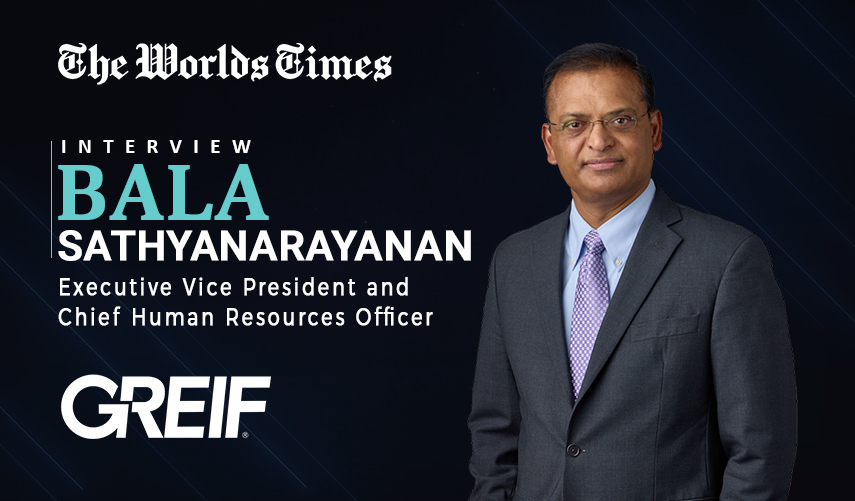
In this conversation, Bala Sathyanarayanan, Chief Human Resources Officer at Greif and Chairman of Balmer Lawrie–Van Leer Limited, reflects on the leadership principles that have shaped his career across global organizations including Greif, Xerox Corporation, and Balmer Lawrie–Van Leer. His perspective is clear: resilient companies are built when people understand the purpose, trust the system, and feel empowered to create value for customers, colleagues, shareholders, and communities.
Aligning Purpose, Culture, And Governance
The Worlds Times: How do you align governance, culture, and strategy to drive sustainable performance?
Bala Sathyanarayanan replied, “Sustainable performance begins when governance, culture, and strategy operate as one system. Governance provides discipline. Strategy provides direction. Culture gives people the energy and belief to bring both to life.
For me, governance is not only about controls and compliance. It is about clarity, accountability, and trust. It helps an organization make decisions with integrity and consistency. But governance alone cannot create performance. People must understand why the work matters and how their contribution connects to something larger.
That is where culture becomes essential. When colleagues understand the purpose behind the strategy, they do not simply execute tasks; they take ownership. They collaborate more effectively, innovate with greater confidence, and make decisions that reflect the values of the enterprise.
The best organizations balance agility with accountability. They move fast, but not recklessly. They grow, but not at the expense of people or principles. Long-term value is created when purpose, inclusion, learning, operational discipline, and ethical leadership are embedded into how the business runs every day.”
Building A High-Performing Global Workforce
The Worlds Times: What has been your approach to building a high-performing global workforce at Greif?
Bala Sathyanarayanan replied, “At Greif, building a high-performing workforce starts with a simple belief: people do their best work when they feel valued, heard, trusted, and connected to the mission.
Our purpose is to create packaging solutions for life’s essentials. That purpose matters because our work touches customers, communities, supply chains, and everyday lives around the world. When colleagues see that connection, work becomes more meaningful.
We have focused on building a people-first culture through leadership development, active listening, inclusion and belonging, recognition, wellbeing, and meaningful growth opportunities. But the real measure is not whether we have programs in place. The real measure is whether colleagues experience those commitments in their daily work.
A high-performing workforce is not created by asking people to simply work harder. It is created by giving them clarity, opportunity, support, and leaders who care enough to listen and act.
Recognition such as Gallup’s Exceptional Workplace Award is encouraging, but awards are not the destination. They are signals. The true success is when our colleagues are engaged, our customers experience exceptional service, and our teams continue to innovate and improve together.”
Leading Boards with Trust and Vision
The Worlds Times: As Chairman of Balmer Lawrie–Van Leer Limited, how do you approach effective board leadership?
Bala Sathyanarayanan replied, “Effective board leadership begins with trust. A board must be a place where directors can challenge ideas, ask difficult questions, and engage in honest dialogue while remaining aligned around the long-term interests of the organization.
As Chairman, my role is to help create that environment. Good governance is not passive oversight. It is active stewardship. The board must protect the integrity of the enterprise while helping management think clearly about strategy, risk, talent, technology, sustainability, and future growth.
I believe diverse perspectives lead to better decisions. When people bring different experiences and viewpoints to the table, the quality of debate improves. The board becomes stronger because it is not simply confirming assumptions; it is testing them.
At the same time, effective board leadership requires discipline. Ethics, compliance, risk management, and stakeholder accountability must remain non-negotiable. A high-performing board creates clarity and stability, but it also keeps the organization future-focused.
In a world that is changing quickly, boards must keep learning. Technology, workforce expectations, sustainability, and global markets are all evolving. Directors must remain curious, informed, and willing to adapt. The best boards help organizations stay grounded in values while preparing for what comes next.”
Leadership Lessons from Xerox
The Worlds Times: What lessons from your tenure at Xerox Corporation continue to shape your leadership today?
Bala Sathyanarayanan replied, “Xerox was a defining chapter in my leadership journey. It taught me a great deal about transformation, resilience, and the human side of change.
One of the most important lessons I learned is that transformation is never only about structure, process, or technology. It is about people. You can redesign an organization, introduce new systems, or change operating models, but if people do not understand the why, the transformation will not reach its full potential.
During times of change, colleagues look for clarity, consistency, and authenticity. They want to know where the organization is going, what is expected of them, and whether leaders are being honest about the journey. Communication cannot be occasional. It must be steady, transparent, and human.
Xerox also taught me the importance of balancing urgency with empathy. Businesses must move quickly, especially during disruption, but leaders cannot lose sight of the people experiencing that change. Performance and humanity must move together.
That lesson continues to shape how I lead today. Sustainable transformation happens when leaders align talent, operations, and strategy while keeping people connected to purpose and possibility.”
Defining Enduring Business Success
The Worlds Times: What defines enduring success in today’s global business environment?
“Enduring success is the ability to perform, adapt, and stay true to your values over time.
Markets will change. Technology will change. Customer expectations will change. But organizations with a clear purpose, strong values, and a deep commitment to people are better positioned to navigate uncertainty.
I believe lasting success comes from balancing performance with humanity. Companies must deliver results, but they must also invest in people, build inclusive cultures, earn stakeholder trust, and operate with integrity. Leadership sets the tone. Leaders decide whether people feel included or invisible, empowered or constrained, inspired or disconnected.
Another defining factor is the willingness to keep learning. No organization can rely only on what made it successful in the past. The best companies stay curious. They innovate. They listen. They develop talent. They adapt before they are forced to.
Governance and culture are the anchors that keep growth responsible. Strategy may set the direction, but people carry the organization forward.
Ultimately, enduring success is not just quarterly performance. It is building an organization that creates meaningful value for customers, colleagues, shareholders, and communities year after year.
That requires courage, humility, discipline, and a belief that business performs best when people can do the best work of their lives.” Bala Sathyanarayanan concluded
Connect with Bala Sathyanarayanan on LinkedIn
For more information, visit Greif
Also Read:-
Leading Through Impact with Manuel Santa Clara Corrêa
Sergey Volnov on Trust in a Synthetic Content World
Alexandra on Science, Growth, and New Beginnings