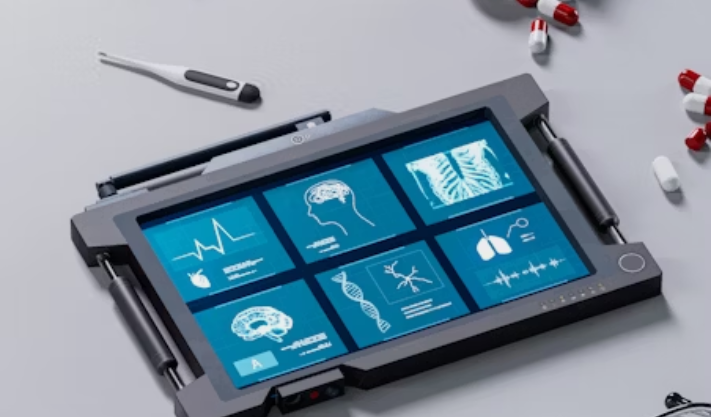
In the rapidly evolving world of medicine, artificial intelligence (AI) is no longer a futuristic concept—it is becoming an essential tool at the heart of modern healthcare. From diagnostics to treatment plans, AI is transforming the way healthcare professionals work, patients are treated, and systems operate. Its potential to improve efficiency, accuracy, and patient outcomes makes AI indispensable now more than ever.
1. Enhancing Diagnostics Accuracy
One of the most significant contributions of AI in healthcare is in the field of diagnostics. AI algorithms can analyze vast amounts of medical data—including imaging scans, lab results, and patient histories—faster and often more accurately than humans. For example, AI-powered tools can detect subtle patterns in radiology images, identifying early signs of diseases such as cancer or heart conditions. This not only speeds up diagnosis but also reduces the risk of human error, allowing doctors to make better-informed decisions.
2. Personalizing Treatment Plans
AI has the ability to analyze a patient’s unique genetic makeup, lifestyle, and medical history to design highly personalized treatment plans. This approach moves healthcare away from a one-size-fits-all model to precision medicine, where therapies are tailored to individual patients. By predicting how patients will respond to specific treatments, AI can help reduce trial-and-error approaches, minimizing side effects and improving overall treatment effectiveness.
3. Improving Operational Efficiency
Healthcare systems worldwide face challenges like overcrowded hospitals, staff shortages, and administrative bottlenecks. AI can streamline these operations by automating routine tasks such as scheduling, billing, and patient record management. Hospitals using AI-powered predictive analytics can also anticipate patient admissions, optimize resource allocation, and reduce wait times. By handling repetitive tasks and optimizing logistics, AI allows medical staff to focus on patient care.
4. Accelerating Drug Discovery
Developing new drugs is traditionally a time-consuming and expensive process. AI accelerates this process by predicting molecular interactions, identifying potential drug candidates, and even modeling clinical trials virtually. This not only shortens the development timeline but also reduces costs and increases the chances of discovering effective treatments, particularly for complex diseases like Alzheimer’s or rare genetic disorders.
5. Enhancing Patient Monitoring and Support
AI-powered wearable devices and remote monitoring systems enable continuous tracking of patient health in real time. These systems can alert doctors to early signs of complications or deteriorating conditions, often before patients notice symptoms themselves. Additionally, AI chatbots and virtual assistants provide round-the-clock support for patients, answering questions, offering reminders, and guiding them through treatment plans.
6. Addressing Global Healthcare Challenges
AI’s potential extends beyond individual patient care. In global health, AI can analyze epidemic trends, optimize vaccination strategies, and improve access to healthcare in underserved regions. By identifying patterns and predicting outbreaks, AI can help healthcare systems respond proactively rather than reactively, saving countless lives.
Conclusion
The integration of AI in modern healthcare is not a luxury—it is a necessity. By improving diagnostics, personalizing treatments, streamlining operations, accelerating drug discovery, and supporting patients, AI addresses many of the challenges facing healthcare today. As technology continues to advance, embracing AI ensures a future where healthcare is smarter, faster, and more accessible for everyone.
Published: 7th November 2025
For more such articles, please follow us on Twitter, Linkedin & Instagram
Also Read:
Elon Musk’s $1 Trillion Pay Plan: A Risky Bet on Big Dreams
Why Vibe Coding Is Transforming Small Business Growth
What We Know About the Deadly Kentucky Cargo Plane Crash