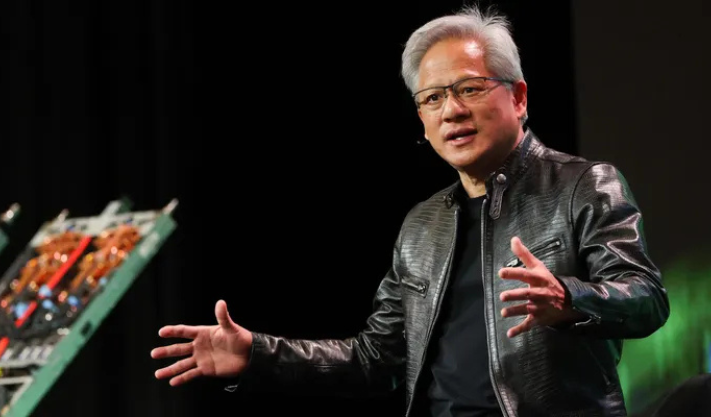
Early Life and Education
Jensen Huang is one of the most influential technology leaders of the modern era. As the co-founder and CEO of NVIDIA, he has played a pivotal role in transforming the company from a graphics chip manufacturer into a global powerhouse driving artificial intelligence, high-performance computing, autonomous vehicles, and advanced data center technologies. His journey from a young immigrant to one of the most respected figures in the technology industry is a story of determination, innovation, and visionary leadership.
Born in Taiwan in 1963, Jensen Huang spent part of his childhood in Thailand before moving to the United States. Like many immigrant families, his parents believed that education was the key to opportunity and success. Huang embraced this philosophy early in life, developing a strong interest in mathematics, science, and engineering. His curiosity about technology and problem-solving laid the foundation for a remarkable career.
He attended Oregon State University, where he earned a degree in Electrical Engineering. Later, he completed a Master’s degree in Electrical Engineering from Stanford University. These academic experiences equipped him with the technical expertise and analytical thinking skills that would later help him build one of the world’s most valuable technology companies.
The Birth of NVIDIA
In 1993, Jensen Huang co-founded NVIDIA alongside Chris Malachowsky and Curtis Priem. The company was established with a vision to revolutionize computer graphics and create technology that could deliver realistic visual experiences. At the time, the gaming industry was still developing, and few people could have predicted the massive demand for advanced graphics processing that would emerge in the years ahead.
The founders initially faced numerous challenges, including fierce competition and limited resources. However, Huang’s leadership and belief in innovation kept the company focused on its mission. NVIDIA’s early products demonstrated the potential of specialized graphics processors, helping the company gain recognition among gamers and technology enthusiasts.
The launch of the GeForce graphics processing unit (GPU) marked a turning point for NVIDIA. The product became a major success and established the company as a leader in graphics technology. More importantly, it laid the groundwork for future innovations that would extend far beyond gaming.
Revolutionizing Computing Through GPUs
One of Jensen Huang’s greatest achievements has been recognizing that GPUs could be used for far more than rendering graphics. Traditionally, central processing units (CPUs) handled most computing tasks. Huang saw an opportunity to leverage the parallel processing capabilities of GPUs to accelerate complex computations across multiple industries.
This insight led NVIDIA to invest heavily in GPU computing. Researchers, scientists, and engineers soon discovered that GPUs could dramatically speed up tasks involving large amounts of data and mathematical calculations. Applications ranging from weather forecasting to medical research began benefiting from GPU-powered systems.
Under Huang’s leadership, NVIDIA introduced CUDA, a software platform that allowed developers to harness the power of GPUs for general-purpose computing. CUDA became a game-changing innovation, enabling organizations worldwide to solve increasingly complex problems with greater speed and efficiency.
Leading the Artificial Intelligence Revolution
While NVIDIA was already successful in gaming and graphics, Jensen Huang recognized another transformative opportunity: artificial intelligence. Long before AI became a global phenomenon, Huang understood that machine learning algorithms required enormous computing power. GPUs were ideally suited to handle these workloads.
NVIDIA invested aggressively in AI research and infrastructure, positioning itself at the center of the emerging AI ecosystem. As deep learning models grew larger and more sophisticated, demand for NVIDIA’s hardware increased dramatically. Companies, universities, and research institutions relied on NVIDIA technology to train and deploy advanced AI systems.
The rise of generative AI further accelerated NVIDIA’s growth. AI models capable of creating text, images, code, and videos required vast computational resources. NVIDIA’s GPUs became the preferred choice for powering these applications, making the company one of the most important players in the global technology landscape.
Huang’s ability to anticipate industry trends years before they become mainstream has been a defining characteristic of his leadership. His vision helped transform NVIDIA into a company that shapes the future of computing.
Leadership Philosophy and Innovation
Jensen Huang is widely admired for his unique leadership style. Unlike many executives who focus solely on short-term financial performance, Huang emphasizes long-term innovation and strategic thinking. He encourages experimentation, continuous learning, and resilience within the organization.
One of his most notable qualities is his willingness to make bold decisions. Throughout NVIDIA’s history, Huang has consistently invested in emerging technologies that others considered risky. Whether it was GPU computing, artificial intelligence, or autonomous vehicles, his confidence in technological progress has often proven correct.
Employees and industry observers frequently describe Huang as a hands-on leader who remains deeply involved in product development and strategic planning. His passion for technology and commitment to excellence have helped foster a culture of innovation at NVIDIA.
Impact on Multiple Industries
Jensen Huang’s influence extends far beyond the technology sector. NVIDIA’s innovations have transformed numerous industries, including healthcare, automotive, finance, education, and scientific research.
In healthcare, AI-powered systems help researchers analyze medical data, accelerate drug discovery, and improve diagnostic accuracy. In automotive technology, NVIDIA platforms support the development of autonomous and intelligent vehicles. Financial institutions use GPU-accelerated computing to manage risk, detect fraud, and analyze market trends.
Scientists rely on NVIDIA-powered supercomputers to conduct research in climate science, physics, and genomics. Educational institutions use AI and advanced computing tools to prepare students for the future workforce. These contributions demonstrate how Huang’s vision has created benefits that reach far beyond traditional computing applications.
Recognition and Global Influence
Over the years, Jensen Huang has received numerous awards and honors for his contributions to technology and innovation. He is regularly featured among the world’s most influential business leaders and technology executives.
Investors, entrepreneurs, and aspiring engineers often look to Huang as a role model because of his ability to combine technical expertise with strategic leadership. His keynote presentations and public appearances attract global attention, particularly when discussing the future of AI and computing.
As NVIDIA’s market value has grown, Huang has also become one of the wealthiest individuals in the world. Yet his reputation is built not only on financial success but also on his role in advancing technologies that are reshaping society.
The Future of Jensen Huang’s Vision
Looking ahead, Jensen Huang continues to focus on the next generation of technological breakthroughs. He believes artificial intelligence will become a fundamental infrastructure layer for industries worldwide, much like electricity and the internet transformed previous generations.
NVIDIA is actively investing in AI, robotics, digital twins, accelerated computing, and next-generation data centers. These initiatives reflect Huang’s commitment to solving complex challenges and expanding the possibilities of technology.
As the world enters an increasingly AI-driven era, Jensen Huang remains at the forefront of innovation. His leadership, foresight, and dedication to technological advancement have made him one of the defining figures of the 21st century. From humble beginnings to leading a global technology giant, Huang’s journey serves as an inspiring example of how vision, perseverance, and innovation can change the world.