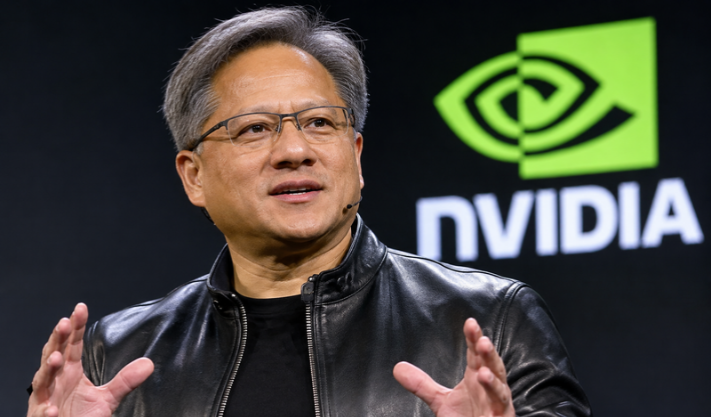
Jensen Huang is co-founder, president and chief executive officer of NVIDIA. He is one of the most significant corporate leaders in the worldwide technology industry, particularly for his involvement in advancing graphics processing, accelerated computing and artificial intelligence.
Huang, who was born in Taiwan and partially raised in the United States, based his career around the belief that computing technology could change the way people work, communicate, create and solve difficult issues. He started the computer graphics company NVIDIA with Chris Malachowsky and Curtis Priem in 1993. The company started as a graphics technology company and eventually became a prominent producer of processors, software platforms and computing systems used across many sectors.
Today, NVIDIA technology is at the heart of AI research, data centres, robotics, autonomous systems, scientific computing, gaming and professional visualisation. Its GPUs and software ecosystem have become an integral part of modern AI infrastructure.
What makes Jensen Huang essential to global business? Under his leadership, NVIDIA has evolved from a graphics-focused semiconductor firm to a leader in the development of accelerated computing and AI. His career is also a case study in how long-term investment in technology, product innovation and smart commercial decisions can transform an industry.
This article discusses Huang’s early life, education, entrepreneurial path, leadership philosophy, company strategy, achievements and his influence on the future of technology.
Jensen Huang: Early Life and Education
Where Was Jensen Huang Born?
Jensen Huang was born in Taiwan on February 17, 1963. His early years were spent travelling from one country to another and adjusting to new educational and cultural contexts. His family moved to the United States when he was a child, before finally settling down in Oregon.
His experiences taught him how to be independent, resilient and adaptable to unfamiliar conditions. Later, these skills proved significant in his entrepreneurial career.
Where Did Jensen Huang Study?
Huang went to Oregon State University, where he studied electrical engineering. He earned a master’s degree in electrical engineering from Stanford University in 1992.
His studies gave him a solid technical foundation in computer engineering and semiconductor technologies. He decided against an academic career and instead joined the technology industry, where he obtained practical experience in chip design and engineering.
What Was Jensen Huang’s Career Before NVIDIA?
Before co-founding NVIDIA, Huang worked for two semiconductor firms, Advanced Micro Devices (AMD) and LSI Logic.
These positions gave him knowledge of the design, development and commercial implementation of semiconductor technology. He learned about how computer chips are made, how technology businesses operate and how engineering decisions impact product performance.
That combination of technical knowledge and industrial expertise put him in a position to develop a firm around a new generation of graphics computing.
How Did Jensen Huang Found NVIDIA?
When Did NVIDIA Start?
Huang co-founded NVIDIA with Chris Malachowsky and Curtis Priem on April 5, 1993. The founders envisioned advanced graphics technology for personal computers, multimedia and gaming.
The company had a relatively focused goal from the start: make computer graphics more powerful and realistic. The computing technology available to consumers was limited, and the graphics business was changing rapidly at the time.
Huang and his co-founders saw that specialised graphics chips could enhance visual performance and provide new opportunities to computer users.
However, the company faced initial technical and commercial difficulties. The semiconductor business was highly competitive, and successfully developing products required substantial investment, engineering expertise and careful consideration of market demand.
The company’s ability to adapt its product approach was a major factor in its long-term success.
What Was the Original Business Idea of NVIDIA?
Initially, NVIDIA focused on computer graphics, specifically technology designed to enhance the visual experience of personal computers and video games.
Its early products were developed to allow computers to process visuals more effectively. This allowed developers to construct visual environments that were increasingly sophisticated and dynamic.
Gradually, the corporation expanded beyond gaming. Its graphics processors found applications in scientific research, professional visualisation, artificial intelligence and other compute-intensive fields.
The expansion shows how a technology developed for one industry can become indispensable to multiple sectors.
Jensen Huang: The Development of the Graphics Processing Unit
What Is a Graphics Processing Unit (GPU)?
One of Huang’s biggest contributions to the technology industry is the advancement of the graphics processing unit, or GPU. His company, NVIDIA, has played a major role in its development and popularisation.
NVIDIA launched the GeForce 256 in 1999, which the company billed as the world’s first GPU. This helped create a new class of processors designed to handle sophisticated graphical calculations.
CPUs, or central processing units, are generally built to handle a variety of computational activities. GPUs, in comparison, are particularly good at performing numerous calculations simultaneously.
This parallel processing capacity made GPUs useful for more than gaming. Later, they were used by researchers and developers for scientific simulations, data analysis, deep learning and artificial intelligence.
What Made the GPU Such a Big Innovation?
The GPU transformed how computers handled visual and computational tasks. It allowed for better graphics and eventually helped drive advancements in modern AI.
AI models typically have to perform vast numbers of computations. Many of these tasks can be completed in parallel on GPUs, making them well suited to training and running sophisticated machine-learning systems.
NVIDIA’s investment in GPU technology opened up opportunities beyond its primary gaming industry.
How Did NVIDIA Become a Leader in Artificial Intelligence?
What Is CUDA and Why Is It Important?
CUDA is a parallel computing platform and programming model developed by NVIDIA in 2006 for using the general-purpose processing capabilities of GPUs.
Before CUDA, GPUs were primarily used for graphics. CUDA allowed developers to take advantage of their parallel-processing capabilities for a wider range of activities.
This was a major strategic move because it encouraged researchers, software engineers and companies to build applications using NVIDIA technology.
The CUDA ecosystem expanded to encompass development tools, libraries, frameworks and software resources. The platform became increasingly valuable to organisations implementing advanced computing applications as more developers started using it.
How Did NVIDIA Contribute to the Advancement of Modern AI?
Deep learning, a branch of artificial intelligence that employs neural networks to detect patterns and execute sophisticated operations, has been significantly shaped by the use of NVIDIA GPUs.
A major milestone was reached in 2012, with the AlexNet neural network demonstrating the effectiveness of GPU-accelerated deep learning for image recognition.
This development sparked interest in employing GPUs for AI research and development.
As AI applications grew, NVIDIA continued investing in processors, networking systems, software and complete computing platforms to support large-scale AI workloads.
Today, its technology powers AI model training, inference, generative AI, data analytics, robotics and scientific computing.
What Is Jensen Huang’s Leadership Style?
Why Is Jensen Huang Known for His Hands-On Leadership?
Jensen Huang is noted for being heavily involved in NVIDIA’s technology strategy, product development and long-term commercial direction.
He has a proven track record of driving engineering excellence, encouraging innovation and addressing complex technological problems.
NVIDIA has created an integrated platform that includes processors, networking, software and development tools rather than treating these technologies as standalone products.
This approach enables the organisation to provide solutions for customers with complex computing needs.
Huang also frequently discusses the importance of preparing for major technological developments before the market begins adopting them.
How Does Jensen Huang Build a Company Focused on Innovation?
Huang’s approach to innovation involves long-term investment, technical knowledge and collaboration across engineering teams.
NVIDIA invests in hardware and software so that its products can function together as part of a larger computing environment.
The organisational culture also encourages people to focus on difficult problems and continuously improve existing technologies.
This is especially significant in semiconductors, where product development might take years of research, engineering, testing and investment.
How Did Jensen Huang Build the NVIDIA Business?
From Gaming Graphics to Data Centre Infrastructure
Since its early days, when its primary focus was computer graphics, NVIDIA’s business has grown considerably.
Gaming remains an important part of what the company does, but data centre computing has become a major commercial area.
Today’s data centres need powerful processors, fast networking, storage systems and software to train and run AI models.
Many of these technologies are delivered by NVIDIA as integrated computing platforms.
Cloud service providers, research organisations, technology businesses and enterprises building AI-powered products use its technologies.
What Are the Main Areas of Business for NVIDIA?
NVIDIA competes in various technology markets:
-
Data Centres: Computing systems and network infrastructure to support AI and other demanding workloads.
-
Gaming: Graphics processors and technologies that enhance game performance and visual quality.
-
Professional Visualisation: Hardware and software for design, engineering, simulation and digital content creation.
-
Automotive: Computing platforms and software for developing driver assistance and autonomous vehicles.
-
Robotics: AI computers, simulation and software for intelligent machines.
-
Scientific Computing: High-performance computing tools for research, simulation and complex data analysis.
NVIDIA’s broad technology portfolio enables it to serve customers across a wide range of sectors.
What Is Jensen Huang’s Role in the Global AI Revolution?
Why Do Technology Companies Depend on NVIDIA?
NVIDIA is used by many organisations because modern AI development requires substantial computational power.
Training a large AI model requires complex computations and huge volumes of data to be processed. Running these models for millions of people also requires powerful infrastructure.
NVIDIA provides GPUs, networking technologies, software libraries and complete systems to support these workloads.
Another key component is its CUDA ecosystem. Developers can rely on established software tools when developing and optimising applications on NVIDIA hardware.
However, NVIDIA isn’t the only business focusing on AI infrastructure. Competitors and customers are also developing alternative CPUs, specialised chips and computing systems.
How Does NVIDIA Support Generative AI?
Generative AI refers to artificial intelligence systems that generate new content such as text, photos, audio, video, computer code and more.
These systems require substantial computing resources for both training and inference.
Generative AI development relies on NVIDIA’s GPU platforms, AI software and data centre technologies. Its technologies power organisations constructing AI assistants, enterprise applications, creative tools and foundation models.
However, the company’s strategy isn’t limited to selling individual chips. Its goal is to provide an integrated technology platform for organisations building and deploying AI at scale.
What Are Jensen Huang’s Biggest Achievements?
Jensen Huang has built NVIDIA into a leading global semiconductor and computing company and helped make GPUs a critical tool for modern computing.
His most noteworthy professional achievements include:
-
Co-founded NVIDIA in 1993: Established a company focused on advancing graphics technology.
-
1999 – The Birth of the GPU: Helped introduce a new class of computing hardware.
-
2006 – CUDA Launch: Extended the use of GPUs beyond traditional graphics applications.
-
Advancing GPU-Accelerated AI: Helped make accelerated computing a foundation for modern deep learning.
-
Expanding NVIDIA’s Technology Ecosystem: Built a platform encompassing chips, systems, networking and software.
-
Supporting Industrial Applications: Led technological advancements across healthcare, automotive technology, robotics, scientific research and manufacturing.
Huang has earned numerous industry and academic awards, including the Semiconductor Industry Association’s Robert N. Noyce Award and honours from the National Academy of Engineering.
What Influence Has Jensen Huang Had on Global Business?
Growth in the Semiconductor Industry
Under Huang’s leadership, the strategic importance of semiconductors to the modern economy has become increasingly evident. Smartphones, cars, cloud platforms, industrial equipment, medical technology and artificial intelligence systems all depend on computer processors.
NVIDIA’s success highlights the importance of specialised processors and accelerated computing. Its growth has also encouraged further investment in semiconductor research, advanced manufacturing and computing infrastructure.
Its influence spans a worldwide supply chain of chip designers, manufacturers, equipment suppliers, software developers, cloud providers and enterprise customers.
How Has NVIDIA Changed the Business Technology Market?
NVIDIA has helped organisations shift from traditional computing to accelerated computing platforms.
Today, organisations utilise AI infrastructure to automate operations, analyse large datasets, create digital products and improve decision-making.
The financial services, healthcare, automotive, retail, telecommunications and manufacturing sectors are investigating how artificial intelligence can improve their operations.
This transition has created new economic opportunities and increased the demand for computing power, technological skills and reliable digital infrastructure.
How Is NVIDIA’s Business Performing Under Jensen Huang?
The growth of NVIDIA reflects the increasing importance of AI infrastructure and accelerated computing.
Annual revenue for the fiscal year ended January 25, 2026, was roughly $215.9 billion, an increase of 65% over the previous fiscal year. This was driven by expansion in its data centre business.
These figures illustrate the extent of demand for AI computing systems, but financial performance might vary according to market conditions, competition, customer investment and technological improvements.
Why Is NVIDIA’s Data Centre Business So Crucial?
The data centre business sells processors, networking technology and computing systems used to build and run AI applications.
As corporations use generative AI and other sophisticated computing techniques, they need infrastructure that can manage increasingly complicated workloads.
NVIDIA’s integrated platform strategy positions the company across many parts of this infrastructure market.
Continued innovation, customer demand, supply chain capacity, energy availability and competition from other computing solutions will all influence long-term performance.
What Challenges Does Jensen Huang Face as CEO of NVIDIA?
Huang also faces several significant business challenges as NVIDIA has become a prominent player in the technology industry.
Increasing Competition in AI Chips
Other semiconductor manufacturers and major technology organisations are developing processors for AI applications.
This could impact pricing, product development, customer relationships and NVIDIA’s market position.
Global Semiconductor Supply Chains
Advanced semiconductor manufacturing depends on specialised manufacturing facilities, equipment, materials and international suppliers.
At NVIDIA, the leadership team has a critical responsibility to manage supply chain risks and ensure adequate production capacity.
Energy Consumption of AI Data Centres
Large AI infrastructure requires substantial electricity and cooling capacity.
As more organisations adopt AI, data centre operators need to consider energy efficiency, infrastructure planning and environmental impact.
Market Access and International Regulations
International trade rules, semiconductor exports and technological regulations can affect NVIDIA’s ability to serve clients in different regions.
The company must adapt its business plan according to changing regulatory circumstances.
Continuous Innovation
Technology markets change rapidly. To preserve its position, NVIDIA must continue producing competitive chips, software platforms, networking systems and computing architectures.
What Is Jensen Huang’s Vision for the Future?
What Does Jensen Huang See for the Future of Artificial Intelligence?
In Huang’s view, artificial intelligence represents a major shift in computing. He has said that AI infrastructure is a new industrial base that organisations can leverage to build intelligent products and services.
He seeks to make accelerated computing more accessible to developers, researchers, corporations and governments.
That overarching goal is reflected in what NVIDIA is doing in AI models, robotics, digital twins and autonomous systems.
What Does NVIDIA’s Technology Strategy Say About the Future of Robotics?
NVIDIA sees robotics as a significant growth area. To operate intelligently, robots need to perceive their environment, analyse information, plan actions and interact with physical settings.
NVIDIA supports robotics development using its processing systems, simulation tools and software frameworks.
The technology can be applied to manufacturing, logistics, healthcare, research and other industrial sectors.
How Might AI Transform the Future of Work?
AI has the potential to transform how employees conduct research, generate content, analyse data, develop software and manage company operations.
AI assistants and automated systems can help companies with repetitive tasks, freeing up employees to focus on more complex responsibilities.
However, the benefits depend on competent deployment, worker training, data security and effective management.
Huang’s leadership at NVIDIA gives the company influence as businesses try to navigate these changes.
Jensen Huang Frequently Asked Questions
Who Is Jensen Huang?
Jensen Huang is the co-founder, president and CEO of NVIDIA, a leading technology company focused on graphics processing, accelerated computing and artificial intelligence infrastructure.
When Did Jensen Huang Found NVIDIA?
Jensen Huang, Chris Malachowsky and Curtis Priem co-founded NVIDIA on April 5, 1993.
What Is Jensen Huang’s Educational Background?
Huang holds a bachelor’s degree in electrical engineering from Oregon State University and a master’s degree in electrical engineering from Stanford University.
What Is Jensen Huang Known For?
He is perhaps best recognised as a co-founder of NVIDIA and a leader in advancing GPU technology, accelerated computing and the infrastructure supporting modern artificial intelligence.
What Is NVIDIA?
NVIDIA designs graphics processing units, artificial intelligence computing systems, networking technologies, software platforms and processors for use in gaming, data centres, robotics, automotive technology and scientific research.
Why Is NVIDIA Important for Artificial Intelligence?
NVIDIA provides the technology and software that developers need to train and run AI models. Its GPUs and CUDA platform are widely used in machine learning, generative AI and other compute-intensive applications.
What Is NVIDIA CUDA?
CUDA is NVIDIA’s parallel computing platform and programming model. It allows developers to use the processing capabilities of NVIDIA GPUs for non-graphics applications, such as scientific computing, data processing and artificial intelligence.
Who Co-Founded NVIDIA With Jensen Huang?
NVIDIA was co-founded in 1993 by Jensen Huang, Chris Malachowsky and Curtis Priem.
What Did Jensen Huang Do Before NVIDIA?
Before starting NVIDIA, Huang worked at LSI Logic and Advanced Micro Devices, where he gained experience in semiconductor technology and engineering.
What Industries Utilise NVIDIA Technology?
NVIDIA technology is used in artificial intelligence, gaming, healthcare, automotive, robotics, manufacturing, financial services, scientific research and professional visualisation.
What Is Jensen Huang’s Leadership Style?
He is known for long-term innovation, engineering excellence, technical problem-solving and establishing an integrated technology ecosystem under his leadership.
What Are Jensen Huang’s Biggest Business Successes?
His key contributions include co-founding NVIDIA, helping advance GPU computing, introducing CUDA and managing the company’s expansion into AI infrastructure and accelerated computing.
What Challenges Is NVIDIA Facing?
The company is dealing with competition in AI processors, semiconductor supply chain concerns, energy requirements, international regulations and the need to keep pace with rapid technological innovation.
What Is Jensen Huang’s Role in the Future of Technology?
Huang’s contribution involves advancing computing platforms for AI, robotics, scientific research, autonomous systems and other technologies that could transform enterprises and industries.
Conclusion: The Enduring Impact of Jensen Huang on Technology’s Future
The journey of Jensen Huang from semiconductor engineer to co-founder and CEO of NVIDIA is an important lesson in how technical competence, entrepreneurial drive and long-term thinking can completely reshape a corporation.
Since founding NVIDIA in 1993, he has led the firm through numerous important phases of technological evolution. What started as a graphics company has become a worldwide computing platform for gaming, scientific research, cloud infrastructure, robotics and artificial intelligence.
Under his direction, GPUs have become vital to modern computing, and NVIDIA has become a central participant in the worldwide AI revolution.
Also Read:-
AI Is Transforming the Future of Work and Careers
Top 15 Successful Women Entrepreneurs to Watch in 2027
Key Challenges Entrepreneurs Will Face in 2027