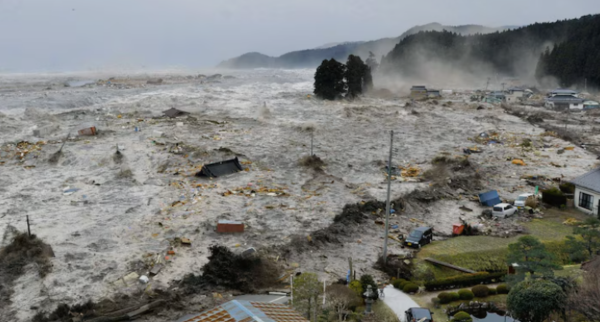
In a major natural disaster event that has gripped nations across the Pacific, tsunami waves hit Hawaii early Tuesday following a massive earthquake off Russia’s eastern coast. The quake, which registered a magnitude of 8.4 on the Richter scale, struck near the Kamchatka Peninsula, triggering widespread tsunami alerts and emergency evacuations across several countries bordering the Pacific Ocean.
Earthquake Details and Tsunami Warning
According to the United States Geological Survey (USGS), the earthquake struck at a depth of approximately 30 kilometers beneath the seafloor, generating powerful tremors felt as far as Japan and Alaska. Shortly after the quake, the Pacific Tsunami Warning Center (PTWC) issued tsunami alerts for coastal areas including Hawaii, Japan, Alaska, the Philippines, and parts of the U.S. West Coast.
The PTWC warned of the potential for life-threatening waves, urging coastal residents to move to higher ground immediately. “Based on all available data, tsunami waves have been observed and are expected to cause dangerous coastal flooding and strong currents,” the warning stated.
Tsunami Waves Reach Hawaiian Shores
By dawn, the first waves from the tsunami had reached Hilo and Kona on the Big Island of Hawaii, with reports of water surges reaching up to 2.5 meters in some coastal areas. Emergency sirens blared across the islands as authorities urged citizens to evacuate low-lying zones. Videos shared on social media showed water rushing inland, submerging roads, sweeping away vehicles, and damaging property.
So far, no casualties have been confirmed in Hawaii, but officials report extensive property damage in some coastal towns. Governor Josh Green has declared a state of emergency and mobilized the National Guard to assist in evacuation, rescue, and recovery efforts.
Pacific Countries on High Alert
Other countries across the Pacific Ring of Fire, including Japan, the Philippines, Papua New Guinea, and New Zealand, have also issued tsunami alerts. Japanese authorities temporarily halted coastal railways and suspended flights at certain airports in the northern region. In the Philippines, coastal communities in Luzon and Samar were evacuated as a precaution.
The U.S. West Coast, including California, Oregon, and Washington, remains under tsunami watch. Coastal towns have reported minor surges, though no significant damage has yet been recorded. The National Weather Service continues to monitor the situation and update the public as new information becomes available.
Global Concern and Climate Connection
This natural disaster has once again raised concerns about the growing risks of seismic activity in the Pacific Basin. Experts highlight the importance of tsunami readiness and urge governments to invest in early warning systems, community education, and climate-resilient infrastructure.
As the Pacific region responds to the aftermath, disaster relief agencies and humanitarian organizations are preparing to provide support to affected communities.
Published: 30th July 2025
For more such articles, please follow us on Twitter, Linkedin & Instagram
Also Read:
This Vegetable Helps Balance Hormones Health
Who Was Shane Tamura, Manhattan Office Shooter?
2025 Global Recession Threat: What Analysts Are Saying