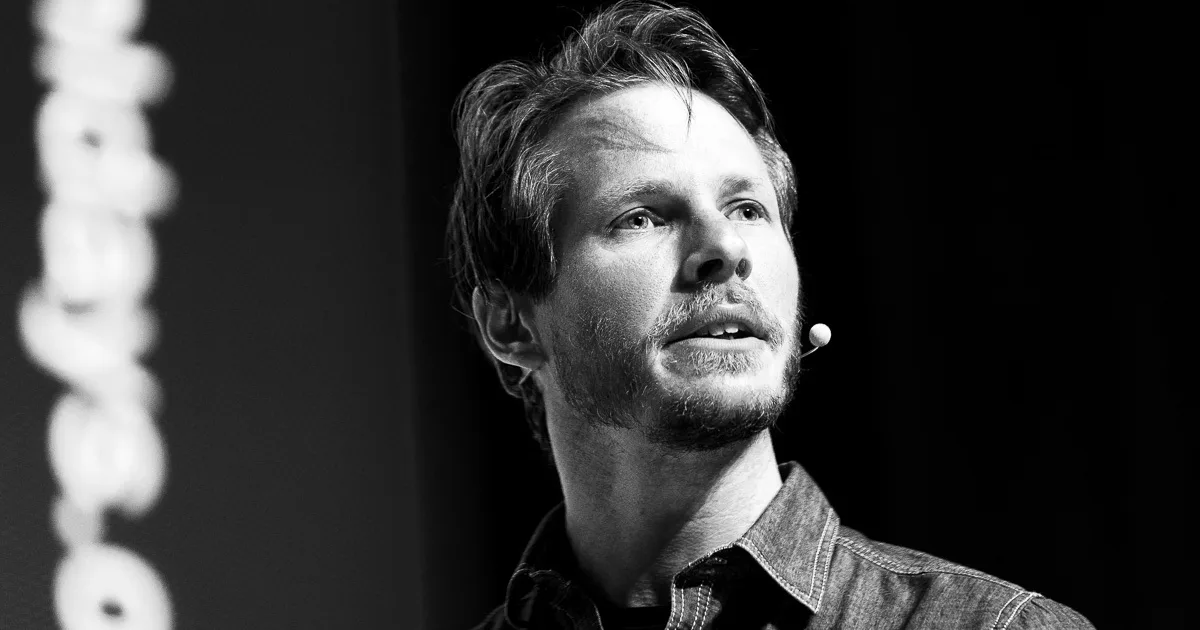
Who Is Thomas Wolf?
Thomas Wolf is a French computer scientist, entrepreneur, and AI researcher best known as the co-founder and Chief Science Officer of Hugging Face. His work has helped make advanced artificial intelligence and machine learning technologies more accessible to developers, researchers, students, and organizations worldwide.
What makes Wolf particularly interesting is that his career did not begin in conventional artificial intelligence. His academic background is in statistical and quantum physics, and he previously worked as a European patent attorney before moving deeper into machine learning and open-source software.
His career demonstrates how expertise from different disciplines can come together to influence one of technology’s fastest-growing industries.
What Is Thomas Wolf Famous For?
Thomas Wolf is best known for his work with Hugging Face and his contributions to open-source tools that make modern AI models easier to access and use.
He contributed to the development of the Hugging Face Transformers and Datasets libraries. These technologies allow developers to work with machine learning models and datasets without having to build every component from scratch.
As co-founder and Chief Science Officer of Hugging Face, Wolf has focused on making complex AI research more approachable. His influence also extends beyond software through his advocacy for open science and large-scale collaboration, particularly through the BigScience research project.
How Did Thomas Wolf Get Into AI?
Thomas Wolf entered artificial intelligence through an unconventional career path.
He studied physics and earned a Ph.D. in statistical and quantum physics from Sorbonne University. Before becoming an AI entrepreneur, he worked as a patent attorney, helping startups and larger organizations address intellectual property matters.
His interest in machine learning developed through his work with technology businesses. His passion for machine learning and deep learning grew while consulting for AI and ML companies. He began studying the field independently before joining the founding team of Hugging Face.
This combination of scientific training, legal knowledge, programming ability, and entrepreneurial thinking became a defining part of his professional journey.
When Did Thomas Wolf Co-Found Hugging Face?
Thomas Wolf co-founded Hugging Face in 2016 alongside Clément Delangue and Julien Chaumond.
The company initially began as a chatbot project but later evolved into an open-source artificial intelligence platform.
This transformation became significant for the AI industry. Rather than keeping machine learning technologies behind closed systems, Hugging Face developed a community-oriented ecosystem where researchers and developers could share models, datasets, applications, and research resources.
Wolf became one of the technical and scientific architects behind this development.
What Is the Hugging Face Transformers Library?
The Transformers library is one of the most important open-source projects associated with Hugging Face and Thomas Wolf.
The toolkit provides developers with tools for working with transformer-based machine learning models across natural language processing and other AI applications.
The broader importance of Transformers is that it reduces the technical barrier to using sophisticated pretrained models.
Instead of requiring every researcher or developer to create a model from the ground up, pretrained models can be adapted for specific applications.
This approach has accelerated experimentation, development, and collaboration throughout the AI community.
What Was Thomas Wolf’s Contribution to Open-Source AI?
Open-source AI is a central part of Thomas Wolf’s professional philosophy.
His work has focused on making research, models, datasets, and software more accessible. His approach emphasizes narrowing the gap between academic research and industrial AI laboratories through open science and large-scale collaboration.
This is particularly important because AI development requires extensive knowledge, computational resources, data, and engineering expertise.
Open collaboration enables researchers from different institutions and countries to contribute to shared technical environments.
For Wolf, open source is more than a software-development strategy. It is also a way to encourage broader participation in artificial intelligence research and innovation.
What Was BigScience and How Did Thomas Wolf Get Involved?
BigScience was a large international collaboration involving researchers working on open and multilingual artificial intelligence.
Thomas Wolf was one of the project’s initiators and a senior chair. The initiative brought together experts to explore large language models and open scientific collaboration.
The project eventually produced BLOOM, a multilingual large language model developed through an international research effort.
BigScience demonstrated that advanced AI research does not necessarily have to be developed exclusively inside a small number of private laboratories. Large communities of researchers can also collaborate on ambitious AI projects.
Why Does Thomas Wolf Matter to the AI Industry?
Thomas Wolf matters to the AI industry not because of a single model or company, but because of the infrastructure and ecosystem he has helped build.
His work has contributed to tools that researchers and developers use to experiment with machine learning. Hugging Face’s ecosystem has become an important resource for research organizations, technology companies, universities, and independent developers.
His career also reflects a broader transformation in artificial intelligence.
Modern AI increasingly depends on open ecosystems, reusable models, shared datasets, developer communities, and collaborative research. Wolf has been an active contributor to this emerging AI ecosystem.
What Is Thomas Wolf Doing Today?
Thomas Wolf continues to serve as Chief Science Officer at Hugging Face and remains active in open-source machine learning and artificial intelligence.
His interests extend across emerging areas of AI, open research, robotics, and approaches for making advanced AI technologies more accessible.
His recent work has also included interest in robotics and open-source AI projects such as LeRobot.
This reflects how the AI landscape is expanding beyond traditional language models. Robotics, multimodal systems, AI agents, scientific discovery, and smaller and more efficient models are becoming increasingly important areas of research.
Open-source communities are also playing an increasingly important role in these fields.
What Can Entrepreneurs and Developers Learn From Thomas Wolf?
Thomas Wolf’s career offers several important lessons for entrepreneurs, developers, and technology professionals.
First, expertise can come from unexpected places. His transition from physics and patent law to AI demonstrates that innovation does not always follow a conventional career path.
Second, accessibility can create significant impact. By helping develop tools that make advanced AI easier to use, Wolf and his colleagues have enabled more people to participate in machine learning.
Third, collaboration matters. BigScience demonstrated how large research communities can tackle challenges that may be difficult for individuals or small teams to address alone.
Finally, technology and education can reinforce each other. Open-source tools become more valuable when developers understand how to use them, adapt them, improve them, and contribute back to the community.
Why Does Thomas Wolf Matter for the Future of AI?
The future of artificial intelligence will not be determined solely by larger models and greater computing power. It will also depend on who can access AI technologies and who can participate in developing them.
These questions are central to Thomas Wolf’s career.
Hugging Face has helped promote an approach to AI development centered on open-source software, collaborative research, scientific education, and community participation.
His journey from physics to patent law and then machine learning also demonstrates the value of crossing disciplines rather than viewing technology as an isolated field.
As AI becomes increasingly important in business, science, education, and robotics, the infrastructure supporting AI may become almost as important as individual models.
That infrastructure is closely connected to the kind of open ecosystem Thomas Wolf has helped build.
Quick Answer: Who Is Thomas Wolf?
Thomas Wolf is a co-founder and Chief Science Officer at Hugging Face. He is an AI researcher and entrepreneur known for his work on open-source machine learning tools, the Transformers ecosystem, and collaborative initiatives such as BigScience.
Quick Answer: What Is Thomas Wolf’s Educational Qualification?
Thomas Wolf is a physicist with a Ph.D. in statistical and quantum physics from Sorbonne University. He also trained as a lawyer and worked as a patent attorney before moving into machine learning and artificial intelligence.
Quick Answer: What Is Thomas Wolf Known For?
He is best known for co-founding Hugging Face and contributing to open-source AI tools, particularly the Transformers ecosystem. He has also played an important role in promoting open AI research and collaborative projects such as BigScience.
Quick Answer: What Does Thomas Wolf Do for AI?
His work focuses on making open-source AI tools more accessible, supporting machine learning research communities, and promoting collaborative AI development. His contributions have made it easier for researchers and developers to experiment with advanced models and datasets.
Summary
Thomas Wolf represents a distinctive kind of technology leader, combining scientific curiosity, programming, entrepreneurship, and open collaboration.
His journey from statistical physics and patent law to Hugging Face and international AI research demonstrates that innovation can emerge from unexpected career paths.
More importantly, his work highlights a central question for the next phase of artificial intelligence: How can sophisticated AI technology become more accessible to the people who want to use, study, and improve it?
As artificial intelligence continues to reshape business, science, education, and robotics, the open infrastructure supporting these technologies could become as important as the individual AI models themselves. Thomas Wolf’s career is closely connected to that transformation.
Also Read:-
What Are the Top 10 Skincare Products for Every Skin Type?
How Much Does It Cost to Buy a Home in Washington?
Sundar Pichai: Google CEO Leading AI Innovation in 2026