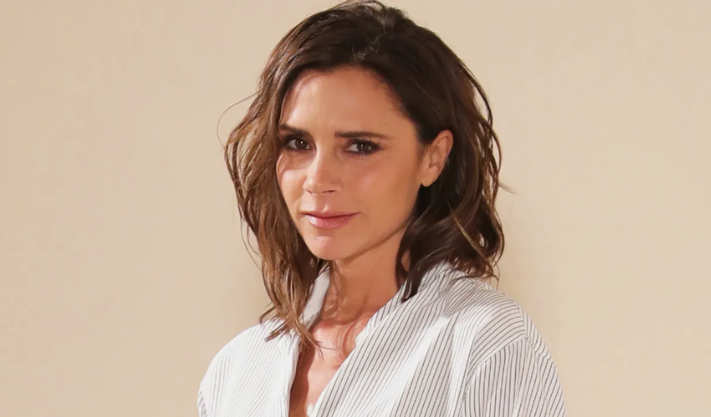
Few public figures have navigated reinvention as successfully as Victoria Beckham. Rising to fame in the 1990s as a member of one of the world’s biggest pop groups, she transformed herself from pop star to respected fashion designer and entrepreneur. Her journey reflects determination, resilience, and an unwavering commitment to building a credible brand in a highly competitive industry.
Early Life and Rise to Fame
Victoria Caroline Adams was born on April 17, 1974, in Harlow, Essex, England. Raised in a comfortable middle-class family, she developed an early interest in performing arts. Inspired by musical theater and pop culture, she attended dance and modeling schools before pursuing a professional career in entertainment.
Her breakthrough came in 1994 when she auditioned for a new girl group that would soon become the globally dominant Spice Girls. Cast alongside Melanie Brown, Melanie Chisholm, Emma Bunton, and Geri Halliwell, Victoria adopted the nickname “Posh Spice.” The group’s debut single, “Wannabe,” released in 1996, became an international sensation, topping charts in more than 30 countries.
The Spice Girls quickly evolved into a cultural phenomenon. They promoted a message of “Girl Power,” encouraging confidence and independence among young women. Albums, sold-out tours, merchandise, and a feature film cemented their status as one of the best-selling girl groups of all time. During this period, Victoria became known for her sleek style, poised demeanor, and fashion-forward image—traits that would later shape her second career.
Transition from Music to Fashion
Following the group’s hiatus in the early 2000s, Victoria Beckham explored solo music projects, but her ambitions soon shifted. While her pop career had brought fame, it was fashion that truly captured her interest. Frequently featured in style columns and photographed by international media, she developed a reputation as a trendsetter.
Her marriage in 1999 to football superstar David Beckham amplified public attention. Together, they became one of the most photographed celebrity couples in the world. However, Victoria was determined to establish an identity beyond being a pop star or footballer’s wife.
In 2008, she launched her eponymous fashion label, Victoria Beckham. The debut collection focused on structured dresses with clean lines and refined silhouettes. Industry insiders initially questioned whether her brand would be taken seriously, suspecting it might rely solely on celebrity appeal. Instead, critics were impressed by the craftsmanship and attention to detail. Buyers from prestigious department stores placed orders, and her label began to gain momentum.
Building a Respected Fashion Brand
Victoria Beckham approached fashion with discipline and long-term strategy. Rather than chasing fast trends, she emphasized timeless elegance and sophisticated tailoring. Her designs became known for their minimalist aesthetic, luxurious fabrics, and flattering fits.
The brand expanded gradually, adding ready-to-wear collections, accessories, handbags, and eyewear. By maintaining creative control and surrounding herself with experienced industry professionals, she positioned the company as a serious contender in high fashion.
Her efforts earned significant recognition. In 2011 and 2014, she won Designer Brand of the Year at the British Fashion Awards, organized by the British Fashion Council. These accolades validated her transition from celebrity to designer and underscored her commitment to excellence.
Despite industry praise, the journey was not without challenges. The global fashion market is volatile, and her company faced financial pressures during expansion phases. Nonetheless, Beckham remained steadfast, restructuring operations when necessary and continuing to refine the brand’s direction.
Expansion into Beauty
In 2019, Victoria Beckham expanded her entrepreneurial reach by launching Victoria Beckham Beauty. The brand reflected her personal approach to makeup and skincare—clean, high-performance products designed for modern consumers. Sustainability and transparency were central pillars of the venture, aligning with growing industry demand for ethical practices.
Her move into beauty echoed a broader trend of celebrities entering the cosmetics space, yet Beckham distinguished herself by emphasizing sophistication and minimalism rather than bold branding. She frequently engaged with customers through social media, offering tutorials and insights into her daily routines.
This expansion demonstrated her understanding of brand cohesion. Fashion and beauty complemented each other naturally, strengthening her overall business ecosystem. By carefully curating every detail—from packaging to marketing—she ensured consistency across platforms.
Reinvention and Public Perception
One of Victoria Beckham’s most notable achievements is her ability to reshape public perception. In the 1990s, she was widely known as “Posh Spice,” a pop personality defined by glamour and celebrity culture. Over time, she rebranded herself as a serious entrepreneur with refined taste and business acumen.
Media narratives gradually shifted from focusing on her fame to highlighting her discipline and work ethic. Interviews revealed her hands-on involvement in design, fittings, and brand strategy. Colleagues frequently described her as focused and detail-oriented.
Her evolution also reflects broader cultural changes. In an era where celebrity influence can quickly fade, Beckham demonstrated that longevity depends on adaptability and credibility. By investing in education about the fashion industry and collaborating with experts, she earned respect within an initially skeptical community.
Family and Personal Life
Victoria Beckham’s personal life has remained a constant source of media attention. Her marriage to David Beckham spans decades, a rarity among high-profile couples. Together, they have four children—Brooklyn, Romeo, Cruz, and Harper.
Balancing family and career has been a recurring theme in her public narrative. Beckham often speaks about the importance of prioritizing her children while managing global business responsibilities. Her ability to navigate both spheres contributes to her multidimensional public image.
In 2017, she was appointed Officer of the Order of the British Empire (OBE) for her services to fashion. The honor marked a significant milestone, symbolizing recognition not just of celebrity status but of professional achievement.
Cultural Impact and Legacy
Victoria Beckham’s story is ultimately one of reinvention. She defied the stereotype that pop stars cannot transition into serious business leaders. Through perseverance and calculated risk-taking, she built a fashion house that competes on international runways.
Her legacy extends beyond clothing and cosmetics. She represents modern female entrepreneurship—ambitious, adaptable, and image-conscious yet grounded in strategic thinking. By continuously refining her brand, she has maintained relevance in industries known for rapid turnover.
Moreover, Beckham’s journey illustrates the evolving relationship between fame and enterprise. While her celebrity provided initial visibility, sustained success required skill, resilience, and vision. She leveraged recognition as a starting point rather than a crutch.
Conclusion
Victoria Beckham’s transformation from pop icon to global fashion powerhouse is a compelling narrative of ambition and reinvention. From her early days with the Spice Girls to her leadership in luxury fashion and beauty, she has consistently demonstrated determination and growth.
In a world where public attention can be fleeting, Beckham built something enduring. Her name now signifies more than a chapter in pop music history—it represents a sophisticated global brand. Through creativity, business intelligence, and persistence, she has carved out a legacy that transcends celebrity and secures her place as a formidable force in fashion.
For more such articles, please follow us on Twitter, Linkedin & Instagram
Also Read:
Kylie Jenner: The Billion-Dollar Beauty Entrepreneur
Huda Kattan: The Digital Beauty Mogul Who Built a Global Empire
Kim Kardashian: From Reality Star to Global Business Powerhouse