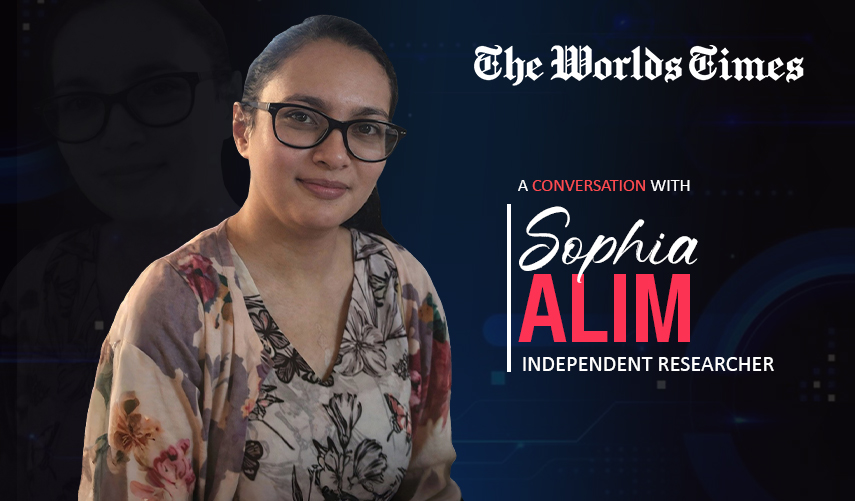
Dr. Sophia Alim is an independent researcher who has spent more than 14 years examining the relationship between social media and society. With a PhD in Computing from the University of Bradford and over 25 published journal papers, conference papers, and book chapters, her research has contributed to international discussions on privacy, cyberbullying, social media and education, digital wellbeing, online vulnerability, and web accessibility. In this interview, Sophia shares insights from her research journey, discusses the evolving impact of social media, and highlights the importance of creating safer and more inclusive digital environments.
From Curiosity to Research Excellence
We started the interview by asking, “Sophia Alim, your work spans social media research, digital wellbeing, privacy, and online safety. Can you tell us about your journey and what inspired you to pursue this field?”
Sophia Alim replied, “My journey into research began during my undergraduate studies when I was introduced to the concept of web accessibility. I became fascinated by how technology and digital design could shape people’s experiences online, either by empowering users or unintentionally creating barriers. That early interest led me to explore the broader relationship between technology and society.
This curiosity ultimately inspired me to pursue a PhD in Computing at the University of Bradford, focusing on social media and privacy. This looked at how accessible social media profile data was and how this can cause users to be vulnerable to social engineering attacks. Over the past 14 years, I have researched topics including social media and education, ethics associated with automated data extraction, cyberbullying, digital wellbeing and web accessibility. Along the way, I have authored and co-authored more than 25 academic publications, contributing to conversations around creating safer, more inclusive, and evidence based digital environments. Today, alongside my work in the EdTech industry, I remain committed to understanding how technology affects individuals and communities. My goal is to ensure that online spaces are designed and governed in ways that protect users, promote wellbeing, and support meaningful digital engagement.”
Exploring the Digital Society
The Worlds Times: How has social media changed since you first began researching it more than 14 years ago?
Sophia Alim replied, “Social media has evolved from being primarily a tool for communication and networking into a powerful force that shapes public opinion, education, business, and even policymaking. The scale of influence has increased dramatically, as have concerns around privacy, misinformation, online harassment, and mental wellbeing. What was once considered a supplementary part of daily life has become central to how people connect, consume information, and express them.”
Understanding the hidden influences
The Worlds Times: What are some of the most important findings from your research on social media behaviour?
Sophia Alim replied, “One recurring theme is that human behaviour online is often influenced by factors that users may not consciously recognise, including platform design, social pressures, and perceptions of privacy. My research has shown that while social media offers significant opportunities for communication and learning, it can also expose users to risks such as oversharing, social engineering attacks, cyberbullying, and vulnerability to harmful content. Understanding these dynamics is essential for developing safer digital spaces.”
The Privacy Paradox in the Digital Age
The Worlds Times: Why is privacy still one of the most pressing issues in the digital age?
Sophia Alim replied, “Privacy remains a challenge because many individuals are required to make complex decisions about their personal information in environments that are constantly changing. There is no such thing as private information on the internet. There is an increase in companies being hacked and personal data being stolen. While users often express concern about privacy, there can be a gap between those concerns and their actual online behaviour. Research helps us understand this disconnect and identify ways to improve digital literacy, platform transparency, and user protection.”
Cyberbullying beyond the Screen
The Worlds Times: Cyberbullying continues to affect millions of people worldwide. What has your research revealed about this issue?
Sophia Alim replied, “Cyberbullying is not simply a technological problem; it is a social issue that manifests through technology. Research shows that its effects can extend well beyond the online environment, impacting mental health, social ties, academic performance, workplace experiences, and overall wellbeing. With the rise in AI and Deepfakes, there are more methods to commit cyberbullying and exploit the victims. Effective solutions require a combination of education, prevention strategies, effective sanctions, platform accountability, and supportive interventions that address both the technological and human dimensions of the problem.”
The Importance of Digital Wellbeing
The Worlds Times: Digital wellbeing has become an increasingly important topic. How do you define it, and why does it matter?
Sophia Alim replied, “Digital wellbeing refers to maintaining a healthy relationship with technology and ensuring that digital interactions contribute positively to quality of life. As online engagement continues to grow, issues such as digital fatigue, information overload, comparison with other social media users and online stress have become more prominent. If we don’t have effective digital use habits and fail to embrace the outside real world, the virtual world becomes our life and leads to mental health issues such as social anxiety and depression. Research in this area helps us better understand how individuals can benefit from technology while minimising its potential negative effects.”
Understanding Online Vulnerability
The Worlds Times: Your research also explores online vulnerability. What does this concept mean in today’s digital world?
Sophia Alim replied, “When I did my PhD, which focused on the vulnerability of online social network (OSN) profile data, we referred to online vulnerability as “the likelihood that the personal details displayed on an OSN profile will spread due to the actions of the profile owner and their friends in regard to information disclosure”
Online vulnerability on a wider scale refers to the heightened risks faced by individuals who may be more susceptible to harm in digital environments. This can include children, older adults, individuals with limited digital literacy, or those experiencing personal challenges. Understanding vulnerability is important because it helps inform policies, technologies, and educational initiatives designed to protect users while promoting inclusive participation online.”
Accessibility as a Path to Inclusion
The Worlds Times: How does web accessibility contribute to a more inclusive internet?
Sophia Alim replied, “Accessibility is fundamental to ensuring that everyone can participate in digital society. When I first began researching web accessibility, there was a main focus on accessibility for disabled users. However, this has changed over the years to include everyone. When websites, platforms, and applications are designed with accessibility in mind, they become more usable for people with diverse needs and abilities e.g. users with low bandwidth, loss of hearing and noisy environments. Accessibility is not simply a technical requirement; it is an important aspect of digital inclusion and social equity.”
Research with Real-World Impact
The Worlds Times: With more than 25 academic publications to your name, what achievement are you most proud of?
Sophia Alim replied, “I am most proud of contributing research that has helped advance understanding of important societal issues linked to technology. Knowing that my work has been cited internationally and used to inform discussions on social media, education, privacy, accessibility, and cyberbullying is incredibly rewarding. The ultimate goal of research is to create knowledge that can make a meaningful difference, and I am grateful to have contributed to that process.”
The Future of Social Media Research
Lastly, we asked, “Looking ahead, what do you believe are the biggest challenges and opportunities for social media research?”
“The rapid growth of artificial intelligence, immersive technologies e.g. Virtual reality, and digital platforms presents both opportunities and challenges. Researchers must continue examining how these developments affect privacy, wellbeing, trust, and social interaction. At the same time, there is an opportunity to use evidence-based research to help shape technologies that are safer, more transparent, and more inclusive. I believe the future of digital innovation must be guided not only by technological advancement but also by a commitment to human wellbeing and ethical responsibility.” Sophia Alim concluded
Connect with Sophia Alim on LinkedIn
Also Read:-
Liliana Rambo on Leadership, Workforce Development & SERJobs
Canatech: Building the Financial Infrastructure for a Borderless Business Economy
Kedar Nath Prashad: The founder of Global Microtunnelling Projects