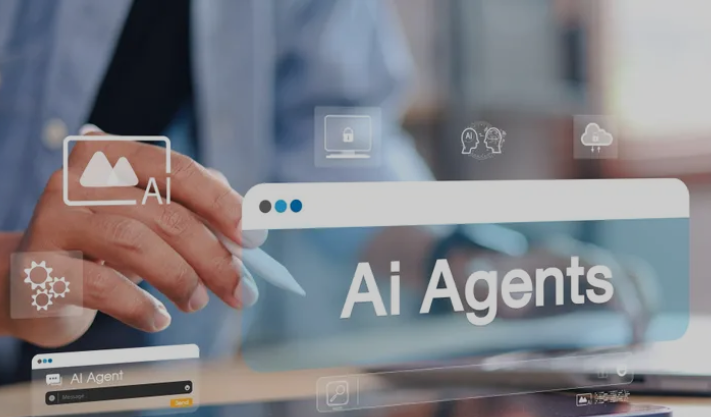
In today’s fast-moving digital economy, businesses that leverage artificial intelligence (AI) not only unlock operational efficiencies but also gain a decisive competitive edge. Among the most powerful innovations are AI agent platforms — tools that automate complex workflows, augment decision-making, and deliver personalized experiences at scale. For executives looking to future-proof their organizations, understanding these platforms is critical. Here are five AI agent platforms every business leader should know.
1. OpenAI GPT-Powered Agents
OpenAI’s suite of generative AI technologies has redefined what intelligent automation can achieve. At the core are GPT-based agents — autonomous responders capable of engaging in context-aware conversations, generating high-quality content, and executing multi-step tasks.
These agents excel in:
-
Customer support automation with human-like responsiveness
-
Content creation from marketing copy to technical documentation
-
Internal knowledge assistance for employees
What sets OpenAI agents apart is their adaptability. Through APIs and plugins, businesses can embed these AI capabilities directly into their workflows, CRM systems, and support platforms. As a result, organizations can dramatically reduce manual overhead while maintaining high quality and responsiveness.
Business Impact: Efficiency gains, better customer experiences, and scalable content workflows.
2. IBM Watson Orchestrate
IBM Watson has long been a pioneer in enterprise AI, and Watson Orchestrate brings that legacy into the era of digital automation. This platform enables the creation of AI agents that act as digital assistants across business processes.
Key capabilities include:
-
Workflow automation without extensive coding
-
Integration with enterprise applications like Salesforce, Workday, and SAP
-
Task prioritization and scheduling
Watson Orchestrate allows employees to delegate repetitive or administrative tasks to AI, allowing teams to focus on strategic work. For example, a salesperson might ask Watson to prepare proposals, schedule follow-ups, or summarize client interactions.
Business Impact: Reduced administrative load, increased productivity, and more consistent execution of routine tasks.
3. Microsoft Power Virtual Agents
Part of the Microsoft Power Platform, Power Virtual Agents empowers organizations to build intelligent chatbots with little to no coding. These AI agents can be deployed across websites, Microsoft Teams, and customer support portals.
Standout features include:
-
Natural language understanding powered by Microsoft’s AI
-
Seamless integration with Microsoft 365 and Azure services
-
Low-code/No-code design interface
For businesses already embedded in the Microsoft ecosystem, Power Virtual Agents offers a flexible and accessible way to automate support tasks, engage customers, and provide self-service capabilities. With analytics and reporting, leaders can monitor performance and continuously improve conversations.
Business Impact: Enhanced customer self-service, reduced support costs, and better engagement metrics.
4. Salesforce Einstein GPT Agents
Salesforce Einstein GPT brings generative AI directly into the world’s leading CRM platform. These AI agents assist sales, service, and marketing teams by delivering real-time insights and context-aware recommendations.
Core strengths include:
-
Automated opportunity insights for sales pipelines
-
AI-powered customer responses in service interactions
-
Content generation for marketing campaigns
Einstein GPT leverages CRM data to personalize outputs. For example, instead of generic email suggestions, it tailors responses based on past customer interactions and preferences. This helps businesses foster stronger relationships and increase conversion rates.
Business Impact: Higher sales productivity, more responsive service teams, and personalized marketing at scale.
5. Rulai Virtual AI Agents
Rulai is an enterprise-grade AI agent platform focused on delivering sophisticated conversational AI experiences. Its strength lies in building multi-turn, context-rich dialogs that mimic real human conversations.
Platform features include:
-
Advanced natural language processing
-
Omnichannel deployment (web, mobile, messaging apps)
-
Customizable workflows and analytics
Rulai AI agents are used widely in sectors like banking, insurance, and telecommunications where customer queries often require context-aware responses. The platform also supports handoff to human agents when needed, ensuring seamless customer experience.
Business Impact: Higher customer satisfaction, reduced response times, and deeper automation across channels.
Selecting the Right AI Agent Platform
Choosing an AI agent platform isn’t a one-size-fits-all decision. Business leaders should consider:
1. Strategic Goals
What do you want the AI to accomplish — cost reduction, customer engagement, internal efficiency, or something else?
2. Ecosystem Compatibility
Does the AI integrate smoothly with your existing tools and systems?
3. Customization and Control
How much control do you need over behavior, workflows, and data privacy?
4. Scalability
Can the platform grow with your business needs?
Conclusion
AI agent platforms are rapidly evolving from experimental technologies to essential business tools. They help organizations automate smarter, serve customers better, and unlock insights from data that once sat untouched. Leaders who understand and adopt the right AI agent platforms will be best positioned to thrive in an increasingly automated and intelligent business landscape.
Published: 25th February 2026
For more such articles, please follow us on Twitter, Linkedin & Instagram
Also Read:
10 powerful lessons freelancers learn from rejection
8 Powerful Books Every Intrapreneur Should Read
Mexico’s top cartel boss ‘El Mencho’ killed, unrest grows