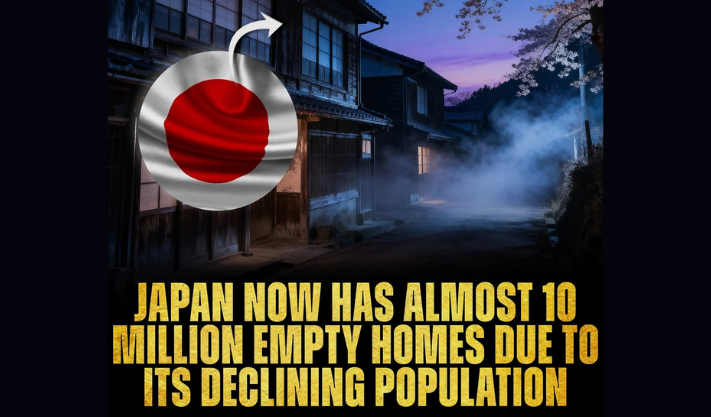
Japan is facing a quiet but serious housing crisis. Despite being known for its crowded cities and advanced infrastructure, the country now has almost 10 million empty homes, a figure that continues to rise year after year. These vacant properties, commonly called akiya (meaning “empty houses”), are a direct result of Japan’s declining and aging population. What once were lively family homes are increasingly being left unused, creating social, economic, and urban challenges across the nation.
A Nation Growing Older and Smaller
The root of Japan’s empty-home problem lies in its demographic shift. Japan has one of the lowest birth rates in the world, while its life expectancy remains among the highest. As a result, the population is shrinking and aging rapidly. Elderly homeowners pass away or move into care facilities, leaving behind houses that often have no one willing or able to live in them.
Younger generations are also playing a role. Many young people leave their hometowns to seek education and employment in major cities such as Tokyo, Osaka, and Yokohama. Rural areas and small towns are especially affected, as entire communities slowly lose residents. With fewer young families staying behind, homes are abandoned rather than passed on.
Why So Many Homes Go Unused
Several factors explain why these homes remain empty instead of being sold or reused. First, many Japanese houses are built with materials designed for a limited lifespan. Older homes often require expensive renovations to meet modern safety standards, making them unattractive to buyers.
Second, inheritance laws and property taxes can discourage families from taking ownership. Heirs may live far away, have no intention of returning, or feel overwhelmed by maintenance costs. In some cases, families keep homes legally but never occupy them, allowing them to slowly deteriorate.
Cultural preferences also matter. In Japan, newly built homes are often favored over older ones. Unlike in some countries where historic houses increase in value, aging homes in Japan typically lose value over time, reducing the incentive to preserve them.
The Scale of the Problem
With nearly one in seven homes now standing empty, the impact is visible across the country. In rural regions, entire streets may be lined with abandoned houses. In suburban areas, unused homes sit between occupied ones, affecting the appearance and safety of neighborhoods.
These vacant homes can become hazards. Overgrown gardens attract pests, weakened structures risk collapse, and neglected buildings may become sites for illegal dumping or vandalism. For local governments, managing these properties creates additional financial and administrative burdens.
Economic and Social Consequences
The rise in empty homes has significant economic consequences. Property values in affected areas often decline, making it harder for communities to recover or attract new residents. Local businesses suffer when populations shrink, leading to fewer jobs and reduced economic activity.
Socially, the loss of residents weakens community bonds. Schools close due to lack of students, public transportation services are reduced, and healthcare access becomes more limited. For elderly residents who remain, isolation becomes a growing concern as neighbors disappear.
Government and Community Responses
To address the issue, Japan has introduced several initiatives. One popular approach is the creation of “akiya banks,” which are databases listing vacant homes for sale or rent at very low prices. Some properties are even offered for free, provided buyers commit to renovating and living in them.
Local governments also offer financial incentives such as renovation grants, tax reductions, or relocation support to attract young families, remote workers, and entrepreneurs. In recent years, foreign buyers and digital nomads have shown interest in these programs, seeing opportunity where others see decline.
In addition, authorities are encouraging the demolition of unsafe structures and promoting the reuse of land for community projects, agriculture, or renewable energy.
A Sign of a Larger Challenge
While these efforts have had some success, experts agree that the empty-home crisis cannot be fully solved without addressing Japan’s broader population decline. Policies aimed at supporting families, improving work-life balance, and encouraging higher birth rates are critical to long-term change.
Japan’s situation serves as a warning for other countries facing similar demographic trends. As populations age and urban migration continues, housing shortages in cities can exist alongside housing surpluses in rural areas.
Looking Ahead
The nearly 10 million empty homes scattered across Japan tell a powerful story about changing lifestyles, economic pressures, and demographic realities. While these vacant houses present serious challenges, they also offer opportunities for creative solutions, sustainable living, and regional revitalization.
How Japan responds in the coming years will shape not only its housing market, but the future of its communities. Whether these homes remain symbols of decline or are transformed into spaces of renewal depends on the choices made today.
Published: 28th December 2025
For more such articles, please follow us on Twitter, Linkedin & Instagram
Also Read:
Netflix Christmas Movies to Get You in the Festive Spirit
Christmas Spirit Shines Across America as Communities Celebrate
Doing Everything Yourself Is Holding Your Business Back