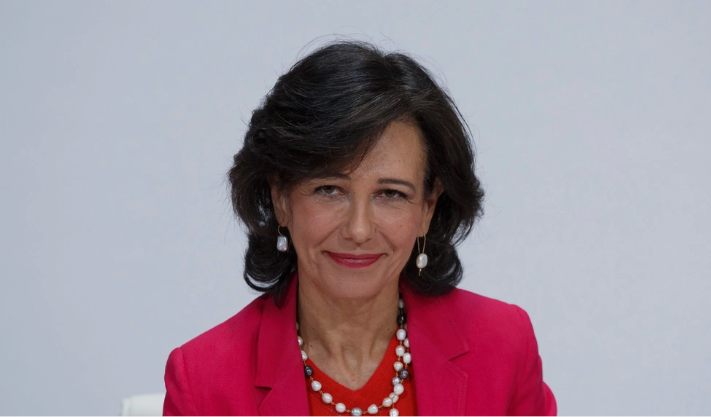
Ana Patricia Botín stands among the most influential business leaders in modern global finance. As the Executive Chair of Banco Santander, she leads one of the world’s largest banking institutions, shaping how millions of people and businesses access financial services. Her leadership represents not only the evolution of a historic banking empire but also the rise of a new generation of executives redefining what global finance looks like in the 21st century.
Early Life and Family Legacy
Born in Spain in 1960, Ana Patricia Botín was raised in a family deeply rooted in banking tradition. She is the daughter of Emilio Botín, the long-serving chairman who transformed Santander from a regional institution into a global financial powerhouse. Growing up in this environment gave her early exposure to financial strategy, corporate leadership, and international business.
However, despite her family background, Botín did not simply inherit success—she built her own path through education, experience, and strategic thinking. Her early years helped shape a strong work ethic and a global mindset that would later define her leadership style.
Education and Early Career
Botín pursued higher education at Harvard Business School, one of the world’s most prestigious institutions for management and leadership training. There, she developed analytical skills, financial expertise, and a broader understanding of global markets.
After completing her studies, she gained international banking experience working at JPMorgan. This role gave her firsthand exposure to global capital markets and modern financial operations. The experience was crucial—it allowed her to step beyond her family’s business environment and understand the competitive landscape of international finance.
Rising Through Leadership Roles
Botín formally joined the Santander Group in the late 1980s, taking on roles that progressively increased in responsibility. Over time, she demonstrated strong strategic vision, operational discipline, and an ability to lead major institutional transformations.
One of her most significant achievements before becoming group chair was her leadership of Santander’s UK division. Under her direction, the bank strengthened customer relationships, expanded digital capabilities, and enhanced profitability in a highly competitive market. This success established her reputation as a capable and forward-thinking executive ready to guide the entire organization.
In 2014, following the passing of her father, she became Executive Chair of Banco Santander. The transition marked a historic moment—not just for the company but for global finance—placing one of the world’s most powerful banking institutions under female leadership.
Transforming Global Banking
Since assuming leadership, Botín has focused on modernizing the bank while preserving its long-standing strengths. Her strategy centers on three major pillars: digital transformation, global integration, and customer-focused banking.
She has invested heavily in technology, recognizing that digital innovation is essential to the future of finance. Under her leadership, Santander expanded online banking services, improved mobile platforms, and adopted advanced data analytics to better serve customers.
At the same time, she has emphasized financial inclusion—ensuring that banking services reach individuals and small businesses that traditionally lacked access. This approach reflects her belief that sustainable growth depends on broad participation in the financial system.
Botín has also strengthened the bank’s global coordination, aligning operations across Europe, Latin America, and North America to operate more efficiently and respond faster to economic changes.
Leadership Style and Vision
Ana Patricia Botín is widely recognized for combining traditional banking discipline with modern innovation. She believes financial institutions must balance profitability with responsibility—supporting economic development while maintaining stability.
Her leadership style emphasizes transparency, long-term planning, and adaptability. She has spoken frequently about the importance of trust in banking and the need for institutions to evolve alongside technological change.
She is also known for advocating diversity and inclusion in corporate leadership. By promoting equal opportunity and diverse perspectives, she aims to build stronger organizations capable of navigating complex global challenges.
Global Influence and Recognition
Botín’s influence extends far beyond her company. She is regularly ranked among the most powerful women in business and finance, recognized for her role in shaping international economic policy and banking standards.
Her voice carries weight in discussions about financial regulation, sustainability, and digital transformation. Governments, industry leaders, and global institutions often look to her insights when addressing the future of banking.
She represents a new model of corporate leadership—global, innovative, and socially conscious.
Legacy and Continuing Impact
Ana Patricia Botín’s career reflects both continuity and transformation. She inherited a strong institutional foundation but has reshaped it to meet modern challenges. Her leadership demonstrates how traditional financial institutions can adapt to rapid technological change without losing stability or purpose.
As global banking continues to evolve, her influence remains significant. Through strategic vision, operational excellence, and commitment to innovation, she continues to shape the future of international finance.
Her story is more than a narrative of corporate success—it is a testament to leadership that bridges generations, cultures, and economic systems. In doing so, she has secured her place among the most important business figures of our time.
For more such articles, please follow us on Twitter, Linkedin & Instagram
Also Read:
Belén Garijo: Steering Global Healthcare Into a New Era
Mary Barra: Driving General Motors Toward a Global Future
Abigail Johnson driving innovation at Fidelity Investments