Every month I share the best things to see in the night sky across North America (also useful for anyone in the mid-northern parts of the Northern Hemisphere). For deeper guides on stargazing, eclipses, and planets, check my main feed.
September 2025 will be an exciting month for skywatchers. Expect a chance of bright auroras, close planet pairings, and a dramatic total lunar eclipse (though not visible in North America). With shorter days and the autumn equinox approaching, evenings are perfect for stargazing. Here’s what to look for this month:
1. The “Autumn Star”
When: All month
Where: Low in the southern sky
Fomalhaut, also called the Autumn Star, is the brightest star in the constellation Piscis Austrinus. It’s only visible in autumn from mid-northern latitudes. To see it, you’ll need a clear, dark view toward the south.
2. Full Corn Moon and Total Lunar Eclipse
When: Evening of Sunday, Sept. 7, 2025
Where: Rising in the east
North America will see the September full moon rise at dusk on Sept. 7. It’s called the Corn Moon this year (the Harvest Moon comes in October, since that full moon is closest to the Sept. 22 equinox). While Asia, Australia, and parts of the Pacific will see a total lunar eclipse, North America will miss it.
3. The “Great Square” of Pegasus
When: After dark, all month
Where: Rising in the east
Look for four bright stars forming a large square shape in the eastern sky after dark. This is the Great Square of Pegasus, a well-known fall constellation. It’s easy to spot even from cities and marks the coming of autumn and the September equinox.
4. The Moon and Saturn
When: Night of Monday, Sept. 8, 2025
Where: Eastern sky
A nearly full moon (97% lit) will appear right next to golden Saturn in Pisces. Saturn is near its brightest of the year, ahead of its opposition on Sept. 20. With a small telescope, you can even catch a glimpse of Saturn’s rings.
5. A “Diamond” in the Sky
When: Before sunrise, Tuesday, Sept. 16, 2025
Where: Eastern sky
Before dawn, a thin crescent moon (28% lit) will sit near Jupiter. To its left, the bright twin stars Castor and Pollux in Gemini will also be visible. Together, the four objects will form a neat diamond shape in the sky, each about four degrees apart.
6. Moon, Venus, and Regulus Align
When: Before sunrise, Friday, Sept. 19, 2025
Where: Eastern sky
A thin crescent moon (only 6% lit) will appear close to Venus and the star Regulus, all packed tightly together near the east-northeast horizon about an hour before sunrise. This will be one of the best sky events of the month to see without a telescope.
7. Saturn at Opposition
When: Sunday, Sept. 21, 2025
Where: Eastern sky
This is the best night of the year to see Saturn. At opposition, Saturn rises at sunset and sets at sunrise, shining brightly at magnitude 0.6. With a small telescope, you can see its rings, which will look nearly edge-on but still noticeable.
8. Partial Solar Eclipse
When: Monday, Sept. 22, 2025
Where: Southern Hemisphere
A new moon at 2:54 p.m. EDT creates the darkest skies of the month and also brings a partial solar eclipse for some regions. People in New Zealand, Fiji, Tonga, and Antarctica will see the moon cover up to 86% of the sun at sunrise.
9. Fall Equinox
When: Monday, Sept. 22, 2025
Where: Worldwide
At 2:20 p.m. EDT, the sun will be directly above the equator. Day and night will be about the same length everywhere on Earth. On this day, the sun rises exactly in the east and sets exactly in the west. From now, nights will slowly get longer.
10. Northern Lights
When: For two weeks after Monday, Sept. 22, 2025
Where: Northern sky
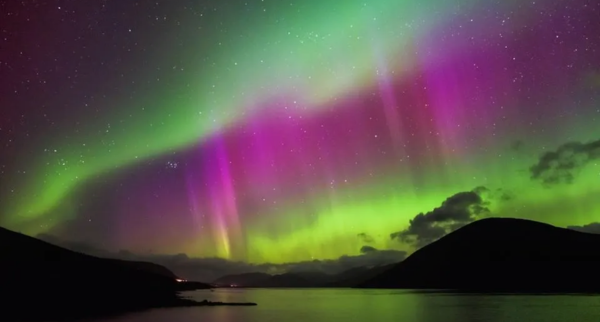
Around the equinox, Earth’s tilt makes the Northern and Southern Lights stronger. The two weeks after Sept. 22 are usually a good time to see them, though not guaranteed. Early forecasts also predict auroras on Sept. 1–2, 2025.
11. The Andromeda Galaxy
When: After dark, all month
Where: Eastern sky
After dark, look for the “W” shape of the Cassiopeia constellation in the northwest. From its rightmost “V,” trace a line down to the bright star Mirach in Andromeda. About two-thirds of the way toward the horizon lies the Andromeda Galaxy (M31). It is 2.5 million light-years away — the farthest object you can see without a telescope. From dark skies, you may spot it faintly with your eyes, while binoculars will show it as a fuzzy patch even from a city.
Published: 1st September 2025
For more such articles, please follow us on Twitter, Linkedin & Instagram
Also Read:
7 Reliable Whiskeys That Taste Top Shelf
5 Career Moves for Older Professionals Near Retirement
Minneapolis Shooting: Robin Westman Shares Outfit Detail