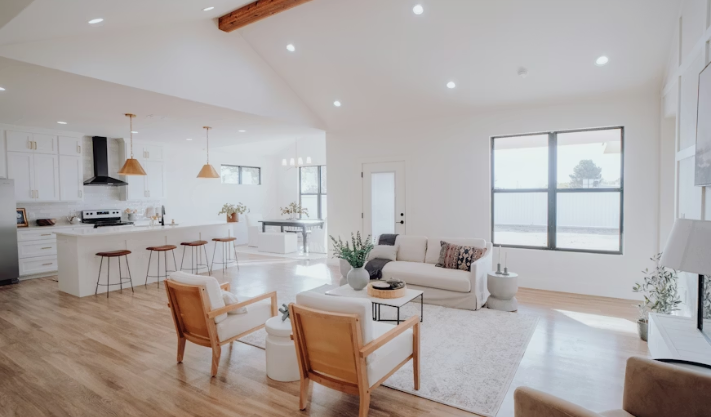
As the world continues to rethink the meaning of “home,” architects are at the forefront of shaping spaces that respond to new lifestyles, technologies, and environmental demands. The 2025 Architect Survey—an annual insight report taken from leading residential architects across Europe, the Middle East, and North America—highlights a striking shift toward homes that are smarter, more sustainable, and deeply human-centric. Here are the top design trends architects say will define homes in 2025 and beyond.
1. Biophilic Design Moves From Trend to Standard
In 2025, biophilic design is no longer an optional aesthetic—it’s becoming integral to architectural planning. Architects report a growing client desire for deeper, more meaningful integration of nature into the home. This goes far beyond houseplants and natural materials.
Expect living walls, indoor courtyards, water features, and daylight-optimized layouts designed to improve mental well-being and reduce reliance on artificial lighting. Many firms are also incorporating locally sourced stone and wood as part of a wider return to natural textures.
2. Flexible, Multi-Purpose Rooms Take Center Stage
The shift toward hybrid work and more home-based lifestyles has made adaptability a top priority. The survey shows that highly flexible rooms—spaces that can quickly transform from office to guest room or from gym to meditation studio—are in high demand.
Architects are responding with modular walls, built-in convertible furniture, and discreet storage that maintains aesthetics while supporting multiple uses. Zoning strategies are also evolving, using lighting, flooring changes, and sliding partitions to define spaces without permanent barriers.
3. Sustainability and Circular Materials Go Mainstream
Environmental consciousness has matured into actionable design choices. In 2025, homeowners increasingly ask for low-impact homes built with recycled, reclaimed, or circular materials.
Architects note a major rise in:
-
High-performance insulation
-
Carbon-neutral concrete alternatives
-
Timber-frame construction
-
Energy-efficient HVAC systems
-
Solar-plus-storage integrations
Waste-reducing construction methods—such as prefabrication and 3D-printed components—are also gaining traction, accelerating build times while lowering emissions.
4. AI-Enhanced Smart Homes With Human-First Design
Smart homes have moved well beyond automated lighting and thermostats. With AI now woven into everyday systems, architects are designing houses capable of learning user preferences and improving energy management.
However, the survey highlights a shift: homeowners want tech that blends seamlessly into the living environment rather than dominating it.
Invisible sensors, voice-free automation, and privacy-preserving systems are key priorities for 2025. Smart kitchens, predictive maintenance, and AI-assisted energy balancing are becoming staples of high-end and mid-range homes alike.
5. Outdoor Living Becomes an Architectural Essential
Architects agree that outdoor living is no longer a “nice-to-have” feature—it’s a core part of modern home design. In 2025, outdoor spaces are being treated as extensions of interior rooms, with year-round functionality.
Expect covered lounges, outdoor kitchens, heating systems, and even weather-proof coworking zones. Landscaping is also evolving to support biodiversity, drought resistance, and low maintenance.
The Future of Home Design: Personal, Sustainable, Intelligent
The 2025 Architect Survey paints a clear picture: homes are becoming more personal, sustainable, flexible, and intelligent. Architecture is moving toward spaces that support mental well-being, respond dynamically to changing needs, and minimize environmental impact.
What comes next? A future where homes are not just places to live, but ecosystems designed to enhance quality of life.
Published: 19th November 2025
For more such articles, please follow us on Twitter, Linkedin & Instagram
Also Read:
Trump Gives Saudi Arabia Special Ally Status Outside NATO
5 Bedtime Snacks That Help You Sleep Better Tonight
5 Smart Ways to Set Holiday Work Boundaries With Your Boss