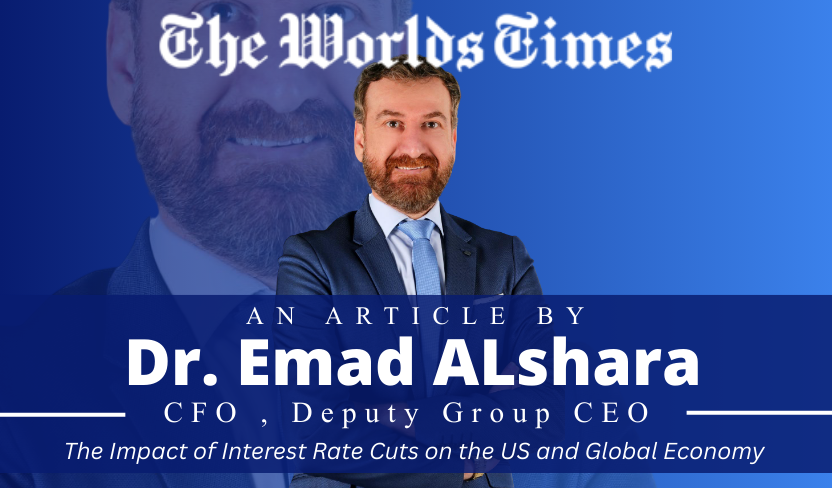
Dr. Emad ALshara
Dr. Emad ALshara is a seasoned finance professional and corporate leader with extensive experience in financial management and economic strategy. Currently serving as CFO and Deputy Group CEO, he has built a strong reputation in corporate finance, governance, and strategic economic analysis. His insights often bridge practical financial leadership with macroeconomic understanding, making him a respected voice on how policy decisions affect both business and broader economic systems.
Understanding Interest Rate Cuts
Interest rate cuts, primarily implemented by central banks like the U.S. Federal Reserve, are a key tool of monetary policy used to influence economic activity. When a central bank lowers its benchmark interest rate, borrowing becomes cheaper for consumers and businesses. The goal is often to stimulate economic growth, particularly when inflation is under control but economic momentum weakens.
In the United States, recent discussions among policymakers reflect differing views on rate cuts. Some officials emphasize caution due to persistent inflation, while others signal openness to easing monetary policy as growth slows.
Domestic Impact: United States Economy
1. Stimulating Borrowing and Investment
Lower interest rates reduce the cost of loans whether for homes, autos, or business expansion. This can encourage consumers and firms to borrow and spend more, thereby boosting economic activity. Historically, financial markets often respond positively to rate cuts as liquidity improves and the cost of capital declines.
2. Employment and Growth
Dr. ALshara recognizes that more accommodative monetary policy can support employment by encouraging investment and consumption. When borrowing costs fall, companies may be more inclined to hire and expand operations a critical factor during periods of economic slowdown.
3. Inflation Considerations
While rate cuts can stimulate growth, they work in tension with inflation control. If inflation remains above target or sticky—as current data on U.S. wholesale prices suggests policymakers may hold off on cuts to avoid reigniting price increases.
Global Economy: Transmission and Spillovers
Interest rate decisions in the United States reverberate worldwide due to the U.S. dollar’s role as the dominant global reserve currency and the size of the U.S. economy.
1. Exchange Rates and Capital Flows
Lower U.S. rates often weaken the dollar because investors seek higher returns elsewhere. Emerging and developing economies may see capital flow toward their markets, potentially boosting investment but also causing volatility in foreign exchange markets.
2. Commodity Markets
A weaker dollar tends to make commodities denominated in dollars—such as oil and gold—more expensive in local currency terms, impacting both producers and consumers across regions. This dynamic has varied effects: commodity exporters may benefit, while importers face cost pressures.
3. Global Growth Dynamics
Central banks across advanced and emerging economies often adjust their policies in response to U.S. rate changes. When the Fed eases, other central banks might follow to support their own growth or maintain currency stability. This broader shift can help sustain global economic activity amid slowing growth trends.
Balancing Risks and Rewards
Dr. ALshara’s broader economic perspective highlights that while interest rate cuts can serve as powerful tools to support growth, they must be applied judiciously. Overly aggressive cuts risk financial instability, encouraging excessive risk-taking and potential asset bubbles. Indeed, some central bankers emphasize these risks when cautioning against premature easing.
Conclusion: Strategic Monetary Policy for Sustainable Growth
In summary, interest rate cuts can stimulate economic activity, incentivize investment, and influence global financial conditions. Their impact spans beyond national borders, affecting capital flows, exchange rates, and monetary policy frameworks around the world. Insights from leaders like Dr. Emad ALshara remind us that monetary policy must balance growth objectives with long-term stability considerations. As economies evolve and new challenges emerge, thoughtful, data-driven monetary decisions remain pivotal to fostering resilient economic environments.
Also Read:
Edson Gonçalves Jr.: Turning Operational Reality into AI
Abe Tomonari merges science, heritage, and compassion
Pascale Fahrni: From Performance to Presence