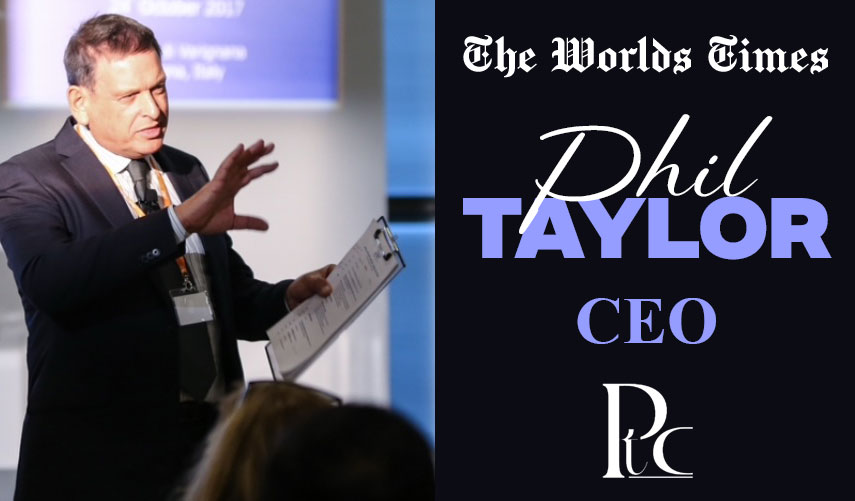
Phil Taylor Interview
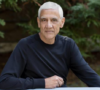
Phil Taylor is a five-time CEO and one of Europe’s most experienced Strategy and Human Capital consultants, with over 8,000 hours dedicated to senior leadership development, participative management, and organizational transformation. As CEO of Phil Taylor Consultants since 2013, he has supported world-class brands including Lamborghini, Ducati, Ferrari, Maserati, EY, BASF, Toyota, and leading European universities.
Renowned for his human-centred approach, Phil delivers strategic alignment, high-impact team programmes, and executive presentation mastery in both English and Italian. He is also a sought-after event moderator and keynote speaker across Italy and Europe, and CEO of Apparition SRL, bringing cutting-edge holographic communication to business, education, and global events. Rooted in strong ethics, deep listening, and Cambridge-trained insight, Phil’s work consistently accelerates clarity, collaboration, and long-term strategic success for institutions and companies worldwide.
What Keeps Phil Taylor Inspired
We started the interview by asking, “You have been a CEO 3 times and now lead Phil Taylor Consultants. What continues to drive your passion for strategy, people, and business transformation after so many decades in leadership?”
Phil Taylor replied, “What has always motivated me is the human factor. Whether I am working with a luxury automotive giant, a leading university, or a fast-growing SME, the fundamental engine of change is people. Strategy only becomes real when teams align, engage, and feel ownership. After more than 8,000 hours in executive training and strategy sessions, I’m still energized by seeing leaders realize what they can achieve when silos disappear and communication becomes open and fearless. Phil Taylor Consultants ( PtC) has grown consistently since 2013 because we focus on ethics, humility, and participative management excluding top-down arrogance. Every project is an opportunity to listen deeply, tailor solutions precisely, and help organizations transform them from within. That human-centered approach keeps our passion alive every day. Usually we try to pre interview everyone on any project to laser listen. What are their views? How do they feel? What ideas for the upcoming project?”
Why One Approach Fits Many Worlds
The Worlds Times: Your work spans Lamborghini, Ducati, Ferrari, Caterpillar, Politecnico di Torino, and 15 other major universities in Italy. What makes your consulting method effective across such different environments?
Phil Taylor replied, “The diversity of our clients from supercar luxury manufacturers to global corporations to academic institutions is exactly why our method works. At Cambridge University I learned that organizations behave like living systems: culture, relationships, and identity matter just as much as operational structure.
My role is to listen deeply, identify underlying dynamics, and build participative frameworks that unlock collaboration. Whether I’m helping engineers at Lamborghini align on communication priorities or supporting university leaders in managing complex governance, the principles remain consistent: shared purpose, emotional competency, no silos thinking and competent people. We use highly creative interactive, digital and AI-driven formats that move far beyond traditional slide-based training. The combination of rigorous strategic thinking and human sensitivity allows us to cross industries and still have strong, lasting impact.
A key focus in the success is self-esteem . For adults to go to training sessions and find that school based slide driven processes are used just isn’t up to the challenge
So we use random generated sub groups (2-5 attendees)
If we don’t work group gravitate by gender, age and function, thus producing training silos
At the end of a training day everyone will have worked with everyone. Sometimes several times over.”
Empowering People
The Worlds Times: Participative Management is a strong theme in your work. Why do you believe it is essential for today’s organizations?
Phil Taylor replied, “Participative Management (PM) isn’t a trend it’s a necessity. I was heavily influenced by a famous University professor Marco Biagi who was at one point my HR Director. Marco was way ahead of his time and sadly was assassinated for his progressive labor laws.
The era of top-down leadership is fading because today’s talent expects to contribute, not just execute. When people feel consulted and included, their performance, creativity, and accountability rise dramatically. I’ve seen this in manufacturing plants, luxury brands, universities, and service industries. The moment teams are invited into the strategic conversation, everything changes: silos shrink, trust grows, and alignment becomes natural instead of forced. Participative Management is not about endless meetings; it is about structured involvement, clear communication, and creating a safe space where ideas emerge freely. For many organizations, this single shift is the key that unlocks growth, innovation, and resilience in a competitive world. A common misunderstanding is PM creates uncertainty as to who governs. Not so. PM proposes. Managers in the end decide.”
Crafting Moments That Stay with the Audience
The Worlds Times: You have moderated some of Italy and Europe’s major events. What makes a powerful keynote or moderation session in your view?
Phil Taylor replied, “A great keynote or moderation is a blend of preparation, empathy, and the ability to captivate an audience. Count on several very detailed pre briefing sessions.
Get there eary. When moderating events for organizations like Federlegno, FAAC, Regesta, Buonristoro, CRIF, Banco BPM, or large university gatherings, I always begin by understanding the culture and expectations of the audience. The job of a moderator is to create rhythm guiding conversations, highlighting insight, and keeping energy alive in the room. A keynote must be memorable, not through complexity but through clarity and emotional resonance. If possible celebrate and involve the audience being careful not to freewheel the questions to an open audience. Dangerous and it just doesn’t work. Whether I am on stage in Modena, Trieste, London Milan, or at CRIF Worldwide Management mobility conferences, I try to connect ideas with real human stories. The aim is always the same: give people something they can take home, apply, and feel inspired by. That is what makes an event meaningful. But never top down or invasive. Speaking skills are important. I was honored to be the founding President of the International Toastmaters Bologna branch.”
A New Era of Executive Presence
The Worlds Times: Apparition SRL is bringing holographic technology into business communication. How do you see holographics transforming executive training and events?
Phil Taylor replied, “Holographic technology is not the future it is already here. With Apparition, and our international technology partners we’re able to bring executives, professors, and keynote speakers into rooms they cannot physically reach. This changes the entire dynamic of corporate training, global communication, and high-level events. Imagine a CEO delivering a fully interactive session from another continent, or a university professor appearing “live” in a classroom without the need for travel. For trade fairs, retail, utilities, and major events, holographic offer immersion and presence that video simply cannot match. It’s sustainable, efficient, and incredibly engaging. We are still early in the adoption curve, but I believe holography will soon be a standard tool in high-level communication and education.”
The Core Leadership Obstacle in 2025
The Worlds Times: You’ve trained senior teams at companies like Lamborghini, Ducati, BASF, Danfoss, Caterpillar, Sacmi, and many others. What is the biggest challenge leader’s face today?
Phil Taylor replied, “The greatest challenge is alignment. Most organizations have intelligence, resources, and talent but they lose momentum because departments pull in different directions. Siloed behavior is the silent killer of strategy. My role is often to rebuild bridges: reconnecting senior managers, strengthening communication flow, and helping teams develop a shared narrative about where they’re going and why. I believe in super competent interfunctional “Navy Seals” style teams. A key secret is to judge the duration of a Team, To cover complex problem solving for example in Italy the duration is about 3 months
Teams meet up once every 10 days or so for a couple of hours maximum. Productive, Enjoyable, Motivating, and it reduce silos too.
Another challenge is adapting leadership styles to new generations who value purpose, flexibility, and authenticity. Leaders need to be more emotionally aware and much more open to dialogue. When alignment and trust are restored, performance rises naturally. I’ve seen this repeatedly across industries unity accelerates everything.”
Where Strategy Meets Intellectual Culture
The Worlds Times: You have worked with over 80 university CEOs and numerous academic management teams. What makes the university environment unique from a strategic and human perspective?
Phil Taylor replied, “Universities operate with a legal complexity that many corporate executives underestimate. Academic culture values autonomy, debate, and intellectual independence which mean change cannot be imposed; it must be co-created. When I work with universities such as Bologna, Camerino, Brescia, Bergamo Ferrara, Politecnico di Torino Venice University, the key is always respectful listening and participative design.
Leadership teams must navigate governance, stakeholder expectations, government regulations, and the personal passions of administrators and professors. Strategic alignment in this context requires patience, clarity, and mutual respect. What I enjoy most is seeing how academic teams, once engaged, can become incredibly innovative and united. The intellectual energy is immense it just needs the right process to channel it effectively.”
Values That Shaped a Global Career
Lastly we asked, “Looking back at your career from Cambridge beginnings to global consulting and event leadership, what core values have guided your journey?”
“Two values have guided me since the start: ethics and humility. These were reinforced during my studies at Cambridge and throughout my early consulting years across five continents. People trust you when they feel respected, heard, and never spoken down to. My work, whether with Lamborghini, Ducati, CEOs of major universities, or international organizations, is rooted in partnership, not hierarchy. Ethics mean being transparent, fair, and never compromising integrity for short-term gain. Humility means listening more than speaking, staying curious, and recognizing that every organization has unique intelligence within it. These values are woven into Phil Taylor Consultants and are why clients stay with us for years sometimes decades. They’re the foundation of everything we do.” Phil Taylor concluded
Connect with Phil Taylor on LinkedIn
For more information visit Phil Taylor
Also Read:
Parker D. Dale leads global biocatalytic water innovation
Dr. Antony Paul Espiritu Martinez: Leading Innovation in Health
Brandon Wong: Skating Beyond the Game to Inspire